
Vandaag of morgen in huis

Kwaliteit gegarandeerd

Welkomstaanbiedingen ontgrendelen: GRATIS bezorging | Tot 80% korting | Gratis 30 dagen JoyPlus-proefperiode
Download de app
A toaster may seem like a simple kitchen appliance, but models differ in capacity, slot shape, controls and ease of cleaning. A low price does not automatically mean good practical performance. Equally, you may sometimes pay extra for features you hardly ever use.
When comparing models, pay particular attention to these three common pitfalls:
A good choice therefore starts with how you use your toaster every day. Do you only toast two slices at breakfast, or do you also want to prepare rolls, thick slices and several portions at once?
A 2-slot toaster is generally suitable for a one-person household or a couple. A model with two long slots can sometimes toast four standard slices at once. Check the product description carefully: the term “4 slices” may refer to long slots rather than four separate chambers.
A 4-slot toaster is practical for families or households where several people have breakfast at the same time. The appliance is usually wider and takes up more space.
Also check the dimensions of the slots. A toaster with wide slots is better suited to thick slices, bagels and rolls. An automatic centring function helps position thin and thicker slices more evenly between the heating elements.
A toaster with adjustable browning settings gives you more control over lightly toasted or darker bread. Six to eight settings are commonly listed in product information. The number itself does not tell you everything: results can also vary depending on the type of bread, moisture content and thickness.
Many models have a power rating of approximately 700 to 1,400 watts. A higher wattage can be useful when toasting several batches in succession, but it does not automatically mean that the bread will be toasted more evenly. Also look for features such as automatic shut-off, a stop button and anti-jam protection.
A toaster with a crumb tray is easier to clean than a model where crumbs collect at the bottom. Empty the tray regularly and allow the appliance to cool completely before cleaning it.
A stainless-steel toaster can have a sturdy appearance, but also check the other materials, weight and stability. A non-slip base prevents the appliance from moving during use. Cord storage helps keep your worktop tidy.
Always use a toaster on a flat, stable surface, away from kitchen cabinets, curtains and other flammable materials. Never insert a knife, fork or other metal object into the slots. If bread becomes stuck, unplug the appliance first and allow it to cool down. Always follow the manufacturer’s instructions and safety information.
A toaster with a defrost function is useful when you use bread straight from the freezer. The function generally extends the cycle so that the bread is defrosted first and then toasted. A toaster with a reheat function briefly warms already toasted bread again, usually without adding a full extra browning cycle.
A toaster with a bun warmer is suitable for croissants, bread rolls and other baked goods that you want to warm gently. Do not leave the appliance unattended while it is in use. A high-lift function is useful for small slices, as it allows you to raise the bread higher without bringing your fingers close to the hot slots.
The recommendations below are linked to different usage profiles. The features mentioned are based on the available product specifications.
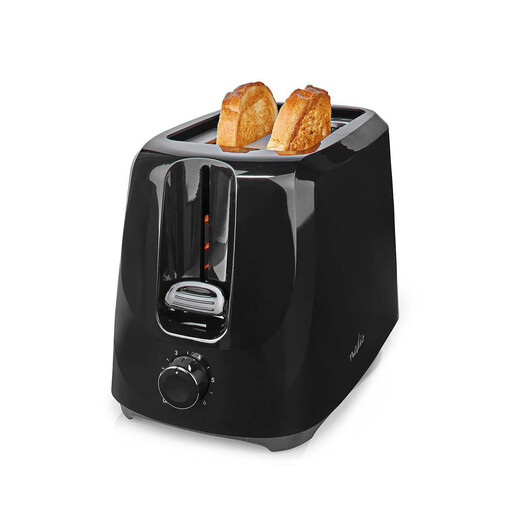
Why it suits this profile: This compact model is designed for everyday use, with two slots and six browning settings. According to the product specifications, it measures 14.7 × 25 × 16.5 cm.
The capacity and number of settings are clearly stated, so you do not pay extra for features you do not need.
Compact size, six browning levels, removable crumb tray and cord storage.
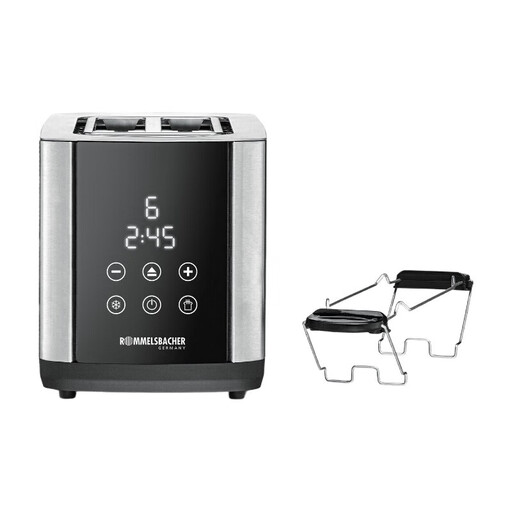
Why it suits this profile: This stainless-steel toaster has extra-wide slots for bread up to 12 × 12 cm and offers nine browning levels.
The stated slot dimensions mean you will not discover after purchase that thick or XL slices do not fit.
Nine settings, defrosting, reheating, automatic shut-off, bun warmer and crumb tray.
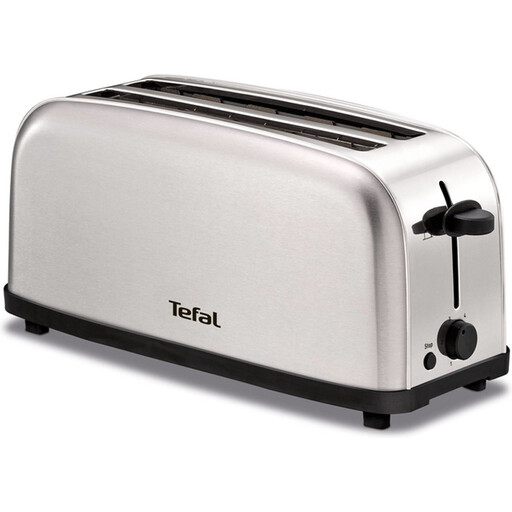
Why it suits this profile: With two long slots, this model can toast four slices at once according to the product description. That is practical for a household with several users.
The long slots provide greater capacity without four separate slots. However, check beforehand that the length suits your worktop.
Four slices at once, stainless-steel housing, six browning settings, crumb tray and bun warmer.
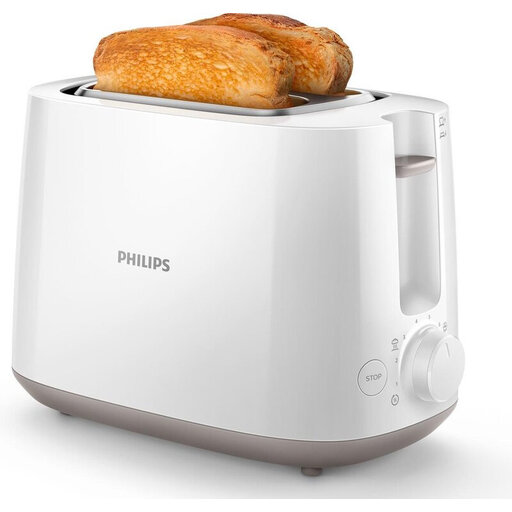
Why it suits this profile: This model combines two variable-width slots with eight browning settings and an integrated rack for rolls and pastries.
The functions are clearly specified: defrosting, reheating, automatic shut-off and a removable crumb tray.
Eight settings, variable-width slots, high-lift function, bun warmer and a stated power rating of 830 watts.
We have put together a complete, up-to-date list of products that fully meet these strict selection criteria and the applicable European safety requirements.
The lifespan depends on usage, cleaning and build quality. A toaster that runs several cycles every day will generally wear out faster than one used a few times a week. There is no fixed lifespan that applies to every model. Check the warranty conditions and stop using the appliance if it is damaged, has a faulty cord or behaves unusually.
Models rated at approximately 700 to 1,000 watts are common for normal home use. If you toast several batches one after another, you may want to consider a higher power rating. However, wattage is not the only factor that determines the result. Slot width, the centring function, browning control and type of bread also play a role.
That depends on your habits. If you often use frozen bread, a toaster with a defrost function can save you time in practice. If you almost always buy fresh bread, a model with adjustable browning, a stop button and a crumb tray may be sufficient. Compare the features with your own breakfast routine, rather than relying on the marketing copy alone.
