
Vandaag of morgen in huis

Kwaliteit gegarandeerd

Welkomstaanbiedingen ontgrendelen: GRATIS bezorging | Tot 80% korting | Gratis 30 dagen JoyPlus-proefperiode
Download de app
Buying tissues seems simple until you get home and discover that the sheets are too thin, the box runs out quickly or the packaging does not fit where you want it. For families, offices and households, it is not just the price that matters. The number of sheets, the layer structure, the material and the way you use the tissue all determine whether a pack is practical.
When comparing products, pay particular attention to these three common pitfalls:
Do not just compare the number of boxes; also calculate the total number of sheets. For example, a pack with 10 boxes of 128 sheets contains 1,280 sheets. This is more relevant for a large family or an office than simply seeing the words “large pack”.
Also pay attention to the size of each sheet. Large sheets can be useful for everyday use, while compact paper tissues are easier to take with you. For a desk, kitchen or living room, facial tissues in a tissue box are often more practical than loose pocket tissues.
The terms 2-ply or 3-ply tissues refer to the number of paper layers. More layers can contribute to strength and absorbency, but they do not tell you everything about the user experience. Also check the sheet size and material.
Some brands’ product descriptions use terms such as “soft”, “strong” or “suitable for sensitive skin”. Treat these claims as manufacturer information, not as a universal guarantee. According to C&S’s product description, certain tissues are soft and kind to the skin; only you can judge whether they are suitable for your skin. Stop using them if irritation occurs.
Tissues for everyday use may be made from cellulose, wood pulp or viscose, among other materials. The Kleenex Family Fabrics packaging states 100% virgin cellulose pulp and FSC certification. The BREEZE products are listed as containing 100% virgin wood pulp. According to the product description, YIJINCHAN uses 100% plant-based viscose.
This information helps you compare products, but it does not provide proof of medical or environmental performance beyond the properties stated. Also check the storage instructions: tissues remain most practical when stored in a dry place.
Dispose of used tissues in a waste bin. The stated product instructions warn that these products must not be flushed down the toilet. This helps prevent blockages and is the correct way to use them.
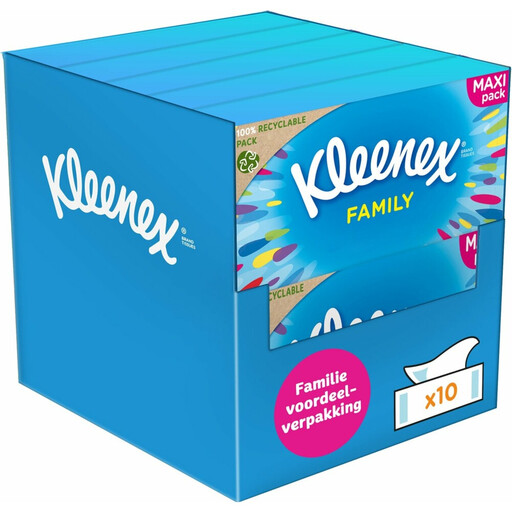
Why it suits this profile: A clearly organised bulk pack for households that use tissues regularly and do not want to keep buying a new box.
The total quantity is clearly stated: 1,280 tissues divided across 10 packs. This makes it easier to estimate your stock and usage.
According to the product information, the tissues are soft and strong. The packaging states that they are FSC-certified and intended for the whole family.
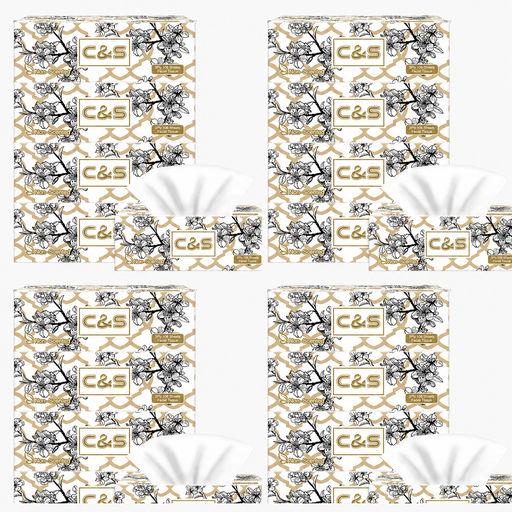
Why it suits this profile: Ideal if you want to place a dedicated tissue box in several rooms, such as the living room, bedroom and home office.
The specifications list 8 boxes, 106 sheets per box and 848 sheets in total. The 3-ply construction is also stated.
The product name describes a soft, skin-friendly version. According to the product description, the tissues are 3-ply and designed for everyday use.
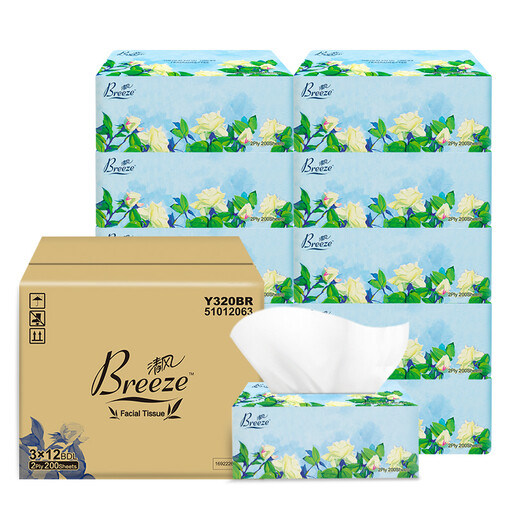
Why it suits this profile: A large supply for families, shared living spaces, offices or locations where a high volume of tissues is used every day.
The total quantity is clearly specified: 36 boxes containing 7,200 sheets in total. This makes your supply more predictable than a single small pack.
The product information states that these are 2-ply tissues measuring 190 × 198 mm, unscented and suitable for dry storage. The quantity is well suited to intensive use.
We have put together a complete, up-to-date list of products that fully meet these strict selection criteria and the applicable European safety regulations.
A tissue holder is particularly useful when you want a neutral or decorative look. Before buying, check the holder’s internal dimensions and compare them with the dimensions of your box. For example, the 5five Selena Bamboo Tissue Box measures 25,5 × 9,3 × 13,3 cm and, according to the product information, is made from bamboo and polystyrene. The holder is freestanding, stackable and designed for many standard-size boxes.
A holder protects the box from visible wear, but it does not change the quality of the tissues themselves. A compact holder may be sufficient for a desk; in a family with high usage, a large box with a suitably sized opening is more practical.
Shelf life varies by product. Check the date or usage information on the packaging. Store tissues in a dry place away from moisture. An opened box will generally remain usable as long as the sheets stay clean, dry and undamaged.
No. The number of layers mainly tells you about the construction. Softness is also influenced by the material, surface texture and product design. Compare the layer structure, sheet size and specific product description together.
That depends on the price, number of sheets and your usage. Divide the total price by the number of sheets to compare packs more fairly. A bulk pack of tissues can be practical for large households or offices, but it does take up more storage space.
