
Vandaag of morgen in huis

Kwaliteit gegarandeerd

Welkomstaanbiedingen ontgrendelen: GRATIS bezorging | Tot 80% korting | Gratis 30 dagen JoyPlus-proefperiode
Download de app
When you’re buying stationery online, you’ll quickly come across dozens of similar products. A low price, eye-catching colours or phrases like “extra smooth” don’t always tell you enough about everyday use. For school, the office, working from home, drawing or journaling, what really matters is the right nib width, the material and what’s actually inside the pack.
A set of twelve pens might look like a bargain, but first check exactly what’s in the pack. Are all the pens the same colour? Is it a fine or medium nib? And are refills available? A large pack is especially practical when you use stationery regularly or share it with a family, class or office.
A soft grip or ergonomic shape can feel nice, but not everyone holds a pen the same way. Pay attention to the shape of the pen, the thickness of the grip and how the nib extends. For children and beginner writers, a triangular shape can provide extra support. For long note-taking sessions, a soft, non-slip grip is often more practical.
Words like “quick-drying”, “waterproof” or “smudge-free” are product claims. According to the manufacturer’s product description, certain gel pens may dry quickly or smudge less. The final result also depends on the paper, your writing speed and how the pen is stored. So always check the technical specifications rather than just the packaging text.
The nib width determines how broad and precise your writing is.
With a ballpoint pen, the ink type is also relevant. Oil-based ink is often used for general documents and forms. Gel ink can give a more intense colour, but requires extra attention to drying time and paper choice.
A plastic pen is lightweight and suitable for everyday use. A metal casing can feel heavier and offer more balance, like a metal M&G mechanical pencil with a 0.5 mm nib. A triangular holder with a soft grip is designed for extra hold, while a smooth round pen fits more easily into a pencil case.
For pencils, the shape is equally important. According to the product description, the STABILO EASYgraph has a triangular shape, pre-formed finger grips and an HB graphite lead of 3.15 mm. The model is specifically designed for left-handed beginner writers. So always check whether the version suits the user when buying school supplies.
A set of multiple pens is handy for stock, colour-coding or shared use. Also pay attention to maintenance:
For products aimed at young children, small parts and sharp points are things to watch out for. Follow the safety warnings on the product page and packaging.
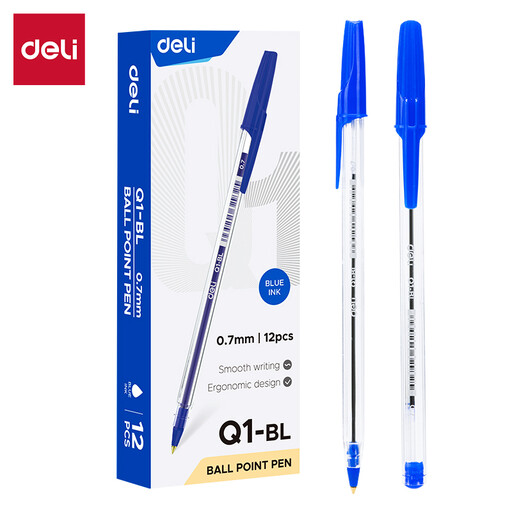
Why this fits the profile: A stock of twelve blue ballpoint pens is practical for school pupils, students, families and a shared workspace. The 0.7 mm nib suits general writing tasks.
The packaging and nib width are clearly specified. This means you’re not just comparing on the number of pens, but also on colour and application.
12 ballpoint pens, blue oil-based ink and a bullet tip of 0.7 mm.
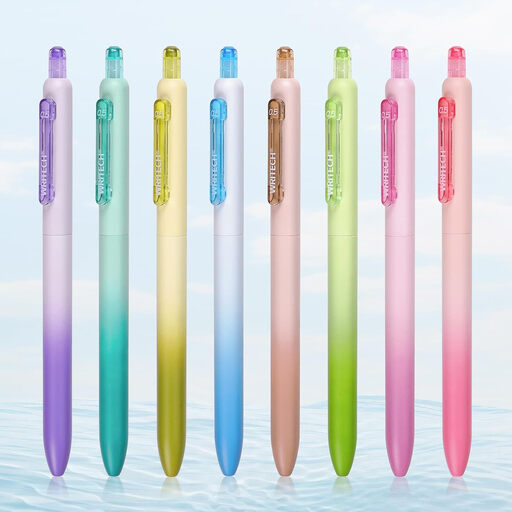
Why this fits the profile: This set is aimed at users who value colour-coding, fine writing and a quiet click mechanism, for example when journaling, in meetings or studying.
The key choices are concrete: 0.5 mm, eight ink colours, a retractable nib and a ribbed barrel. This makes the set easier to compare.
Fine 0.5 mm nib, eight colours, soft non-slip grip and quiet click mechanism according to the product description.
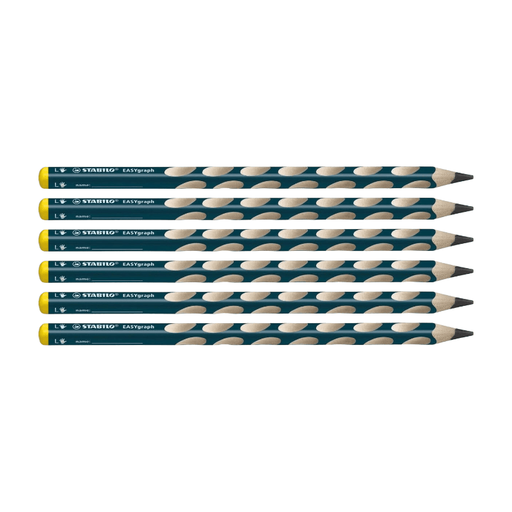
Why this fits the profile: This model is specifically designed for left-handed beginner writers. It suits families, primary schools and teachers looking for targeted school and drawing materials.
You’re not buying a standard pencil when the user needs a left-handed version. The designation, HB hardness and pencil shape are stated upfront.
6 pencils, HB graphite, triangular shape and 3.15 mm thick lead according to the product information.

Why this fits the profile: A compact sharpener with a collection tray is useful at a desk, in a pencil case or on the go. That suits home workers, artists and school pupils.
The collection tray prevents shavings from ending up directly on the table or in a bag. Do check the exact version and number of pieces on the product page.
Compact design, metal sharpening blade and integrated collection tray according to the product description.
We’ve put together a full, up-to-date list of products that fully meet these strict selection criteria and comply with current European safety regulations.
That depends on your preference and writing style. A 0.7 mm nib is a practical middle ground for everyday writing. If you write smaller letters, you might consider 0.5 mm. If in doubt, test the pen on the paper you usually use, because ink can behave differently depending on the paper type.
Store gel pens with the nib retracted or the cap firmly closed. Keep them out of direct sunlight and extreme temperatures. With a ballpoint pen, it also helps to protect the nib and not leave the pen lying open unnecessarily.
Replace or check a sharpener when the pencil becomes frayed, the point comes out crooked or you need to use more and more pressure. Empty a collection tray regularly and remove pencil residue. With heavy use, a sharpener with a sturdy metal blade can last longer, but its lifespan depends on the material, how often it’s used and how well it’s maintained.
