
Vandaag of morgen in huis

Kwaliteit gegarandeerd

Welkomstaanbiedingen ontgrendelen: GRATIS bezorging | Tot 80% korting | Gratis 30 dagen JoyPlus-proefperiode
Download de app
Buying stationery might seem straightforward, until you have to choose from dozens of gel pens, ballpoint pens, mechanical pencils, fineliners, brush pens and markers. A low price doesn’t tell you much about the writing experience, and a striking design won’t automatically suit your paper, handwriting or intended use.
For school pupils, university students, office professionals, journalers and artists, there are three main pitfalls to watch out for:
The right choice starts not with the appearance, but with the technical specifications and what you’ll actually use it for.
The nib width determines how much control and coverage you get. A 0.5 mm nib is practical for small handwriting, planners, diagrams and detailed sketches. A 0.7 mm nib generally writes a bit fuller and stands out well for everyday writing. For broader marks or creative applications, brush pens and markers are more suitable.
With fineliners and drawing pens, also pay attention to the type of nib. A metal-encased nib, like the one on the STABILO point 88, is designed for precise lines and use with a ruler or stencil. A flexible brush nib, on the other hand, offers variation between thin and thick lines.
A metal body often gives a mechanical pencil more weight and can provide extra control for technical drawing or sketching. Plastic pens are usually lighter and more practical for a pencil case or school bag. For long writing sessions, the grip is at least as important as the material.
A non-slip or silicone grip can help you hold the pen steadily. A retractable pen also prevents you from losing a loose cap. Do check that the mechanism works smoothly and that the tip can be fully retracted.
Markers and brush pens need to be sealed properly to prevent them from drying out. Alcohol markers can bleed through paper; it’s best to use marker paper or place a protective sheet underneath your work. With gel pens, storing them horizontally, as the product description suggests, helps keep the ink flow consistent.
Also pay attention to safety information. Products with small parts are not suitable for children under three years old. A mention such as EN 71 can give you information about product safety, but always check the full product details and recommended age.
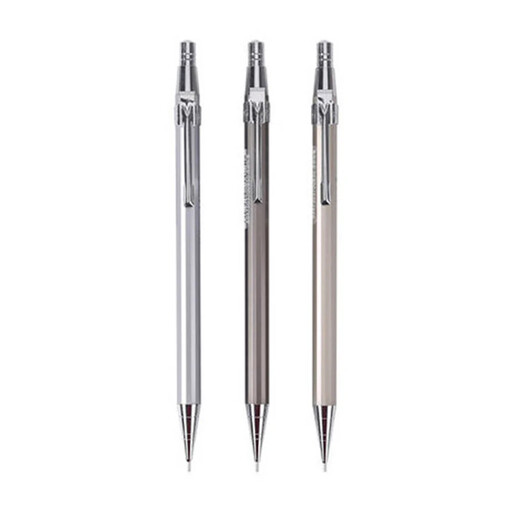
Why this suits the profile: A set of three mechanical pencils is ideal for school, home and a spare pencil case. The 0.5 mm black lead works well for notes, drawing and simple technical sketches.
The fixed 0.5 mm size stops you from accidentally choosing a nib that’s too broad. The push-button mechanism makes it easy to advance the lead.
Metal body, 0.5 mm black lead and three finishes: black, white and gold.
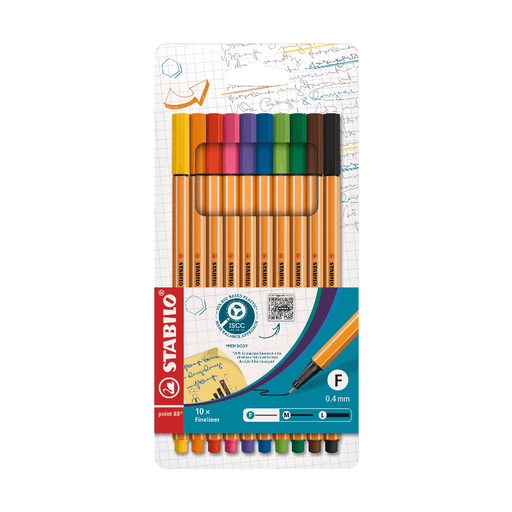
Why this suits the profile: This set is ideal for users who combine neat notes, colour-coding, journaling and precise drawings. The 0.4 mm line width is suitable for fine line work.
The metal nib is, according to the product description, suitable for use with rulers and stencils. The cap can be placed on the back, so it’s less likely to get lost.
0.4 mm nib, ten colours, water-based ink and a resealable storage box.

Why this suits the profile: For artists and creatives who need sketching pens and markers, this set offers multiple colours and two nib shapes for detail work and broader lines.
The product description clearly states that these are alcohol markers. This means you can plan ahead for possible bleeding and choose suitable paper.
24 colours, a flexible brush nib from 1 to 5 mm and a metal fineliner nib of 0.6 mm.
Choose gel pens if you value a smooth line and clear colours. For quick forms, admin work and everyday office tasks, ballpoint pens are often practical thanks to their simple operation. Mechanical pencils are ideal for erasable sketches, maths and technical drawing.
For creative projects, you can combine writing and drawing supplies. Use fineliners for outlines, brush pens for variable lines and markers for blocks of colour. If you mainly write in a planner or diary, look for a retractable pen, a soft grip and a nib of 0.5 or 0.7 mm.
We’ve put together a full, up-to-date list of products that fully meet these strict selection criteria and comply with current European safety regulations.
For general use, gel pens or ballpoint pens with a nib of 0.5 to 0.7 mm are a practical choice. Choose a retractable model if the pen will often be in a bag or pencil case. For corrections, erasable gel pens can be handy, but always check that the ink is suitable for your documents.
Close markers and brush pens properly immediately after use. Store them out of direct sunlight and away from extreme heat. With alcohol markers, it’s also a good idea to store them horizontally and use suitable paper, as per the product information.
The lifespan depends on how much you write, the pressure you use, the paper and storage conditions. A pen that is often left without its cap can dry out more quickly. Store fineliners with the cap on and retractable gel pens with the nib retracted. A multi-pack with a common nib width can be more cost-effective if you write daily, as long as you actually use the extra pens.
