
Same-day & Next-day Delivery

Quality Guaranteed

Unlock Your Welcome Offers: FREE Delivery | Up to 80% OFF | Free 30-day JoyPlus trial
Download the APP
If you’re buying soup online, you’ll quickly come across dozens of varieties: instant soup, tinned soup, ready-to-eat soup and international flavours from Japan, Turkey, China and the Netherlands. However, the packaging doesn’t always tell you what you practically need. A large tin may contain several portions, while a box of sachets is more convenient for the office or on the go.
As Joybuy’s Product Recommendation Officer, I filter product information based on points you can actually check. This way, you avoid relying solely on attractive claims, a well-known brand name or a low price.
An 800 ml pack might seem like good value, but check how many bowls it actually yields. According to the product information, the Unox Hearty Pea Soup (800 ml) is intended for around three bowls. A 570 ml pouch, such as Unox Rich Indian Curry Soup, serves two bowls. Instant soup works differently: the Marukome pack of 152 grams contains eight portions.
So don’t just compare the price per pack – compare the price per portion too. This is especially important for households, students and anyone who regularly needs a quick meal.
Words like “traditional”, “rich” or “authentic” tell you very little about the actual ingredients. According to the product description of Marukome, the base includes rice miso, bonito and kombu extract. That gives you far more concrete information than simply the label “Japanese miso soup”.
For every product, check:
International soup can contain allergens you might not expect. Miso typically contains soya. Some varieties also contain fish, gluten or wheat. Hikari Miso Miso Soup Seaweed, for example, lists soya, gluten and wheat. Unox Rich Indian Curry Soup mentions wheat, mustard, celery, milk and egg, among others.
Also watch out for conflicting or different storage information. Some products state both “store in a cool, dry place” and a specific instruction to keep refrigerated. The packaging on arrival is what you should follow. Do not use any packaging that is damaged, leaking or swollen.
For a quick meal, the difference between one minute and several minutes matters. Basak Instant Lentil Soup contains four sachets of 22 g each. According to the product description, you add hot water and stir the soup for about one minute. With instant miso soup, you usually just add hot water, but always check the water quantity on the pack.
Ready-to-eat soup in a tin or pouch usually needs to be heated in a pan or microwave. According to the product information, Unox Hearty Pea Soup can be heated in the microwave for around 2.5 minutes at 750 watts. Never put a metal tin in the microwave; pour the soup into a suitable bowl first.
Choose based on your situation:
A product may show different nutritional values per 100 g than per prepared portion. Pay particular attention to salt per portion, because instant soup and miso soup can be relatively concentrated. Hikari Miso Instant Miso Soup states 12,000 mg of sodium per 100 g – that’s a value for the dry product and shouldn’t be directly compared with a prepared bowl.
If you eat vegetarian food, you also need to check whether bonito, fish powder, chicken or pork has been added. According to the product information, Marukome contains fish and soya, among other things. A product description can also vary between packs, so always check the current ingredients list before use.
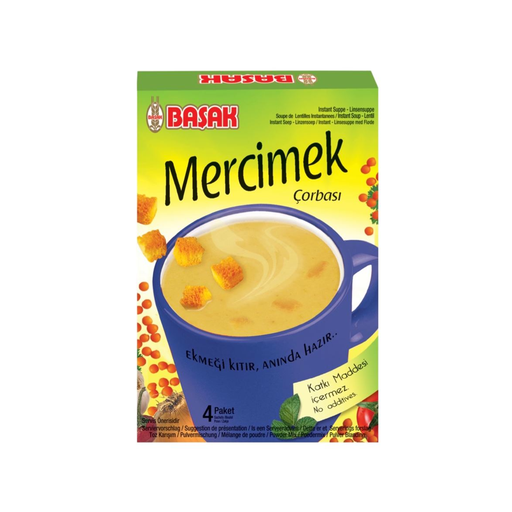
Why this fits the profile: Four individual sachets make it easy to try a small stock of instant soup without buying a large pack.
The portion size and preparation method are clear: 4 × 22 g and, according to the product information, ready with hot water in about one minute.
Four sachets, lentils as the main ingredient, and a preparation that requires very little kitchen equipment.
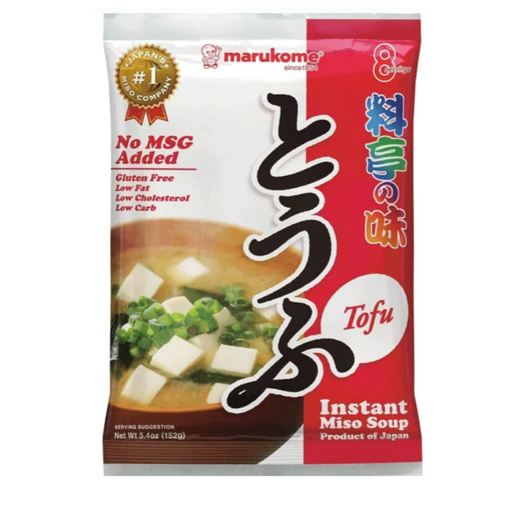
Why this fits the profile: For anyone looking for a Japanese miso soup with several recognisable components, whether at home or in the office.
The pack states eight servings and lists rice miso, tofu, wakame and spring onion, making the portion size and ingredients easier to assess.
Eight portions per pack; according to the product description, made with rice miso, bonito and kombu extract. Allergens: soya and fish.
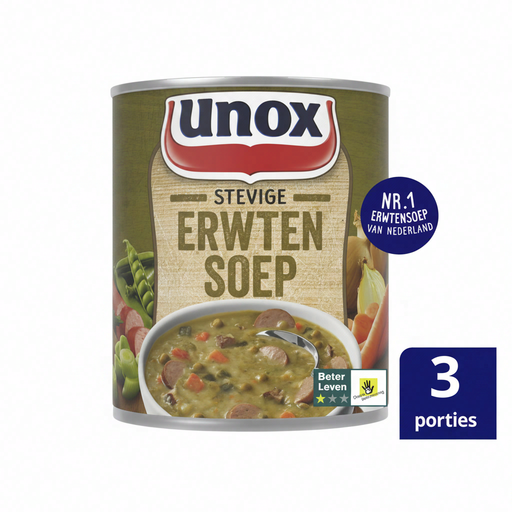
Why this fits the profile: A practical choice for households that want to serve several bowls of pea soup from one pack.
The volume and stated yield are concrete: 800 ml for around three bowls. This makes comparing per portion much easier.
According to the product information, contains 67.6% vegetables, including peas, and a smoked sausage; suitable for pan or microwave.
We’ve put together a full, up-to-date list of products that fully meet these strict selection criteria and comply with current European safety regulations.
Instant soup in individual sachets is usually the easiest to take with you. You only need a mug and hot water. Just check whether you’ll have access to a kettle or hot water point while you’re out. A ready-to-eat soup pouch can be more practical if you have a microwave or pan available.
The shelf life varies by product and packaging. Dry instant soup and unopened tinned or pouch soup can often be stored for a long time, but always check the best-before date on the pack. Different rules apply once opened. Store leftovers in the fridge in a suitable sealed container and follow the instructions on the label.
Look at three things: the preparation time, the number of portions and the ingredients. For a light lunch, Japanese miso soup can be enough. For a more filling meal, pea soup, bean soup, Turkish lentil soup or a Chinese congee are better options. If you have any allergies, always check the full allergen information before placing your order.
