
Vandaag of morgen in huis

Kwaliteit gegarandeerd

Welkomstaanbiedingen ontgrendelen: GRATIS bezorging | Tot 80% korting | Gratis 30 dagen JoyPlus-proefperiode
Download de app
Buying soft drinks online seems straightforward: pick a flavour, add a multipack to your basket and you’re done. Yet mistakes happen more often than you’d think. A pack can look bigger than its actual contents, a product labelled “zero” may still contain caffeine, and a fruit drink isn’t automatically the same as juice.
As Joybuy’s Product Recommendation Officer, I filter product information by practical criteria. That way, you can quickly see which soft drink suits your household, party, store cupboard or taste preference.
The term “zero” usually refers to the sugar content, not the caffeine. For example, Coca-Cola Zero Sugar Soda contains caffeine according to the product information, whereas Coca-Cola Zero Sugar Caffeine Free is offered as a caffeine-free variant. So if you’re looking for a soft drink for the evening, for children, or for a low-caffeine option, it’s worth checking the ingredients list and product description separately.
With a sugar-free soft drink, the sugar content in the nutrition table is the key factor. A fruit drink labelled “no added sugar” may still contain naturally occurring sugars. Iam Superjuice Passionfruit Drink, for instance, contains 30% natural passion fruit juice and states 17 kcal per 100 ml. That’s a different product type from a carbonated drink with sweeteners.
Don’t just compare the price of a tray. Look at:
Check the nutritional information per 100 ml. This lets you compare cola, lemon-lime drinks and fruit drinks fairly. Also pay attention to the difference between “0 g sugars”, “no added sugar” and a product that does contain sugar.
Sugar-free soft drinks often contain sweeteners such as aspartame, acesulfame-K, sucralose or steviol glycosides. Products containing aspartame usually carry a warning that they are a source of phenylalanine. Always check the current label before consuming, especially if you have allergies, intolerances or specific dietary requirements.
If you’re consciously avoiding caffeine, don’t just search for “cola zero”. Look for the term caffeine free or check the ingredients list. Lemon-lime drinks such as Sprite Zero Sugar are described as caffeine-free in the product information. Pepsi Zero Sugar Cola, on the other hand, lists flavourings including caffeine.
Flavour profiles also vary widely:
Soft drink cans of 200, 330 or 355 ml are practical for parties, lunchboxes and controlled portions. A soft drink multipack of 12 or 24 cans is handy if you regularly drink the same flavour or want to stock up for guests.
Bottles of 1 or 1.5 litres are often suitable for a family or a dinner, but once opened they need to be refrigerated and consumed within the recommended period. Always check that the cap or seal is intact and follow the storage instructions on the packaging.
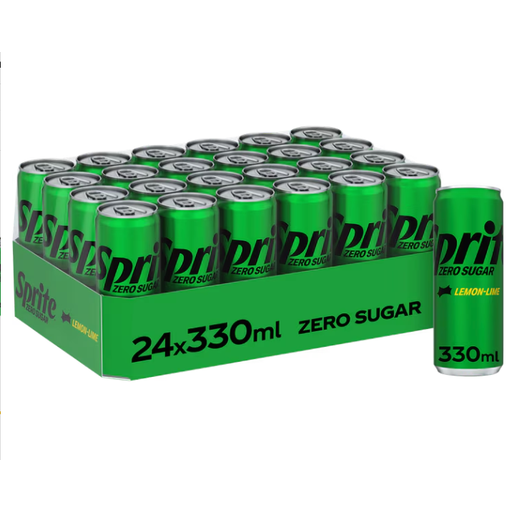
Why this suits the profile: A 24-pack of 330 ml cans provides a manageable stock for home, visitors or a party. The citrus flavour offers an alternative to cola.
The product information states 24 x 330 ml, so the total quantity is clear upfront. Check the current label for precise nutritional values and ingredients.
24 cans of 330 ml; lemon-lime flavour; described as caffeine-free in the product information.

Why this suits the profile: Ideal for anyone who wants a classic cola taste and explicitly wants to avoid caffeine. The packaging is clearly designed for stocking up.
The product name mentions both Zero Sugar and Caffeine Free. This makes the distinction from regular cola zero immediately clear; always check the packaging though.
24 x 330 ml; 0 g sugar per 100 ml according to the product information; caffeine-free variant.
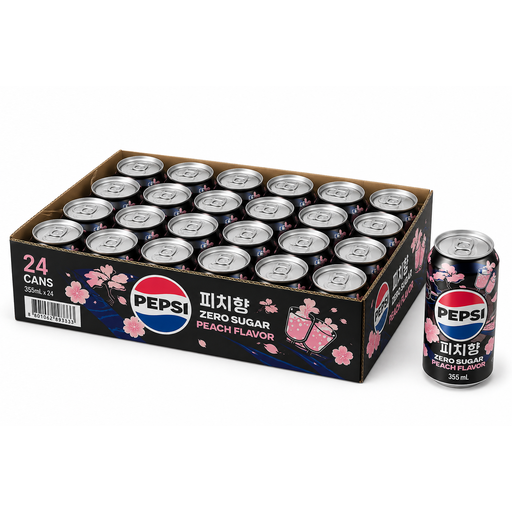
Why this suits the profile: For fans of exotic soft drinks who want to combine a familiar cola base with a peach flavour.
The product information states peach flavour, 24 cans and 0 g sugar per 100 ml. The ingredients list mentions several sweeteners and phenylalanine; check this before purchasing.
355 ml cans; peach-cola flavour; 0 kcal and 0 g sugar per 100 ml according to the provided product information.
We’ve put together a full, up-to-date list of products that fully meet these strict selection criteria and comply with current European safety regulations.
For a party, 330 ml cans are practical: they’re easy to hand out chilled and don’t sit half-empty after opening. For daily use with several people, 1 or 1.5 litre bottles can be more convenient. A product like 7UP Zero Sugar Lemon and Lime in a 1.5 litre bottle suits a shared meal better than individual cans.
If you want something without fizz, look at fruit drinks or flavoured water. Pay extra attention to the percentage of fruit juice, the sugar content and the serving size. Not every fruit drink is low in calories, even if the packaging has a light or natural look.
Look for an explicit label such as “caffeine free”. Also check the ingredients list. Cola zero without this label may still contain caffeine. Lemon-lime soft drinks are often described as caffeine-free in the product information, but the label remains the final authority.
Unopened soft drinks should generally be stored in a cool, dry place away from direct sunlight. The exact date is on the packaging. Once opened, the drink must be kept refrigerated and used within the recommended period. With cans, opening per portion is practical; with large bottles, a good seal is important to minimise carbonation loss.
That depends on the price per litre, delivery costs and pack size. A 24-pack can be good value if you drink it regularly, but a smaller pack prevents you from building up too much stock. So compare the total volume, price per litre, flavour and storage space before you order.
