
Vandaag of morgen in huis

Kwaliteit gegarandeerd

Welkomstaanbiedingen ontgrendelen: GRATIS bezorging | Tot 80% korting | Gratis 30 dagen JoyPlus-proefperiode
Download de app
Buying socks might seem straightforward, but a poor choice often only becomes apparent after a few hours of wear. A cuff that slips down, seams that press against your toes, or material that feels warm and damp can quickly make a pair of socks impractical. Even a large multipack isn't automatically good value if the fit doesn't suit your shoes and how you use them.
In this guide from the Joybuy Product Recommendation Officer, you'll discover what to look for in everyday socks, sports socks, running socks, children's socks and no-show socks. The recommendations are based on verifiable information such as material, size, length, number of pairs and care instructions.
A high cotton content sounds appealing because of its soft feel and breathable nature. However, the fibre blend alone doesn't determine wearing comfort. Polyester and polyamide can contribute to durability, while elastane is needed for stretch and a snug fit.
So don't just focus on "100% cotton", but also consider:
The Utree men's socks, for example, are described as cotton with elastic fibres for the fit. The antibacterial properties mentioned are a claim from the brand's product description and should not be taken as an independently verified result.
Ankle socks and no-show socks are handy under trainers and low shoes. However, they offer less coverage around the ankle than crew or mid-cut socks. For walking boots, higher sports shoes or footwear that rubs against the ankle, a longer sock can be more practical.
For running and training, it's wise to check whether the sock:
A sock multipack is practical for families and daily use, but always check the size. Products in size 39-42 are not the same as socks for size 43-46. For children's socks, the age indication can also vary between brands. So look at the EU size and, where available, the size chart.
A good sock fits snugly without constricting your foot. A sock that's too big can create folds around the toes or heel. A sock that's too small can pull at the cuff and wear out more quickly.
For adults, sock size 39-42 is a common category. Still, check the product page, as the size breakdown can differ between brands and models. For children, pay particular attention to the specified size variant, such as size 4 or 5 for Levi's children's socks.
A reinforced heel and toe are useful details for everyday use. They can offer extra protection in areas that experience a lot of friction inside shoes, but the actual lifespan also depends on washing, drying and how often they're worn.
Cotton socks generally feel soft and are often chosen for the office, school and casual wear. A blend with polyester, polyamide or elastane can support elasticity and shape retention.
For sports socks and running socks, a synthetic blend is often used. According to the product description from Salomon, the Speedcross models are designed with moisture management and quick-drying properties. This is information from the brand about the product and not an independent guarantee for every wearer.
A thicker sole can be comfortable during training or with shoes that have a bit of extra room. In snug-fitting trainers, a thick sports sock can actually create pressure. The Nike Everyday Cushion models mention extra cushioning under the heel and forefoot. The 3-packs consist of 75% cotton, 18% polyester, 6% polyamide and 1% elastane.
For everyday use, a thinner sock is often more versatile. For intensive training or running, a model with a padded sole and support around the foot can be better suited to the activity.
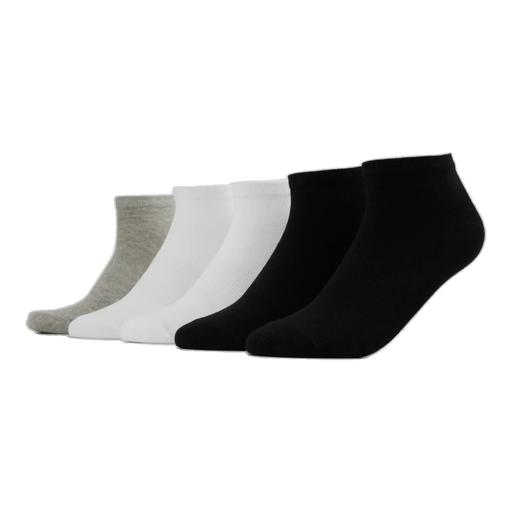
Why this fits: A practical choice for everyday wear under trainers, loafers and other low shoes.
The size 39-42 and material blend of 75% cotton, 23% polyester and 2% elastane are clearly stated.
Five pairs, low cut and a choice of colours including black, white and grey.
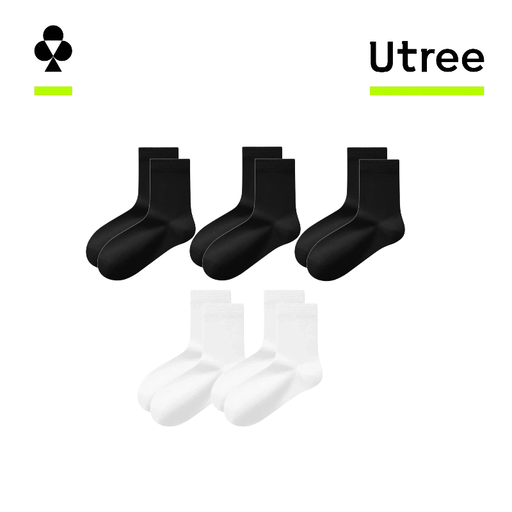
Why this fits: The mid-calf length and business-friendly colours suit the office, commuting and leather shoes.
Check the exact size variant on the product page; the displayed size 24-26 does not automatically follow the EU shoe size.
According to the product description: cotton, a seamless toe and a 3D heel shape.
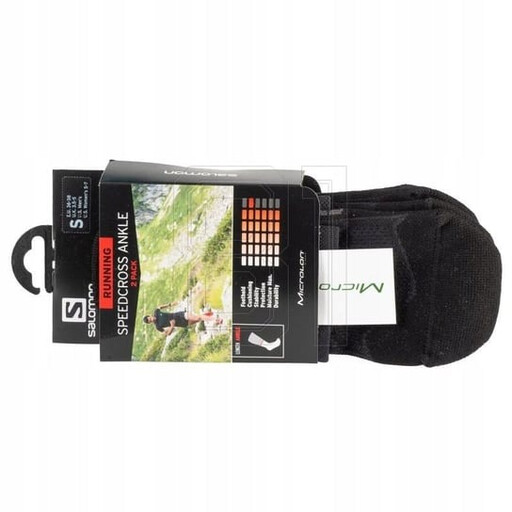
Why this fits: A unisex 2-pack for running, with ankle length and a padded sole according to the product information.
The product page states the material, size 39-41 and care instructions. Check whether the ankle length suits your running shoes.
Polyester, nylon and elastane; according to Salomon, designed for moisture management and quick drying.
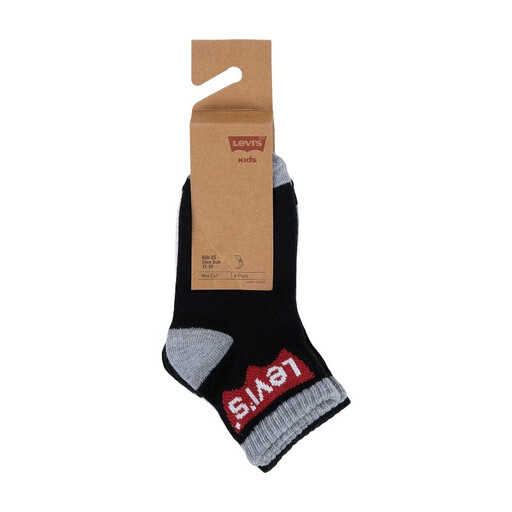
Why this fits: Six pairs make laundry planning easier for children who are active every day.
Choose the right variant, as low-cut and mid-cut have different heights and coverage.
According to the product description: cotton, polyester and elastane, plus a reinforced heel and toe.
Browse a current selection of affordable socks and compare size, colour, length, material and number of pairs before you order.
Wash socks according to the label. Urban Classics advises washing various models at 30 °C and not tumble drying. Nike states for the Everyday Cushion models a warm machine wash and tumble drying on low heat. Incorrect care can affect elasticity and shape.
That depends on your washing routine and activities. For everyday use, a multipack of five or six pairs can be practical. If you play sports or run, you'll benefit from a few separate sports socks, so that everyday socks aren't used for every activity.
That varies by model and shoe. No-show socks are mainly intended for low shoes and casual use. For running, it's better to check whether the product description mentions moisture management, a secure fit and sufficient coverage. An ankle sock like the Salomon Speedcross is specifically described as a running model.
Choose the right size, avoid washing at too high a temperature when the label doesn't allow it, and only use the tumble dryer according to the instructions. Also, rotate your socks. A reinforced heel and toe can help with everyday use, but are no guarantee of a fixed lifespan.
