
People who buy several rolls at a time
If you keep rusks in stock for breakfast or lunch, it helps to compare rolls with the same number of rusks first. Albert Heijn, Jumbo and ALDI Nederland, for example, list plain rusks in rolls of 13.


For a stock of plain rusks, 13-piece rolls are a sensible starting point if you want to compare packs with the same number of rusks. Choose wholemeal or seeded rusks if that’s more important to you, and only buy as many rolls as you can use before their best-before date and store in a dry place.
If you keep rusks in stock for breakfast or lunch, it helps to compare rolls with the same number of rusks first. Albert Heijn, Jumbo and ALDI Nederland, for example, list plain rusks in rolls of 13.
Keeping a stock only works for you if you can protect the rolls from moisture. Jumbo recommends storing its plain rusks in a cool, dry, dark place; PLUS also advises protecting its plain variety from heat.
If you’re looking for wholemeal rusks, seeds or a particular fibre content, compare the exact varieties. When it comes to allergens, check the label on every roll you choose: the ingredients listed vary from product to product.
First, decide which feature matters most to you. Then check the contents, storage instructions and ingredients of the rolls you’re planning to buy.
| What to consider | What should you check? | Who does this matter to? |
|---|---|---|
| Comparable pack sizes | Check the number of rusks and the weight per roll; compare packs on a like-for-like basis. | If I buy several rolls, I don’t want to treat packs with different contents as if they were the same. Around 36% of consumers prioritise being able to compare them like for like. |
| Keeping them dry | Check the best-before date and storage instructions on the roll; make sure you can seal an opened pack properly. | When keeping a stock, I want to stop opened rusks going soft before I’ve finished them. Around 29% of consumers give storage the highest priority. |
| Ingredients | Compare the fibre per 100 g and read the ingredients and allergen information for the exact variety. | I’d rather choose a variety that suits my preference for wholemeal or seeds, or avoids ingredients I need to avoid. For around 21% of consumers, the ingredients are the main consideration. |
| Rusks instead of bread | Don’t assume rusks are equivalent to bread for iodine intake; consult the Netherlands Nutrition Centre’s information if needed. | If rusks often take the place of bread, I want to know whether that affects my iodine intake. Around 14% of consumers put this question first. |
Plain, wholemeal and seeded varieties may have different weights or numbers of rusks. So the roll itself isn’t enough to go by when you’re putting together a stock.
Check the number of rusks or the weight, and compare different types of rusks separately.
Moisture can make rusks go soft. An opened roll also needs attention if you’re working your way through several rolls.
Check the best-before date on each roll, store your stock according to the packaging and seal opened packs properly.
Ingredients, fibre content and allergens vary by product. For example, PLUS seeded rusks list sesame, while Jumbo’s plain rusks list wheat, gluten and egg.
Read the label on the exact variety before stocking up, even if you already know the brand.
The Netherlands Nutrition Centre states that rusks contain no iodine. So rusks don’t necessarily play the same role in your meals as bread.
Check the Netherlands Nutrition Centre’s information if you want to find out how rusks fit into your usual diet.
Albert Heijn lists plain, wholemeal and multiseed varieties in its rusk range.
Jumbo sells Plain Rusks, among other products, in rolls of 13.
PLUS lists both plain rusks and a variety with seeds and kernels.
Goud Gebakken is an ALDI own-brand range that includes plain and wholemeal rusks.
Bolletje offers regular and wholemeal rusks, as well as varieties in different packaging.
These Joybuy products illustrate three options for stocking up: wholemeal rusks, multiseed rusks and plain rusks. Compare the stated contents and check the packaging of the variety you choose.
 No image available
An option if you’re specifically looking for wholemeal rusks to keep in stock.
The roll contains 13 rusks. Joybuy lists 11 g of fibre per 100 g for this Bolletje variety; check the label on the exact pack for allergen information.
 No image available
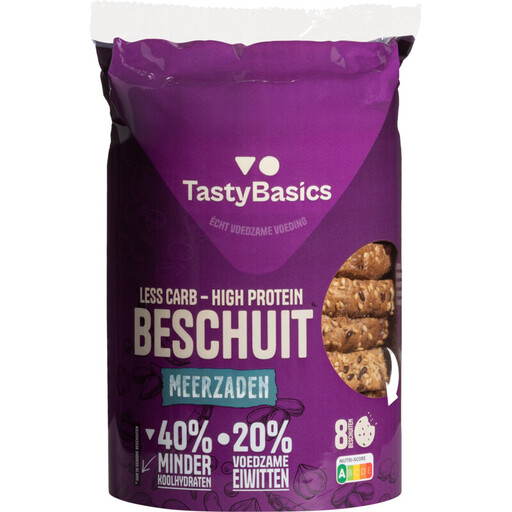
An option if you’re looking to stock up on rusks made with several types of seeds.
The pack states a weight of 184 g. Check the number of rusks and the ingredients on the pack you choose if these are important to your decision.
 No image available
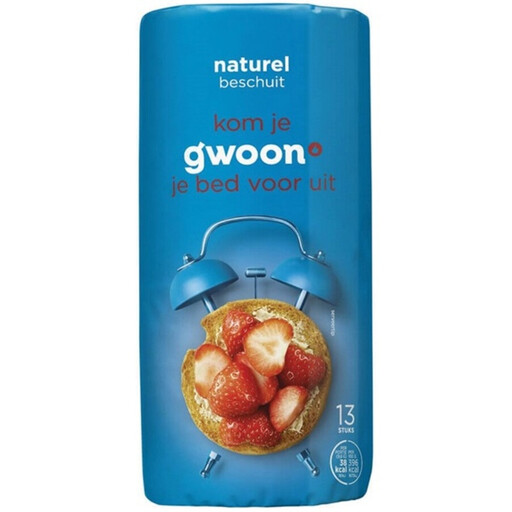
An option if you’re looking for everyday plain rusks.
The pack states a weight of 125 g. Check the number of rusks and read the label on the exact roll if ingredients or allergens are important to your choice.
Compare rolls with the same number of rusks, or use the stated weight as a common basis. Also check that you’re comparing like with like: plain, wholemeal and seeded rusks differ in their ingredients too.
Store the rolls according to the instructions on their packaging and protect them from moisture. Jumbo recommends keeping its plain rusks in a cool, dry, dark place; seal opened packs properly and check the best-before date on each roll.
Read the allergen information for every specific variety you plan to buy. Jumbo and PLUS plain rusks list wheat, gluten and egg; the PLUS seeded variety also lists sesame.
Choose one of these varieties if you specifically prefer wholemeal or seeded rusks. Then compare the ingredients, the stated fibre per 100 g and the allergens; don’t rely on the variety name alone.
No, don’t assume that: the Netherlands Nutrition Centre states that rusks contain no iodine. If rusks often replace bread in your diet, you can check with the Netherlands Nutrition Centre to find out what role bread plays in iodine intake.