
Vandaag of morgen in huis

Kwaliteit gegarandeerd

Welkomstaanbiedingen ontgrendelen: GRATIS bezorging | Tot 80% korting | Gratis 30 dagen JoyPlus-proefperiode
Download de app
A robot vacuum cleaner can remove dust, crumbs and pet hair every day, without you having to push a stick vacuum or drag a hose around the house. But buying a robot vacuum cleaner isn’t just about choosing the model with the highest pascal rating. It needs to suit your floors, layout, pets and willingness to carry out maintenance.
Dutch households with hard floors, carpets and pets often look at suction power, mopping, noise levels and app controls. Read on to find out which specifications really make a difference and which marketing claims are worth checking before you order.
A higher suction power rating sounds appealing, but it doesn’t tell you everything about how well a vacuum will clean your home. The brush design, seal, filter and route planning all play a part too. A robot vacuum cleaner with a high stated suction power may be less practical if hair gets tangled around the brush or it misses corners.
So make sure you also check:
A robot vacuum cleaner with a mopping function is especially useful for everyday cleaning of tiles, vinyl, laminate and other suitable hard floors. It won’t remove stubborn stains as effectively as mopping by hand.
If you have carpets, look for an automatic mop lift. A robot vacuum cleaner with a mopping function and automatic mop lift can raise the mop when it detects a carpet. Be sure to check the stated lift height and the type of carpet you have. A low mop lift may not be suitable for thick or deep-pile carpets.
A robot vacuum cleaner with a self-emptying dock means you don’t have to empty the dust container every day, but it doesn’t eliminate maintenance altogether. Dust bags or containers still need to be replaced or emptied. Models with a mopping function also need their mop pads, water tanks and sensors cleaned regularly.
Before you order, check:
A robot vacuum cleaner with LiDAR navigation uses lasers to map your home. This usually allows it to clean in a more systematic way than models that move around randomly. You can then use the app to set rooms, cleaning times and no-go zones.
LiDAR won’t automatically prevent every collision. Cables, toys and loose clothing can still get caught. A combination of laser mapping and additional sensors is useful in a busy home, but it’s best to clear the floor before you start.
For a robot vacuum cleaner for pet owners, the right main brush and an easily accessible filter are just as important as the stated suction power. Hair can build up around the brush roller, so choose a model with an anti-tangle feature and check how easy it is to remove the brush.
A powerful robot vacuum cleaner is useful for picking up crumbs and pet hair from hard floors and carpets, but its actual performance also depends on the floor surface, the mode you choose and battery life.
A quiet robot vacuum cleaner is handy when you’re working from home, the children are asleep or you want to run it in the evening. Check whether the stated noise level applies to quiet mode or the maximum suction setting. A self-emptying dock may be noisier for a short time than the robot is while cleaning.
A robot vacuum cleaner with an app usually lets you set cleaning times, select rooms and add no-go zones. Check in advance that the app is compatible with your phone and that you can use its features without a voice assistant.
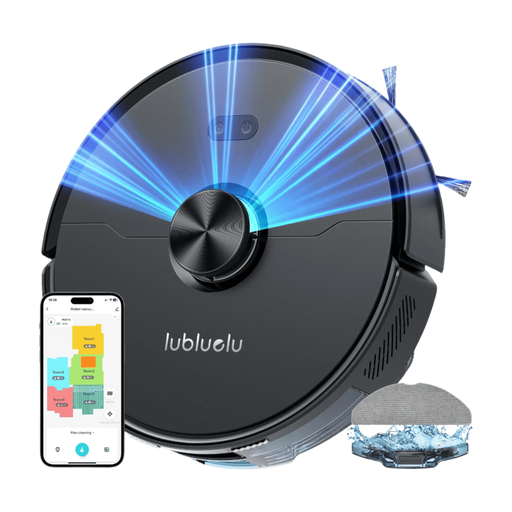
Why it suits this profile: This model combines vacuuming and mopping with laser navigation, app controls and a stated battery life of up to 180 minutes. It’s a practical choice for households looking for one device to handle everyday cleaning.
The product description mentions map-based navigation, an app and a mopping function. Check whether 4,000 Pa and a maximum noise level of 70 dB are right for your floors and when you plan to use it.
3-in-1 use, laser navigation, coverage of up to 300 m² according to the product information, and a base station with dust and water tanks.
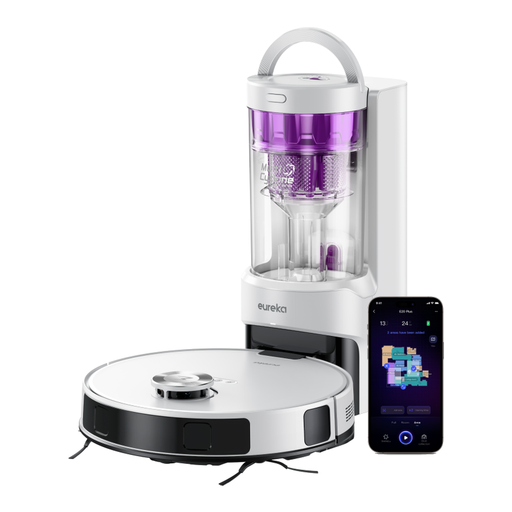
Why it suits this profile: According to the product description, the E20 Plus is designed for homes with pets, hard floors and carpets. App controls, LiDAR and a large-capacity dust container make it a good fit for more frequent everyday use.
The product information mentions an anti-tangle system, carpet detection and an automatic mop lift of 10 mm. Check whether this lift height is sufficient for your carpet.
According to the product description: 8,000 Pa suction power, 3D obstacle avoidance, LiDAR mapping and a 2-litre dust container.
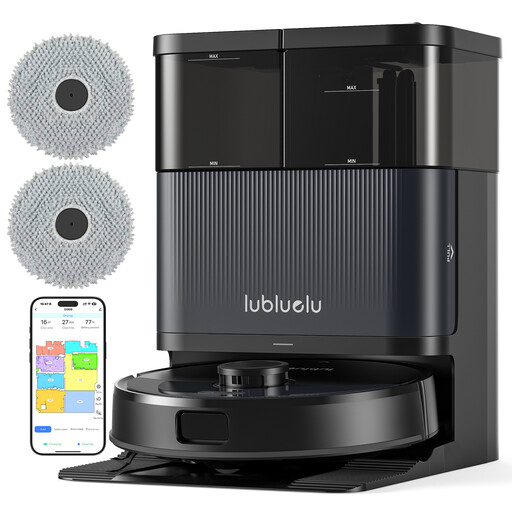
Why it suits this profile: This model is designed for an automated cleaning routine that includes vacuuming, mopping, app controls and an all-in-one station. It’s a good fit for families and pet owners who want to empty the vacuum less often by hand.
The product description mentions carpet detection, automatic mop lifting and a station. You’ll still need to maintain the mop, brushes, sensors and dust bag as instructed in the manual.
According to the product information: up to 10,000 Pa suction power, a stated noise level of 55 dB, LiDAR mapping and automatic mop lift.
We’ve put together a complete, up-to-date list of products that meet these strict selection criteria and the applicable European safety regulations.
Clean the dust container, brush and sensors regularly. If you have pets that shed a lot, you may need to do this more often. Remove and dry the mop pads after use. Always follow the manual and switch off the device before carrying out maintenance.
Its lifespan depends on how often you use it, how well you maintain it and whether replacement parts are available. In particular, check whether filters, side brushes, mop pads and main brushes are sold separately. In the EU, consumers are entitled to a minimum legal guarantee of two years; additional rights may apply under national law.
As well as the purchase price, you may need to pay for electricity, replacement filters, brushes, mop pads and dust bags. A model with a bagless station can help keep ongoing costs down, while a station with a bag is often cleaner and easier to empty. So compare not just the price of the device, but also its longer-term maintenance costs.
