
Vandaag of morgen in huis

Kwaliteit gegarandeerd

Welkomstaanbiedingen ontgrendelen: GRATIS bezorging | Tot 80% korting | Gratis 30 dagen JoyPlus-proefperiode
Download de app
Rice noodles are versatile, quick to prepare and work well in stir-fries, soups, salads and hotpot. Yet it’s not always easy to pick the right variety. Packaging often mixes up terms like rice sticks, rice vermicelli, Vietnamese rice noodles and Thai rice noodles. And when you see “gluten-free” on the label, you still need to check the ingredients list.
If you buy rice noodles without comparing them, you’ll usually run into three problems:
The width of rice noodles largely determines their bite and how they absorb sauce or broth.
Bear in mind that the name doesn’t always tell you the exact width. So check whether the packaging states, for example, rice noodles 3 mm, rice noodles 5 mm or rice noodles 10 mm.
Many rice noodles are made from rice flour and water. Other products may contain tapioca, modified starch or salt. This can affect the elasticity, cooking time and texture.
For shoppers looking for gluten-free noodles, the ingredients list is more important than a general product name. In the available product information, several varieties state they contain none of the 14 major EU allergens. Still, always check the current packaging, warnings about cross-contamination and preparation instructions before using the product.
A product made with only rice, water and possibly tapioca can fit into a vegan diet, but again, check the label. A vegan certification or explicit mention gives more certainty than a general assumption.
A 400 g pack is practical for a household and for several meals. For catering, large families or stocking up your cupboard, a box containing multiple packs can be better value. Farmer Brand Farmer Rice Stick noodles 3mm, for example, comes as 34 packs of 400 g.
The preparation method varies from product to product:
Always follow the instructions on the packaging. Product descriptions may mention general cooking times, but the actual packaging is what you should rely on.
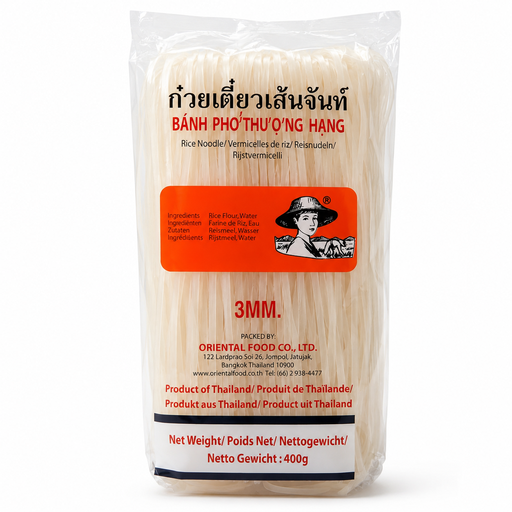
Why this fits the profile: The 3 mm width is versatile enough for Pad Thai, stir-fries and soups. The 400 g pack is a manageable size for a first purchase.
The stated width makes the intended use clearer than a general label like “Asian noodles”. According to the product information, it is made from rice flour.
3 mm wide, 400 g per pack and, according to the product information, free from the 14 major EU allergens.
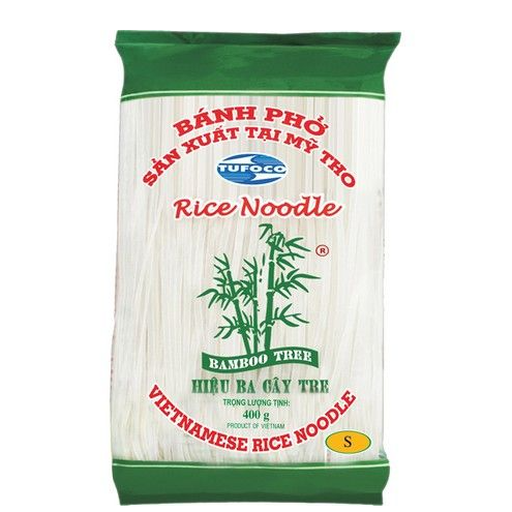
Why this fits the profile: The fine 1 mm variety suits Vietnamese dishes such as light broths, bun bowls and salads where a delicate noodle is preferred.
The product information states its origin as Vietnam and lists the ingredients as rice, tapioca and water. This lets you know in advance what type of texture to expect.
1 mm thickness, 400 g pack and, according to the product information, none of the 14 major EU allergens.
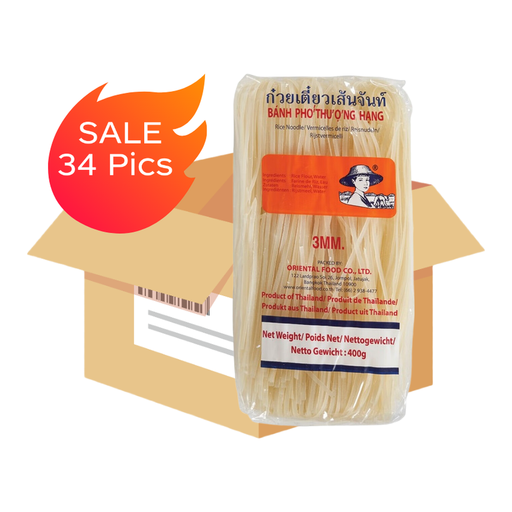
Why this fits the profile: The box of 34 packs of 400 g is designed for high-volume use, meal planning, families and professional kitchens.
The total quantity is clearly stated. This means you won’t buy a small consumer pack when you use rice noodles regularly.
3 mm wide, rice flour listed as an ingredient and 34 individual packs of 400 g.
We’ve put together a full, up-to-date list of products that fully meet these strict selection criteria and comply with current European safety regulations.
For a Pad Thai, 3 mm or 5 mm rice sticks are often a practical choice. For pho, look at Vietnamese rice noodles around 3 to 5 mm, depending on how much bite you want. Thin rice vermicelli of 1 mm works better in light salads and delicate soups. If you want a firmer result, use rice noodles 10 mm in stir-fries or hotpot.
Rice noodles can be gluten-free if they contain no wheat or other gluten-containing ingredients. Always check the ingredients list and allergen information on the actual packaging. “Rice noodle” alone is not a substitute for a full check on cross-contamination.
It varies by thickness and brand. Some thin varieties are ready after a few minutes of boiling, while others need to soak for 10 to 20 minutes first and are then heated briefly. Follow the preparation instructions for the specific product to avoid the noodles becoming too soft.
For Pad Thai, rice sticks of 3, 5 or 10 mm are often used. Thinner noodles absorb sauce quickly and cook more quickly. Wide rice sticks give more bite and hold up better in a dish with lots of vegetables, tofu or other ingredients. When buying, pay particular attention to the stated width and preparation method.
