
Vandaag of morgen in huis

Kwaliteit gegarandeerd

Welkomstaanbiedingen ontgrendelen: GRATIS bezorging | Tot 80% korting | Gratis 30 dagen JoyPlus-proefperiode
Download de app
Buying rice noodles seems simple enough – until you’re standing in front of a shelf or browsing a webshop full of Asian noodles, rice vermicelli and instant meals. A thin noodle for a salad behaves very differently from a wide noodle for pad thai or a sturdy variety for hotpot. The ingredients, portion size and allergen information also vary considerably.
As a Joybuy Product Recommendation Officer, I filter product information based on practical points. This helps you see more quickly which noodles suit your cooking, and stops you from paying for a pack that isn’t right for the dish you want to make.
Packaging often shows measurements like 1 mm, 3 mm, 5 mm or 10 mm. This is no small detail. Rice vermicelli at 1 mm softens quickly and works well with Vietnamese noodles, bun bowls, salads and fresh spring rolls. A wide rice stick at 10 mm holds more sauce and gives a firmer bite in stir-fry dishes.
If you buy a thin noodle for pad thai, you could end up with a soft, easily broken texture. Conversely, a thick noodle can be too heavy for a light pho broth.
Not every Asian noodle is rice-based. Glass noodles, such as Longkou vermicelli, are usually made from mung bean starch. Other instant vermicelli can be primarily sweet potato starch.
Always check the ingredients list. A product may look like rice vermicelli, but have a different texture, cooking time and flavour absorption.
With instant rice noodles, the weight sometimes consists largely of sauce and topping sachets. The Hao Huan Luo Luosifen at 375 g, for example, contains 100 g of dry noodles and 275 g of seasoning, broth and toppings. The product information lists peanuts, soya and sulphites among other things.
This makes such a kit convenient, but less suitable if you’re looking for plain noodles or need to avoid certain ingredients. With composite products, don’t just read the front – check all the sachets and warnings too.
Use this guide as a practical starting point:
The uses mentioned are based on product descriptions. The desired texture also depends on soaking, cooking and the preparation in your recipe.
Some products consist of rice, water and starch. According to the product information, Bamboo Tree Rice Noodles contain rice, tapioca and water, and do not list any of the 14 major EU allergens. Farmer Brand Rice Stick Noodle 3 mm lists rice flour as an ingredient and also states it contains none of these allergens.
Please note: you should not automatically assume gluten-free based on the name alone. Sunlee Longkou Vermicelli is made from mung bean starch, but the product information states it may contain soya and gluten from wheat. If you have an allergy or coeliac disease, always check the current label and packaging.
Dried rice noodles often need to be soaked or briefly cooked. According to the product description, Sunlee Rice Stick Straight 3 mm requires around 3 to 4 minutes of cooking. Gia Bao phở tươi 4 mm is intended for pho and other Vietnamese soups. For instant products, preparation may involve soaking in boiling water for 5 to 6 minutes, as with Bai Jia Instant Vermicelli.
Also look at the net weight:
The following selection is based on verifiable data such as thickness, ingredients, weight, preparation and listed allergens.
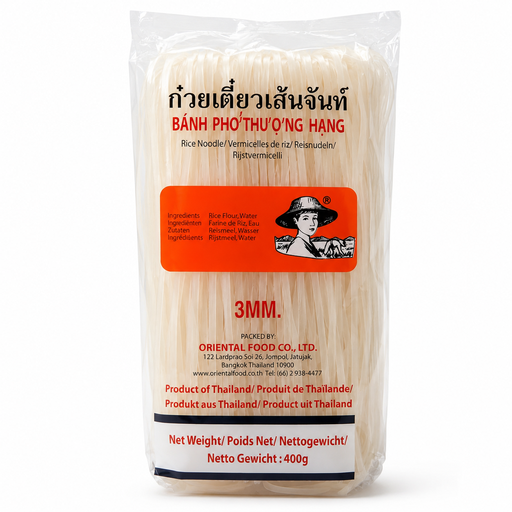
Why This Fits Their Persona: A simple 3 mm noodle for anyone starting out with stir-fries, soups or rice noodle salads at home.
The thickness and packaging are clearly stated. The ingredients list shows rice flour and none of the 14 major EU allergens.
400 g pack; 3 mm width; suitable for multiple cooking methods.
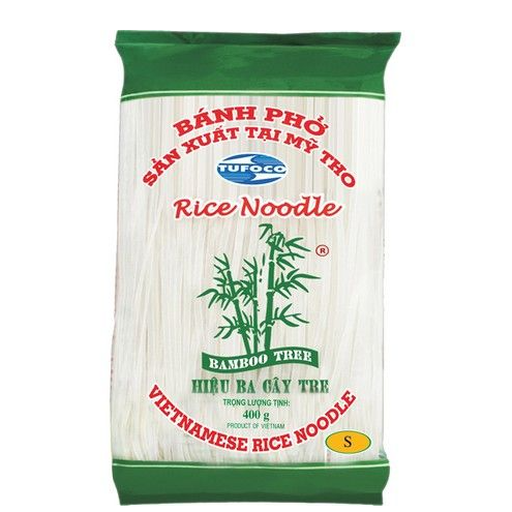
Why This Fits Their Persona: For those looking for thin Vietnamese noodles for bun, light broth, salads and fresh spring rolls.
The product information states 72% rice, a thickness of 1 mm and a clear application for various dishes.
400 g; rice and tapioca as main ingredients; none of the 14 major EU allergens listed.
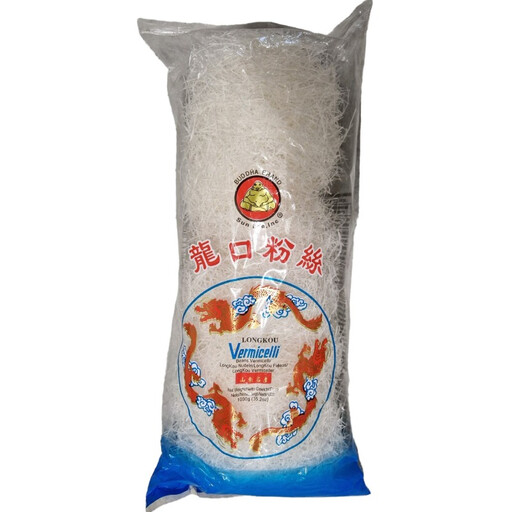
Why This Fits Their Persona: For frequent home cooks, families or lovers of hotpot, Chinese noodles, soups and cold salads.
This is glass vermicelli made from mung bean starch, not a rice noodle that is only called one. Do check the note about possible soya and gluten contact.
Bulk pack of 1,000 g; suitable for hotpot, stir-frying, soup and salad; 0 g fat according to the product table.
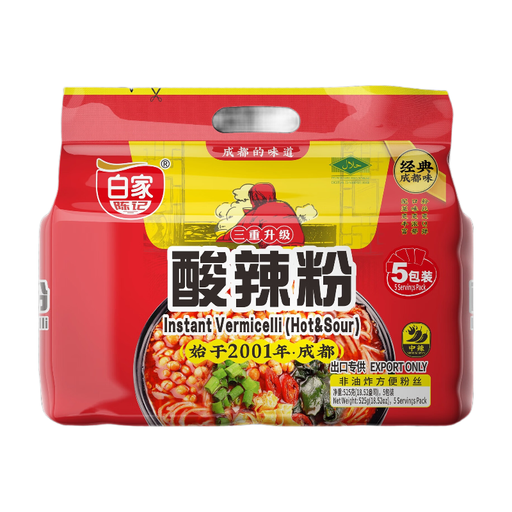
Why This Fits Their Persona: For quick meals with a sour and spicy kick, without having to gather multiple sauces and toppings yourself.
The set contains five portions of 105 g and the instructions mention 500 ml of boiling water and 5 to 6 minutes of soaking. The sachets make the contents easy to check.
525 g total; five individual portions; vermicelli based on sweet potato starch; chilli oil and vinegar included.
Browse a current selection of Chinese rice noodles and compare packaging, ingredients, thickness and preparation method before you order.
For pho, wide, soft Vietnamese noodles such as Gia Bao 4 mm make sense. For pad thai, you’d be better off looking at 3 mm or wider rice sticks. For hotpot and salads, glass noodles often work better than rice sticks.
No. Some varieties consist solely of rice, tapioca or other gluten-free starches, but composite instant products may contain wheat, soya or sulphites. Always check the allergen information on the current packaging. Even with possible cross-contamination, the label is what counts.
For pho, soft, relatively wide Vietnamese noodles are typically used. According to the product description, Gia Bao Rice Noodle Phở Tươi at 4 mm is intended for pho and other Vietnamese soups. A thin rice vermicelli can become too soft more quickly in broth.
Store dried noodles in a cool, dry place away from direct sunlight. Seal the packaging well to limit moisture and contamination. For fresh or pre-cooked products, follow the specific instructions on the pack and consume within the stated time after opening. The information on the packaging remains the best guide for shelf life and use.
