
Vandaag of morgen in huis

Kwaliteit gegarandeerd

Welkomstaanbiedingen ontgrendelen: GRATIS bezorging | Tot 80% korting | Gratis 30 dagen JoyPlus-proefperiode
Download de app
Buying a new refrigerator seems straightforward until you delve into the specifications. Manufacturers use a lot of marketing terms that create more confusion than clarity. The result? You pay for features you don't need or, worse, end up with an appliance that becomes an irritation after just one year. As a Product Recommendation Officer at Joybuy, I'll help you make the right choices based on facts, not hype. Let's look at the three most common pitfalls when buying a refrigerator.
A refrigerator that takes up a lot of space in your kitchen doesn't automatically have a lot of internal storage. Due to thick insulation walls, the net capacity can be surprisingly disappointing. You're paying for empty space and a higher energy bill, while struggling to fit your weekly groceries.
The term 'No Frost' is often used, but not all systems are created equal. Some models have 'Low Frost', which reduces ice formation but doesn't prevent it completely. This means you'll still need to defrost manually a few times a year. True No Frost technology completely prevents ice build-up in the freezer section, saving you time and effort.
The purchase price is only part of the story. A cheap refrigerator with a poor energy label can cost you hundreds of pounds extra in electricity in the long run. An energy-efficient refrigerator is an investment that pays for itself.
To avoid a bad buy, focus on the specifications that truly matter. These are the three most important factors to check before you make a decision.
The required capacity depends on your household. A miscalculation can lead to a lack of space or unnecessary energy consumption.
Since 2021, the energy label runs from A (very efficient) to G (least efficient). A model with energy class C can save you a significant amount on your annual energy bill compared to a model with class F. Pay attention to the annual energy consumption in kWh on the label; this gives the most concrete indication of the costs.
In an open-plan kitchen or a small home, a noisy refrigerator can be a constant source of irritation. A quiet refrigerator produces less than 38 decibels (dB). Models around 35 dB are whisper-quiet and ideal for a peaceful living environment.
Based on these objective criteria, we have selected a number of models that suit different needs and situations.
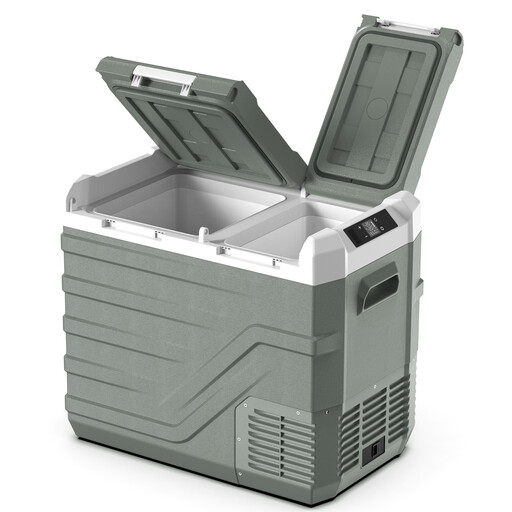
Why This Fits Their Persona: Ideal for campers, truck drivers, or a day out on the boat. This portable 12v cooler runs on your vehicle's battery and a standard wall outlet, giving you chilled drinks and fresh food anywhere.
This is a specialised product. Instead of a clumsy, run-of-the-mill solution, this compressor cooler provides powerful cooling that isn't dependent on the outside temperature.
Two separately controllable temperature zones (-20°C to 20°C) and built-in battery protection to prevent draining your vehicle's battery.
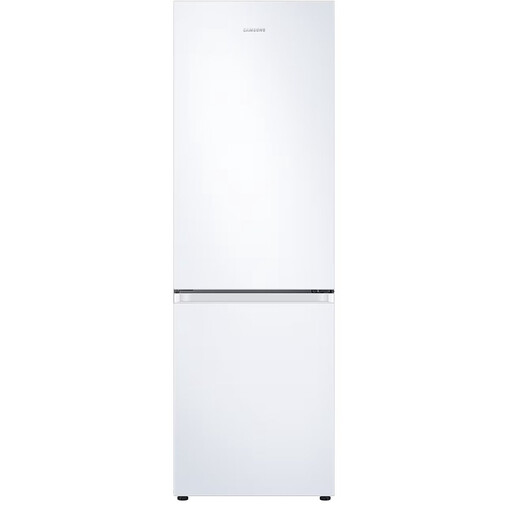
Why This Fits Their Persona: Families need space and flexibility. With 344 litres, this Samsung refrigerator offers ample capacity for weekly groceries. The Wi-Fi connectivity with the SmartThings app is practical for monitoring energy consumption.
According to Samsung, its SpaceMax technology allows for thinner walls, maximising internal capacity without increasing the external dimensions. This directly addresses the pitfall of 'big on the outside, small on the inside'. The model also features full No Frost.
Large net capacity (344L) in a standard size. It is also a quiet refrigerator with a noise level of just 35 dB.
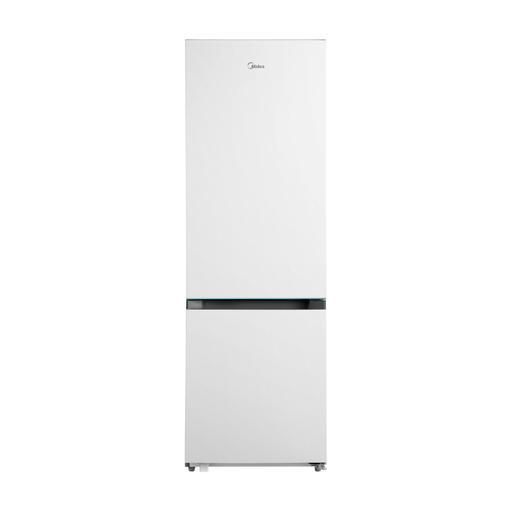
Why This Fits Their Persona: For those with an open-plan kitchen who value a quiet environment, noise is a crucial factor. This Midea refrigerator combines a sleek design with an exceptionally low noise level.
This model tackles the 'hidden' pitfall of noise pollution. At 35 dB, it is one of the quietest models in its class. It also features full No Frost technology, so you'll never have to defrost again.
Very quiet (35 dB, noise class B) and a generous 330-litre capacity. The door is reversible for flexible placement in any kitchen.
We have compiled a complete, up-to-date list of products that fully meet these strict selection criteria.
A refrigerator is considered quiet when its noise level is below 38 decibels (dB). Models with a level of 35 dB or lower are exceptionally quiet and barely audible, making them perfect for open-plan kitchens or studio apartments.
No Frost is a technology that continuously circulates cold, dry air through the freezer section. This completely prevents ice formation, meaning you never have to defrost manually. Low Frost significantly reduces ice build-up, but you will still need to defrost the freezer compartment 1 to 2 times a year. It is often a more budget-friendly option.
A good rule of thumb for the required capacity is:
