
Vandaag of morgen in huis

Kwaliteit gegarandeerd

Welkomstaanbiedingen ontgrendelen: GRATIS bezorging | Tot 80% korting | Gratis 30 dagen JoyPlus-proefperiode
Download de app
Buying plates seems simple, until you have to choose between ceramic, porcelain, metal, plastic or disposable options. A plate can look attractive but still be awkward to store in a kitchen cupboard, unsuitable for the microwave or prone to damage with everyday use.
The right choice depends on your household, the meals you serve and how you use your plates. What matters to a family may be different from what matters to a restaurant, caterer, camper or someone who enjoys serving snacks.
A striking glaze, embossed detail or organic shape can make a plate appealing, but may also make it less practical. Irregular rims, for example, take up more space and can be harder to stack. So always check the diameter, height and stackability.
A breakfast plate measuring around 15 to 20 cm is suitable for bread, fruit or small meals. For a dinner plate, a size of around 25 to 27 cm is usually more suitable. Pasta plates often have a wide rim and a deep centre, while sushi plates are usually flatter and longer.
A dishwasher-safe plate is not automatically suitable for the microwave, oven or freezer. Check the product specifications for each appliance. Plastic, aluminium and some decorative glazes often have restrictions.
For example, the product information for the YumiPLUS 10-inch Blue Willow Leaf Sushi Plate says it can be used in the microwave, oven and dishwasher. The PURECOOK 3-compartment models, by contrast, are listed as not suitable for the microwave. This matters if you regularly reheat meals on the plate.
A set of four or six plates is practical for everyday use, but may not be right for a large family, a party or a catering business. For catering, serving plates, sharing plates and sturdy plastic plates may be more useful. For picnics or camping, lightweight camping plates often make more sense than ceramic ones.
Also check what’s included in the pack. One product may contain a single plate, while another model is supplied in packs of two, three, four, 24 or even 50.
Ceramic plates are versatile and well suited to everyday use. They’re often available in a range of colours, shapes and glazes. For decorative designs, check whether the glaze is dishwasher- and microwave-safe.
Porcelain plates generally have a refined feel and are often used for pasta plates, sushi plates and dinnerware for entertaining. A thinner plate may be lighter, but it still needs to be handled with care to avoid knocks and drops.
Stainless steel plates are practical for children, outdoor use and heavy-duty settings. According to the product information, the PURECOOK models are made from 304 stainless steel. This material specification tells you about the construction, but always check the specific warnings: metal isn’t suitable for the microwave and can get hot when serving hot food.
Plastic plates are lightweight and suitable for certain parties or outdoor activities. Check whether they’re intended for reuse, whether they’re dishwasher-safe and what temperature limits apply. Disposable plates, such as those made from bamboo fibre or aluminium foil, are mainly intended for one-off or temporary use. Check their sturdiness, pack size and disposal requirements.
Don’t just look at the diameter; consider the depth and rim too:
Plates with three or five compartments are practical for portioning. Use the compartments as a serving aid, but don’t treat the design as a medical or nutritional claim.
Before buying, check:
According to the brands’ own product information, some glazes may be better protected if you avoid abrasive sponges, steel wool and metal cutlery. Always check the instructions on the product page and packaging.
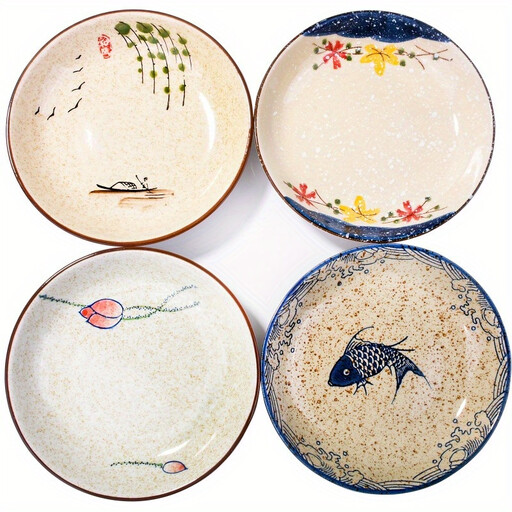
Why it suits this shopper: A set of four ceramic dinner plates is a straightforward starting point for a small household or student accommodation. The round shape is suitable for everyday meals.
The pack size is clearly stated as four pieces, so you won’t accidentally buy a single plate when you’re looking for a small set.
Ceramic construction and Japanese-inspired styling; a good starting point for everyday dinnerware.
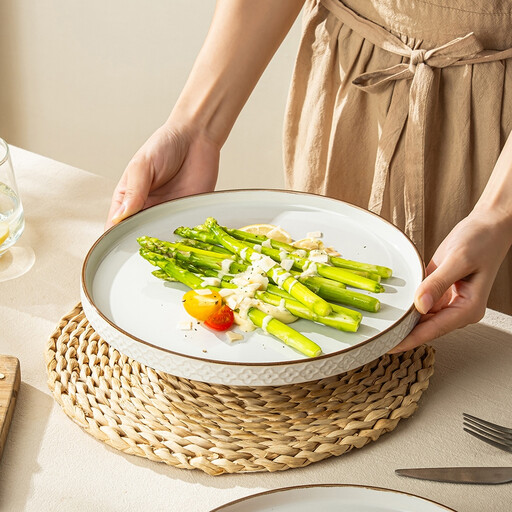
Why it suits this shopper: These generously sized ceramic plates are a good fit for families and dinner parties where you want to serve a main course, salad or pasta together on one plate.
The product information specifically lists use in the microwave, oven, fridge, freezer and dishwasher. Still, check the instructions on the plate before use.
Four 10.25-inch plates; stackable design and embossed decoration according to the product description.
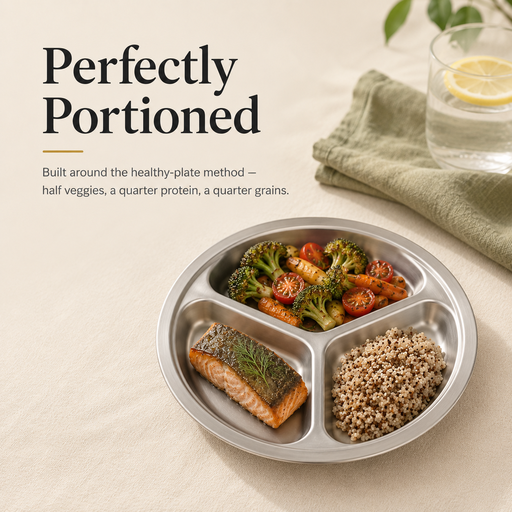
Why it suits this shopper: The three compartments are handy for families, campers, caterers and meals where different items need to be kept separate.
The product information specifies the material and 19.5 cm diameter, and warns that the model must not be used in the microwave.
304 stainless steel, three compartments and a set of two; dishwasher- and steriliser-safe according to the product information.
We’ve put together a complete, up-to-date list of products that meet these strict selection criteria and the applicable European safety regulations.
Ceramic and porcelain plates are popular choices for the home. Pay particular attention to the size, stackability and whether they’re listed as dishwasher-safe. For children, camping or heavy-duty use, stainless steel may be more practical because it doesn’t break easily.
Their lifespan depends on the material, how they’re used and how they’re cared for. Ceramic and porcelain can last a long time if you avoid cracks, chips and sudden changes in temperature. Stainless steel plates are less prone to breaking, but can still get scratched or dented. Replace a plate as soon as it’s damaged.
Not always. Compare the price per plate, pack size, care requirements and suitability for your appliances. A set of plates may seem like good value, but be inconvenient if only some of the models are suitable for the dishwasher or microwave. With disposable plates, how often you use them and how they’re disposed of also matter.
