
Vandaag of morgen in huis

Kwaliteit gegarandeerd

Welkomstaanbiedingen ontgrendelen: GRATIS bezorging | Tot 80% korting | Gratis 30 dagen JoyPlus-proefperiode
Download de app
When you want to buy pens, colour and price are often the first things you consider. However, the tip size, ink type and intended use are what really determine whether a pen remains comfortable to write with. A cheap set may prove awkward for small lettering, while an extensive colour set is not always suitable for everyday note-taking.
This buying guide helps school pupils, students, parents, hobbyists and professionals choose the right fineliners, gel pens, ballpoint pens, brush pens and rollerball pens.
A set with 50 colours may seem appealing, but check whether you will actually use all of them. For school or the office, a few black, blue and red pens are often more practical. For drawing, hand lettering or journalling, a wide range of shades can be particularly useful.
Also pay attention to the packaging. A resealable case or compact box stops pens from coming loose in your bag and protects the tips.
A 0.4 mm fineliner is suitable for small lettering, diagrams, rulers and templates. That does not mean it produces the same line as a 0.7 mm ballpoint pen or a brush pen. If you want to create broad accents, areas of colour or varying line widths, you will need a different type of pen.
Terms such as “quick-dry”, “no bleed” and “smudge-resistant” are product claims. Your actual experience also depends on the type of paper, writing pressure and whether you are left- or right-handed. If possible, test the pen on the paper you use most often. When writing on both sides of the page or on thin paper, the combination of ink and paper is particularly important.
A fine tip is not automatically more comfortable. For longer texts, a slightly broader tip may feel more comfortable.
Water-based ink is common in fineliners and drawing pens. According to the product information, the STABILO point 88 uses odourless water-based ink and has a metal tip casing. According to its product specifications, this makes the pen suitable for writing, drawing, colouring and working with a ruler or template.
Gel ink often writes smoothly and is available in black, blue, red and a range of colours. When choosing gel pens, pay attention to the drying time, particularly if you are left-handed or often move your hand across the text.
Rollerball ink is more fluid. This can provide a smooth writing experience, but the paper may absorb more ink. Check whether the rollerball is suitable for your notebook or planner.
An anti-slip or ergonomic grip is useful when you write for long periods. A retractable pen is convenient for school, the office and travelling, as there is no loose cap to lose. Pens with caps should be closed securely after use. According to the product information, fineliners and brush pens should preferably be stored horizontally or in their case, away from direct sunlight and extreme temperatures.
Small parts are an important consideration for young children. Always check the age information and safety warnings on the product page.
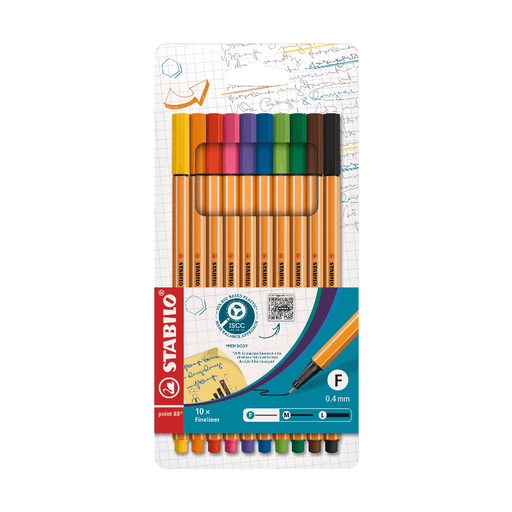
Why this suits the profile: A set of 10 colours offers a manageable starting point for notes, drawing and schoolwork without requiring you to buy a large assortment straight away.
The 0.4 mm tip and resealable packaging make the specifications clear and help prevent pens from becoming loose and drying out quickly.
10 assorted colours, 0.4 mm tip, metal tip casing and suitable for writing, sketching and working with a ruler.
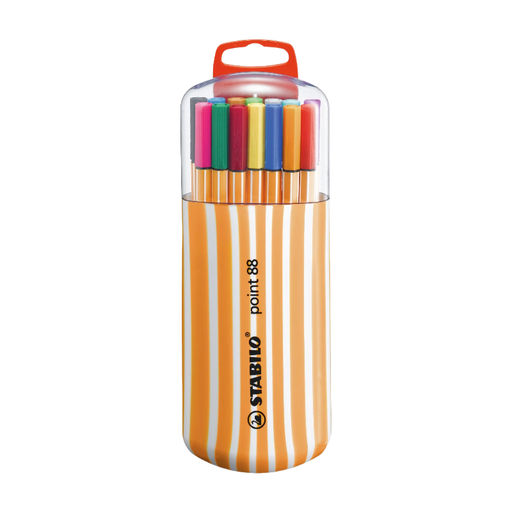
Why this suits the profile: This larger writing set is ideal for journal and planner enthusiasts who regularly work with colour coding, hand lettering and detailed sketches.
The set states a fixed writing width of 0.4 mm and water-based ink. This makes it easier to decide in advance whether the pen is suitable for detailed work.
20 colours, 0.4 mm tip, resealable storage and a design which, according to the product information, is suitable for writing and drawing.
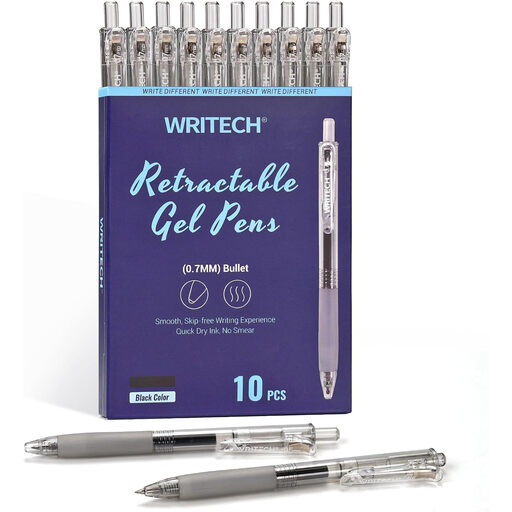
Why this suits the profile: A set of 10 identical black gel pens is practical for intensive writing at school, in the office, during meetings and when taking extensive notes.
The product information lists a retractable tip, anti-slip grip and 0.7 mm tip. You therefore do not have to choose based solely on colour or appearance.
10 black pens, 0.7 mm medium tip, retractable mechanism and quick-drying gel ink according to the product description.
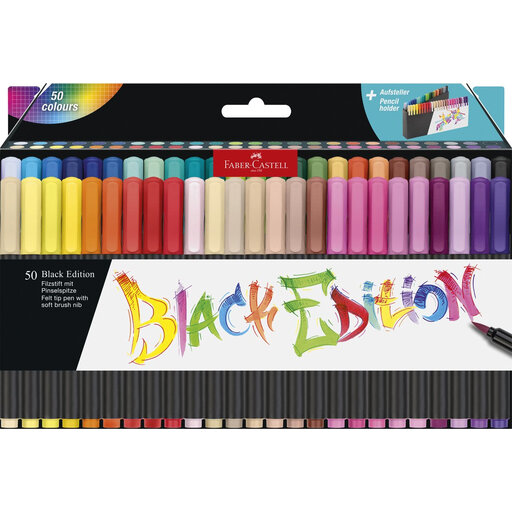
Why this suits the profile: This set is aimed at creative hobbyists, children from the stated minimum age and adults who create lettering and small drawings with varying line widths.
The product information clearly states that the pens are intended for light-coloured paper and not black paper. This helps avoid unrealistic expectations about the surface.
50 brush pens, flexible brush tip for thick and thin lines, washable ink according to the product description and EN 71 certification.
Choose fineliners for precise lines, diagrams and drawing. Gel pens are ideal for smooth writing, colour coding and journalling. Ballpoint pens are practical for everyday use and are often refillable; according to the product information, the STABILO pointball has a 0.5 mm tip, anti-slip grip and refill option. Rollerball pens offer a fluid writing experience and are suitable for notes and sketches, but require more attention when choosing paper.
For hand lettering, brush pens make more sense than standard drawing pens. If you mainly want to replenish your school or office supplies, start by considering usage, tip size and the number of pens in the same colour.
We have put together a complete, up-to-date list of products that fully meet these strict selection criteria and the applicable European safety regulations.
For everyday writing, a ballpoint or gel pen with a 0.5 to 0.7 mm tip is a practical choice. Look for a comfortable grip and choose a retractable model if you often carry the pen with you.
Replace the cap immediately after use and store the pen in a resealable case. Do not leave fineliners in direct sunlight or extreme heat for long periods. For brush pens, horizontal storage helps, according to the product instructions.
0.4–0.5 mm fineliners and coloured gel pens are often used for journalling. Choose fineliners for thin borders and details; gel pens are useful for colour accents and headings. Check the drying time beforehand and test the ink on a corner of the paper to see whether it shows through.
