
Vandaag of morgen in huis

Kwaliteit gegarandeerd

Welkomstaanbiedingen ontgrendelen: GRATIS bezorging | Tot 80% korting | Gratis 30 dagen JoyPlus-proefperiode
Download de app
When you want to buy pens and markers, you soon come across dozens of sets with similar promises. Yet they can differ considerably in tip size, ink type, surface compatibility and maintenance. A gel pen for a planner, for example, works differently from an acrylic marker for glass or wood.
For consumers in the Netherlands, three pitfalls are particularly important:
When buying pens and markers, making the right choice starts with considering what you need them for.
Ballpoint pens usually use oil-based ink. They are practical for forms, diaries, school notes and documents. A 0.7 to 1.0 mm tip produces a medium-width line and feels familiar for many everyday writing tasks.
Gel pens generally write with a noticeably smooth feel and are available in black, blue, red and several other colours. Pay attention to the combination of tip size and drying time. A 0.5 mm tip is useful for compact notes; 0.7 mm provides slightly fuller colour coverage.
For small lettering and boxes, fineliners and gel pens with a fine tip are suitable. A retractable model prevents you from losing a separate cap. Sets with different colours are useful for to-do lists, study notes and bullet journals.
If you want to be able to make corrections, look for erasable pens. According to the product description, the heat-sensitive gel ink can be removed with the rubber tip. Bear in mind that text may fade or disappear when exposed to high temperatures. For this reason, do not automatically use these pens for official documents.
Colour markers and creative marker sets are particularly useful for illustrations, cards and hand lettering. For surfaces such as wood, metal, ceramic, plastic, glass or canvas, an acrylic marker is the more logical choice. Check whether the marker is water-based, which tip shape is included and whether it needs to be activated by shaking and pumping.
For young children, a set of washable dot markers can be practical. Jar Melo’s product information states that they are water-based and feature a sponge-like stamp tip. “Washable” does not guarantee that every mark will disappear completely: take care around clothing and furniture, and clean up spilled ink as quickly as possible.
The measurement in millimetres usually refers to the tip size, but not always to the exact line width on paper. A 0.4 or 0.5 mm tip is suitable for details and small lettering. A 0.7 mm tip is a versatile choice for school, the office and note-taking. A 1.0 mm tip produces a broader, clearly visible line.
A bullet tip writes differently from a needle tip. A needle tip may feel more precise, while a bullet tip is often somewhat more robust for everyday use.
Claims such as “no smudging” or “extra fast-drying” come from the brand’s product information. According to the manufacturer’s own information, this may reduce the risk of smearing; actual performance varies depending on the type of paper and how the product is used.
A large pack is only good value if you actually use the colours and tip type included. Therefore, check:
Many products in this category are not suitable for children under three years of age because of caps, clips or other small parts. Ink can also stain textiles and surfaces. Store writing supplies in a cool, dry place away from direct sunlight, and follow the warnings on the product page.
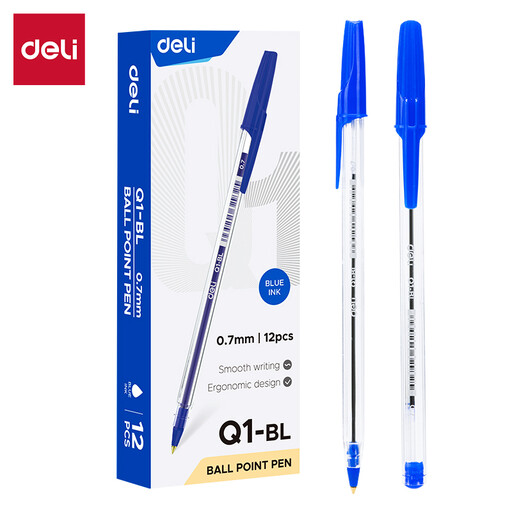
Why it suits this profile: A straightforward set for school, home or an office supply cupboard when you want several ballpoint pens to hand.
The product information clearly states the 0.7 mm bullet tip, blue oil-based ink and pack of 12 pens.
12 pens, 0.7 mm tip and suitable for the office, school, note-taking and documents.
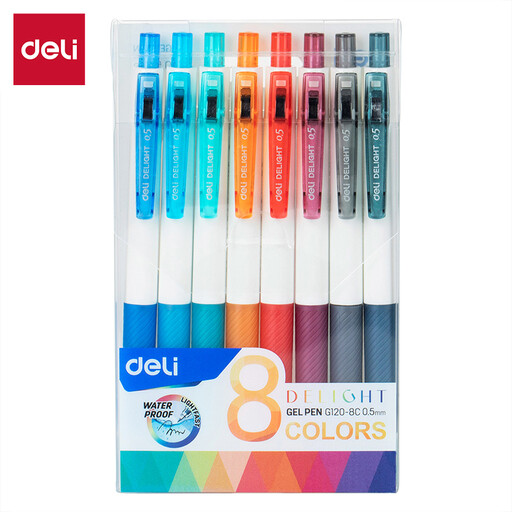
Why it suits this profile: Suitable for journalling, colour-coding and detailed notes thanks to its fine tip and eight colours.
The specifications mention the 0.5 mm needle tip, rubber grip and eight individual colours, so you do not have to judge the product on appearance alone.
Fine line, eight colours, rubber grip and gel ink according to the product specifications.

Why it suits this profile: A targeted choice for creative projects on paper, wood, glass, ceramic, metal, plastic, stone, fabric and canvas.
The product description lists the stated surfaces, two tip sizes and the shaking and pumping action needed before use.
Six colours, 1 mm and 3 mm tips, water-based acrylic ink and an ink-level indicator according to the product information.
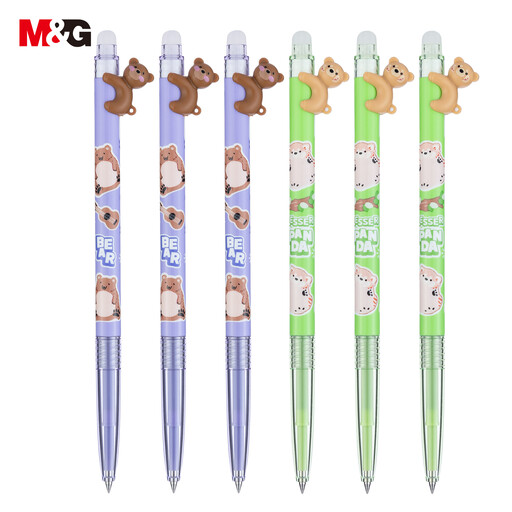
Why it suits this profile: Useful for anyone who regularly edits notes and wants to write with a fine 0.4 mm blue line.
The set states both the tip size and the erasable system. The product information also warns that the ink is sensitive to heat.
Six pens, 0.4 mm fine tip, blue heat-sensitive gel ink and a decorative clip.
We have compiled a complete, up-to-date list of products that fully meet these strict selection criteria and the applicable European safety regulations.
Put the cap back on a capped pen immediately after writing. With retractable pens, retract the tip. Store gel pens and markers according to the product instructions, usually horizontally and away from heat and direct sunlight.
For a class or office, it is better to buy a set with a clearly stated quantity and colour selection. For creative projects, it is wiser to check first whether the ink adheres to your chosen surface. Test a new marker on a scrap piece before using it on a visible surface.
Also check the seller’s returns and warranty information. For consumers in the European Union, many distance purchases come with a statutory cooling-off period, subject to exceptions. The specific terms and conditions are provided during checkout and with the product.
A gel pen, fineliner or another pen with a 0.4 to 0.5 mm tip is generally practical for small lettering and diaries. Check whether the ink dries quickly enough for your paper and writing style.
This is usually not advisable. According to the product description, the heat-sensitive ink may fade or disappear when exposed to heat. Use erasable pens mainly for planners, practice work and personal notes.
Their lifespan depends on ink capacity, frequency of use, storage and whether the cap is replaced properly. A marker that is frequently left open will dry out more quickly. Close it securely after every use and store the set according to the instructions on the product page.
