What should you look for when buying?
First decide whether a proven reduction in fat is essential. Then consider the preparation method, flavour and ease of ordering.
The percentages below give an approximate breakdown of the priorities of consumers who want to order peanuts online for a lighter snack.
| What to consider |
What should you check? |
Who is this important to? |
| Actual fat reduction |
Compare the fat per 100 g and check what any claim is based on. |
If having less fat is your top priority, you’ll want to compare the exact variety with a similar product. Around 36% of consumers give a proven reduction in fat top priority. |
| Portion size and nutritional composition |
Check the portion size, saturated fat and other nutritional values; unsalted does not mean low in fat. |
If you mainly want to keep track of how much you eat, portion size is just as relevant to you as the product variety. Around 29% of consumers prioritise portion size and nutritional quality. |
| Flavour and ingredients |
Check the flavour variety, ingredients list and allergen information on the packaging. |
If flavour and ingredients determine your choice, you’ll want to know exactly what the variety contains and which flavour you’re ordering. Around 21% of consumers prioritise these points. |
| Ease of ordering online |
Check whether the variety is available to order online, and review the pack size and ordering conditions. |
If you want to add peanuts to your groceries, it matters whether they’re available through your chosen delivery service. Around 14% of consumers say ease of online ordering and the conditions of the order are their top priorities. |
For solid foods, the European Commission defines ‘low fat’ as no more than 3 g of fat per 100 g. EUFIC describes ‘reduced fat’ as containing at least 30% less fat than a similar product. This is general guidance, not an assessment of a specific pack of peanuts. For a 25 g handful of ordinary unsalted peanuts, the Voedingscentrum lists 12.9 g of fat, including 1.9 g of saturated fat. This is category-level information, not a value that applies to every variety.
Peanuts and peanut snacks at Joybuy
These Joybuy products are peanut snacks to compare by product type, ingredients and stated nutritional values. A preparation method or an unsalted variety does not, in itself, prove a reduction in fat.
 No image available
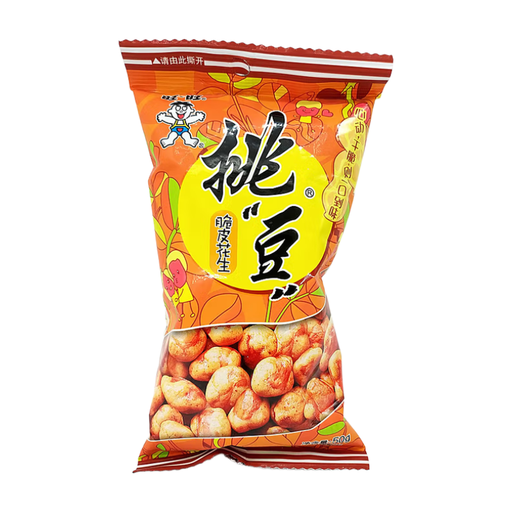
WANT WANT Tiaodou Crispy Peanuts, 50 g
A good choice if you’re looking for a ready-to-eat savoury peanut snack.
The product description lists 70% peanuts and 38.3 g of fat per 100 g.
According to the product description, the snack contains peanuts, wheat and soya.
View at Joybuy
 No image available
g’woon Unsalted Peanuts, 250 g
A good choice if you’re looking for unsalted peanuts; being unsalted says nothing about whether the fat content has been reduced.
The product description lists 99% peanuts and sunflower oil.
According to the product description, the product may contain cashew nuts.
View at Joybuy
 No image available
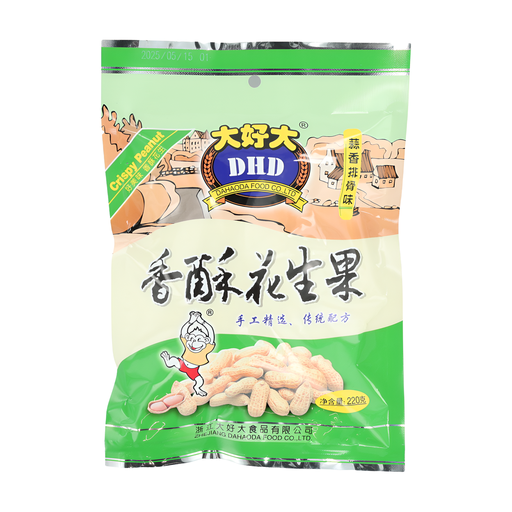
Dahaoda Crispy Peanuts Garlic Spareribs, 220 g
A good choice if you’re looking for a ready-to-eat peanut snack with garlic and spareribs flavour.
The product description lists 30.0 g of fat per 100 g.
The ingredients description includes wheat, vegetable oil, sugar and salt, among other things.
View at Joybuy
 No image available
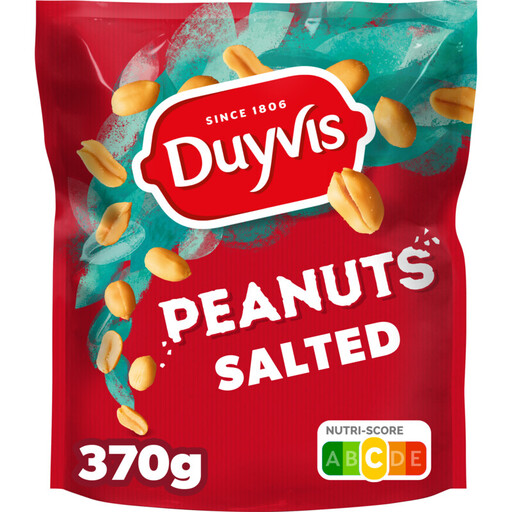
Duyvis Salted Peanuts, 370 g
A good choice if you’re looking for a classic salted peanut snack, but not if your choice is based solely on a lower fat content.
The product description lists peanuts, sunflower oil and salt, and 52 g of fat per 100 g.
The product description warns that these peanuts are not recommended for children under 5 due to the risk of choking.
View at Joybuy
 No image available
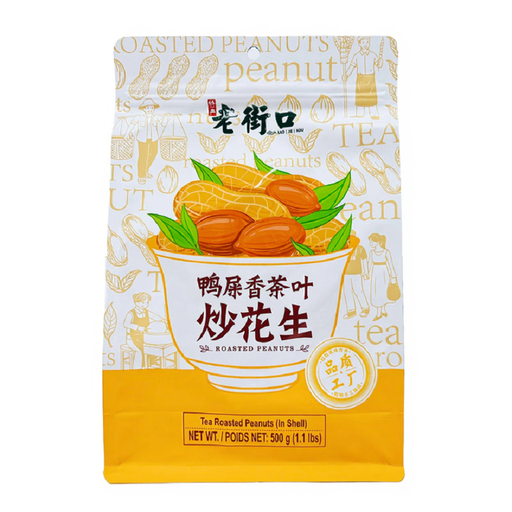
Lao Jie Kou Yashi Xiang Tea-Infused Roasted Peanuts, 500 g
A good choice if you’re looking for a roasted peanut snack with a tea aroma to share.
The product description lists peanuts, salt, tea and flavourings as ingredients.
View at Joybuy
Frequently asked questions
Does low fat mean the same as reduced fat?
No. For the ‘low fat’ claim on solid foods, the European Commission sets a maximum of 3 g of fat per 100 g. EUFIC describes ‘reduced fat’ as containing at least 30% less fat than a similar product. So compare the full claim and the nutritional information on the exact pack.
Are oven-baked peanuts automatically a good choice if you want to eat less fat?
No. The preparation method alone does not prove a reduced fat content. Duyvis says Oven Baked Peanuts Original is made without added oil or fat; you should also compare the nutritional information for the exact variety.
How can I check whether peanuts are available to order online?
Check the ordering options on the specific product listing and the terms of your chosen delivery service. The Lidl listing we reviewed for roasted and salted peanuts says they’re sold in store; a product page alone doesn’t confirm that delivery is available.
What information should I check for a peanut product sold online?
Check the ingredients, nutritional information and allergen information on the exact packaging. Business.gov.nl says that food information in the Netherlands must be in Dutch and available online; the NVWA says that allergen information must appear on the label of prepacked products.
What should I do with AH Extra Large Salted Peanuts with a best-before date of 04-11-2026?
Don’t eat that specific pack. Albert Heijn has recalled the tub with this best-before date because it may contain metal fragments. The warning applies to this pack and date only, not automatically to all AH peanuts.


