
Vandaag of morgen in huis

Kwaliteit gegarandeerd

Welkomstaanbiedingen ontgrendelen: GRATIS bezorging | Tot 80% korting | Gratis 30 dagen JoyPlus-proefperiode
Download de app
A jar of ready-made pasta sauce might seem like a simple choice. Yet sauces vary greatly in ingredients, portion size, allergens and nutritional values. If you only look at the front of the label, you could end up paying for a flavour that doesn't suit your dish, or be left with half a jar unused.
When buying pasta sauce, there are three main pitfalls to watch out for:
The right sauce depends on the dish and how long you want to spend preparing it.
Ingredients are listed in descending order of quantity. If tomato is at the top, it generally forms the base. For the g'woon Pasta Sauce Ricotta - 490 g, the product information states the composition is, for example, 70% tomatoes, with ricotta, Pecorino and Grana Padano.
Also check the source of fat and sugar. “No added sugars” doesn’t mean a sauce contains no sugars; tomatoes naturally contain sugars. The g'woon Pasta Sauce Traditional - 490 g states in the product information that it has no added sugars and contains 4g of sugars per 100g.
Allergens are especially important:
Always check the current product packaging with every order. Recipes and allergen information can change.
Always compare products on the same basis: per 100g. Pay particular attention to:
A simple tomato sauce isn’t automatically suitable for every meal. The Grand'Italia Sugocasa Tradizionale - 690 g states in the product information that it has 36 kcal and 0.53g of salt per 100g. The Grand'Italia Besciamella - 400 g contains, according to the same source, 112 kcal and 1g of salt per 100g. That difference matches their use: the first is a tomato base, the second a creamy sauce for lasagne and gratins, among other things.
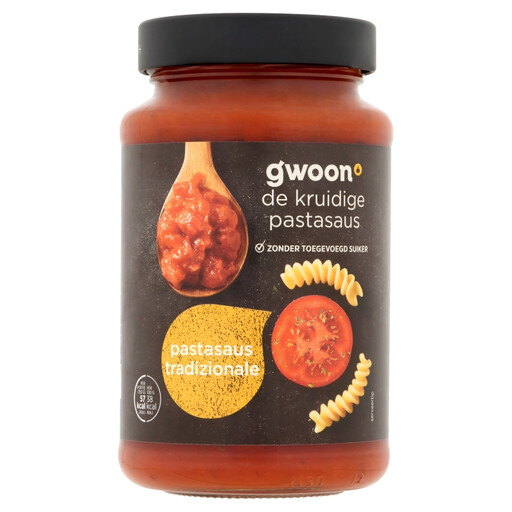
Why this suits the profile: The 490g jar is practical for a weekday meal and, according to the product information, has a tomato base with no added sugars.
You can clearly see the tomato percentage and the ingredients, so “Italian flavour” isn’t the only reason for your choice.
79% tomato, 9% tomato purée according to the label; 36 kcal per 100g according to the product information.
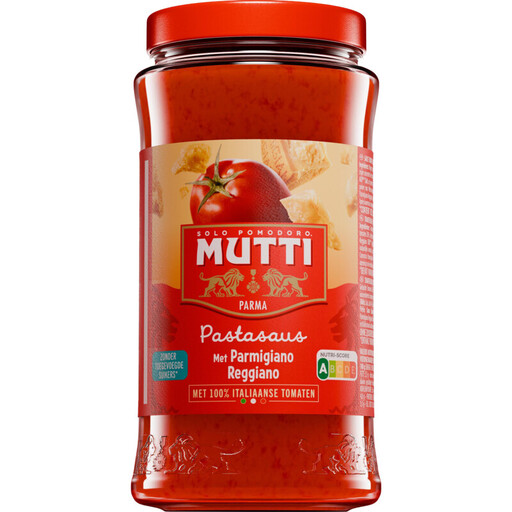
Why this suits the profile: Ideal for anyone looking for a tomato sauce with cheese who values origin and ingredients.
The product information mentions 4% Parmigiano Reggiano, so the cheese content is verifiable.
60.6% tomato pulp, 20% passata and 4% cheese according to the label; 67 kcal per 100g.
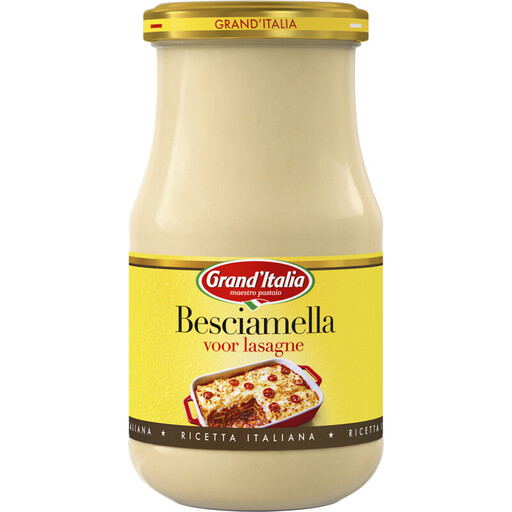
Why this suits the profile: A convenient choice for lasagne, oven bakes and gratinated vegetables where a white base sauce is needed.
The use is clearly described as a sauce for lasagne, gratins and oven dishes; you don’t need to use a regular tomato sauce as a substitute.
Ready to use; contains 21% cream and whole milk according to the product information.
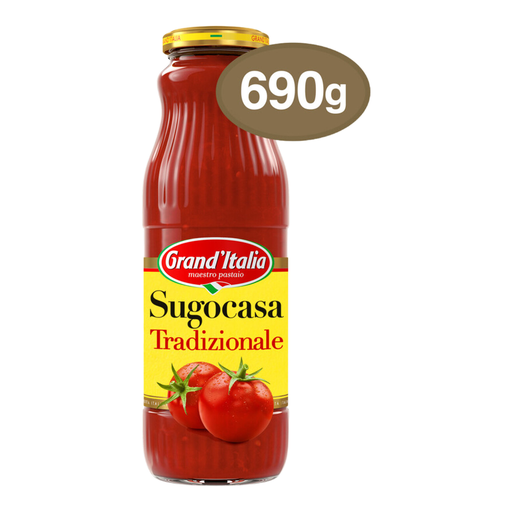
Why this suits the profile: The 690g content is handy for several people eating, or for a meal where extra vegetables, mince or pasta is added.
The large size means you don’t need several small jars for a family dish; just make sure you use the jar in good time after opening.
78% tomato and 16% tomato concentrate according to the product information; suitable for a vegan or gluten-free lifestyle according to the stated product information.
We’ve put together a full, up-to-date list of products that fully meet these strict selection criteria and current European safety regulations.
If you want to order pasta sauce online, it’s a good idea to check the following points first:
For a quick meal, you can add courgette, mushrooms, lentils or vegetarian mince to a tomato sauce. Pesto is usually stirred directly through hot pasta; a cream or béchamel sauce is better used in an oven dish.
Choose a tomato sauce, pesto or cream sauce without meat ingredients and check the label. A bolognese sauce isn’t automatically vegetarian, even if the packaging shows lots of vegetables.
This varies by product. Follow the instructions on the packaging and store an opened jar according to the stated guidelines. Do not use the sauce if the packaging is damaged or if the smell, colour or texture has clearly changed.
That depends on the ingredients, portion size and offers. Ready-made pasta sauce saves preparation time. Making your own sauce gives you more control over salt, herbs and vegetables. So compare the price per 100g and see which extra ingredients you still need to buy.
