
Vandaag of morgen in huis

Kwaliteit gegarandeerd

Welkomstaanbiedingen ontgrendelen: GRATIS bezorging | Tot 80% korting | Gratis 30 dagen JoyPlus-proefperiode
Download de app
When you want to buy muesli online, you quickly come across terms such as crunchy, high-fibre, organic, no added sugar and extra fruit. These words do not always tell you enough about the full composition. That is why a good choice starts not with the front of the packaging, but with the ingredients list, nutrition table and allergen information.
A product can contain no added sugar while still containing natural sugars from fruit. Sweeteners may also be used. With fruit muesli, it is therefore sensible to check both the ingredients and the amount of sugar per 100 grams.
For example, Quaker Cruesli Zero Sugar Added Apple, Pecan and Cinnamon states that it contains no added sugars or sweeteners. The nutrition table lists 5 grams of sugar per 100 grams. That is different from sugar-free muesli. Hero B’Tween Zero uses maltitol as a sweetener and lists 42 grams of polyols per 100 grams. According to the product information, excessive consumption may have a laxative effect.
The term high-fibre can be useful, but compare products on the same basis: usually per 100 grams. According to the product information, Holie’s Crunchy Muesli Mixed Nuts contains 21 grams of fibre per 100 grams. Quaker Cruesli Red Fruits lists 8.3 grams. A smaller serving of a high-fibre muesli may still provide less fibre than a larger serving of another product.
Also look out for ingredients such as chicory root fibre, oligofructose and other added fibres. These can increase the nutritional value, but they also affect the texture and flavour.
An image of strawberries, raspberries or apple does not mean that the product contains a large amount of fruit. Check the percentages. According to the stated composition, Quaker Cruesli Red Fruits contains 0.8% strawberry and 0.7% raspberry. In B+ Muesli Nuts and Fruit, the fruit includes 22% dried grapes and 5% apricot, but the product also contains grains, seeds and nuts.
Ingredients are listed in descending order. If sugar, glucose syrup, honey or oil appears near the top of the list, it makes up a relatively large proportion of the product. With crunchy muesli and granola, oil and sweeteners are often needed to create clusters. This explains why these products regularly contain more energy than plain porridge oats or unsweetened muesli.
At a minimum, compare:
According to the product details, Holie’s Crunchy Muesli Protein Nuts lists 22 grams of protein and 21 grams of fibre per 100 grams. The composition includes wheat protein and wheat gluten, among other ingredients. This makes the product unsuitable for people who avoid gluten.
Always check the current packaging, particularly if you have an allergy or coeliac disease. Look out for wheat, barley, oats, spelt, milk, peanuts, soya, sesame and various nuts. “Gluten-free oats” in a product description does not automatically mean that the finished product is completely gluten-free. For example, the information provided for Madegood Granola Mixed Berry states both “gluten-free oats” and “contains: gluten”. If in doubt, follow the label directly and do not order the product without checking.
For muesli with nuts, Holie’s Mixed Nuts, Holie’s Nuts & Seeds and Quaker Cruesli with Raisin and Hazelnut are options with clearly identified nuts. If you want to avoid nuts, you should also read the “may contain” warning. This information can be important in cases of cross-contamination.
A 400 or 450-gram bag is practical for everyday breakfast. A multipack of 6 packs is particularly worthwhile if you use the product regularly and have enough dry storage space. Muesli bars are more convenient when you are out and about, but they often contain more binders, sweeteners or chocolate than a standard muesli mix.
A product in portion sachets, such as the 838-gram Family mixes, can be prepared quickly with hot water. However, check whether you are looking for a breakfast cereal mix or an instant product. The preparation method and nutritional values can differ considerably.
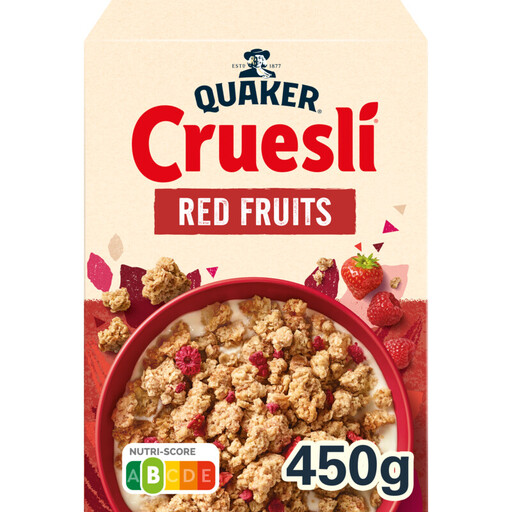
Why it suits this profile: A familiar crunchy muesli in a medium-sized pack, suitable for serving with yoghurt or milk.
The fruit percentage and nutritional values are clearly stated. This means you can check the claims about fibre and grains.
450 grams, 95% wholegrain cereals according to the product information, 8.3 grams of fibre per 100 grams, plus dried strawberry and raspberry.
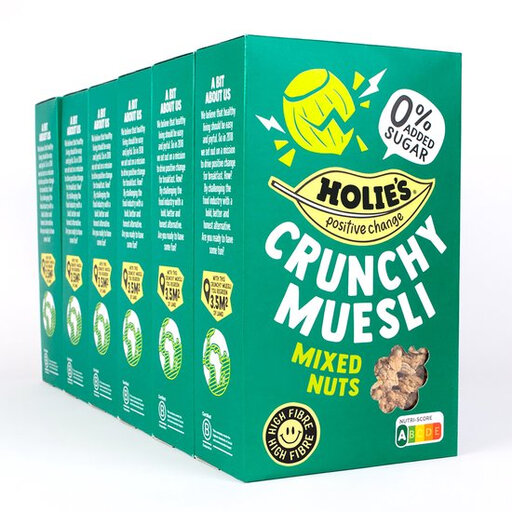
Why it suits this profile: A bulk pack for households that regularly eat crunchy muesli with nuts.
The product information states 0% added sugar, but also 2.4 grams of sugar per 100 grams. This makes the distinction transparent.
21 grams of fibre, 11 grams of protein and a nut mix containing almond, hazelnut, pecan and Brazil nut, among others.
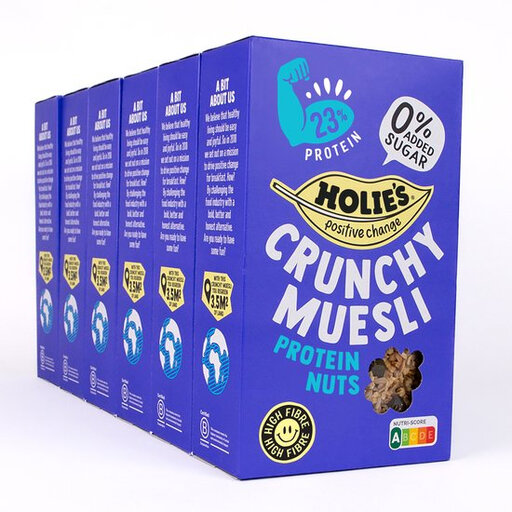
Why it suits this profile: Aimed at shoppers who pay extra attention to the balance of protein, fibre and carbohydrates in their breakfast.
The stated 23% protein content should be considered alongside the full allergen list: the product contains wheat and gluten.
Up to 23 grams of protein and 19–21 grams of fibre per 100 grams according to the stated nutritional information; 0% added sugar.
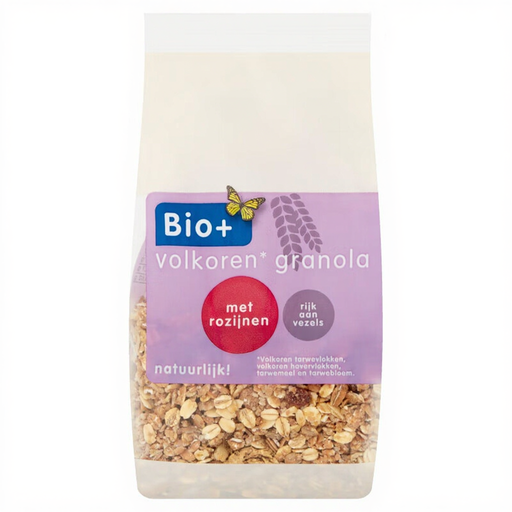
Why it suits this profile: A compact granola with grains, raisins, apricot and seeds for breakfast or as a topping.
The composition specifies concrete percentages for raisins, apricots, sunflower seeds and nuts. However, check the allergen information on the packaging.
350 grams, 9.3 grams of fibre per 100 grams and ingredients that, according to the product description, are of organic origin.
We have put together a complete, up-to-date list of products that fully meet these strict selection criteria and the applicable European safety regulations.
Muesli usually consists of loose cereal flakes, dried fruit, seeds or nuts. Granola is generally baked and is therefore crunchy, but it can also contain oil and sweeteners. If you want to buy granola, it is a good idea to compare the energy value and sugar content.
Muesli bars are suitable for your bag, desk or train journey. Hero B’Tween Zero is individually wrapped and lists 68 kcal per bar according to the product information. However, the product contains milk, peanuts, cereals containing gluten and sweeteners. Bolletje Nice Going Grain Red Fruit contains 15 grams of fibre per 100 grams and comes as 9 bars, but contains cereals containing gluten and added sugar.
This varies by recipe. In the available product information, Holie’s Crunchy Muesli Mixed Nuts and Holie’s Protein Nuts stand out with 21 grams of fibre per 100 grams. Quaker Cruesli Zero Sugar Added lists 24 grams. Always check the current packaging, as recipes may change.
No. “No added sugar” means that, according to the product information, no sugar or sweetener has been added to the recipe. The product may still contain natural sugars from fruit. Sugar-free muesli is a stricter description and should be assessed using the full label.
Store muesli and granola in a cool, dry place away from sunlight and moisture. Seal the packaging securely. This will generally help the crunchy texture last for longer. Always check the best-before information on the packaging when buying, and do not use a product if its packaging is damaged.
