
Vandaag of morgen in huis

Kwaliteit gegarandeerd

Welkomstaanbiedingen ontgrendelen: GRATIS bezorging | Tot 80% korting | Gratis 30 dagen JoyPlus-proefperiode
Download de app
A microwave may seem like a simple appliance, but small differences in size, power and controls can make a big difference to how easy it is to use every day. A model that looks spacious enough on paper, for example, may not fit a large bowl or square dish. A grill function may also be unnecessary if you mainly use your microwave to heat up meals.
Watch out for these common pitfalls:
A 20-litre microwave is a practical size for students, smaller households and flats. As well as checking the capacity, look at the internal dimensions and turntable diameter. A 25 cm plate, for example, won’t necessarily fit in every compact microwave.
Measure the following in advance:
A compact microwave isn’t always shallow. Check the stated external dimensions rather than relying on the product title alone. Place a freestanding microwave on a stable, heat-resistant surface. Built-in models have additional niche dimensions and installation requirements.
A 700-watt microwave is suitable for everyday reheating and simple cooking, but some dishes may take longer. Heating is generally quicker with 800 watts or 900 watts, as long as you adjust the cooking time to suit the dish.
More important than a high wattage alone are:
Always follow the manual and the instructions on the packaging. Power levels and cooking times vary from one model to another.
A microwave with a turntable heats food as it rotates. Check whether the turntable can be removed and whether its diameter suits your dishes. A flatbed model has no turntable, so the base stays flat and cleaning may be easier. However, the usable space depends on the shape of the interior.
A microwave with a grill can brown or crisp the top of dishes. This is useful for toast, cheesy dishes or adding a crispy finish. However, a grill doesn’t automatically make the appliance a fully fledged oven. Check which functions are actually included: some models have a microwave and grill, but no fan oven function.
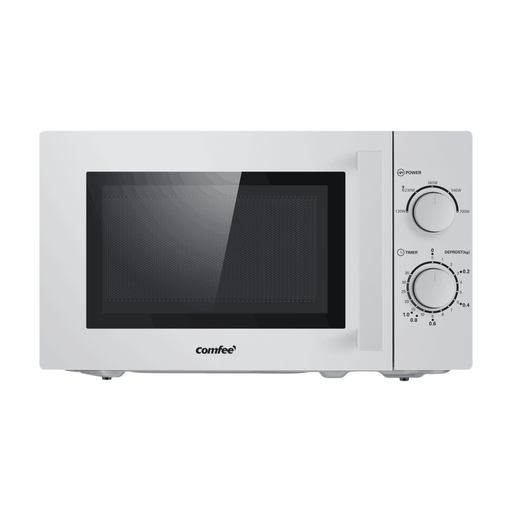
Why it suits this buyer: The two simple dial controls are easy to use if you mainly want to heat up and defrost food without having to navigate complicated menus.
The specifications list a 20-litre capacity, 700 watts and five power levels. That means you’re not paying for functions you may never use.
20-litre capacity, five power levels, an interior light and a removable glass plate, according to the product information.

Why it suits this buyer: Its larger capacity and combination of microwave and grill functions are a good fit for households that cook a variety of dishes.
The specifications list the 900-watt microwave output and 1500-watt grill power separately, so you can see which function you’re selecting.
28-litre capacity, 900-watt microwave output, a grill function and a ceramic-enamel interior, according to the product description.
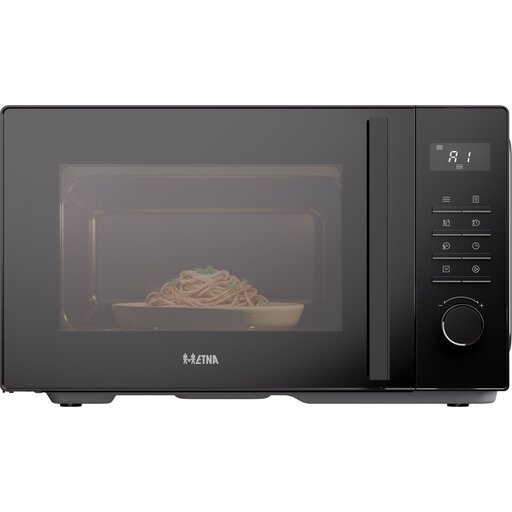
Why it suits this buyer: This freestanding model offers extra room inside for larger plates and multiple portions, without the need for built-in installation.
The stated dimensions are 469 × 377 × 280 mm. You can check in advance whether the appliance and the required ventilation clearance will fit.
25-litre capacity, 900-watt microwave output, eight automatic programmes and a 28.8 cm turntable.
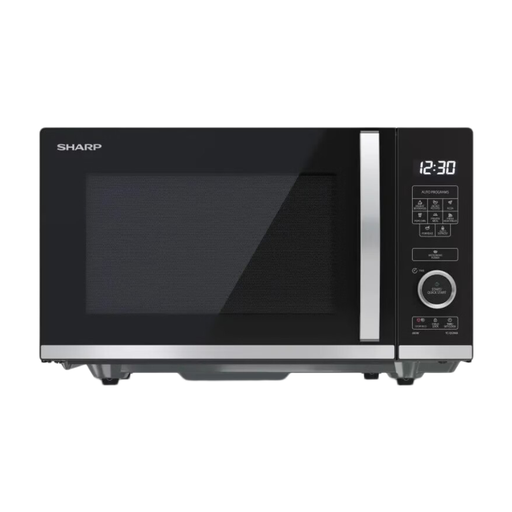
Why it suits this buyer: The flat base is a good option if you use dishes in different shapes and don’t want to clean a turntable.
The flatbed design means you don’t need to make room for a rotating glass plate. However, check the stated flat base dimensions of 262 × 262 mm.
20-litre capacity, 800 watts of power, ten power levels and a flat oven base, according to the product information.
We’ve put together a complete, up-to-date list of products that meet these strict selection criteria and current European safety regulations.
Only use microwave-safe dishes. Don’t put metal cutlery, aluminium foil or dishes with metallic rims in the cooking cavity, unless the manual specifically allows this for a particular function. Don’t heat sealed packaging or closed containers of liquid. Never run the microwave empty, and stop using it if the door, seal or power cord is damaged.
Clean the interior regularly with a soft, damp cloth. The top of a model with a grill can get particularly hot, so let the appliance cool down before cleaning it. Also check that the ventilation openings remain clear.
For reheating and defrosting, 700 to 800 watts is often enough. If you want to heat larger portions more quickly, consider a 900-watt model. Always adjust cooking times according to the dish’s instructions and the power level you’ve selected.
It depends on the dishes you use and how you prefer to clean your microwave. A turntable can help distribute heat evenly, while a flatbed model offers a flat base and more flexibility when it comes to the shape of your dishes. For both types, check the actual internal dimensions.
Energy use depends on the power, function selected and how long you use it for. A quick heating cycle uses less energy than a longer cooking or grilling session. So don’t just look at the wattage: think about how often you’ll use the appliance and which function you’ll select.
