
Vandaag of morgen in huis

Kwaliteit gegarandeerd

Welkomstaanbiedingen ontgrendelen: GRATIS bezorging | Tot 80% korting | Gratis 30 dagen JoyPlus-proefperiode
Download de app
Buying marker pens seems straightforward, until you have to choose between felt-tip pens, highlighters, acrylic markers, brush markers and permanent markers. A cheap set might look appealing, but it may not suit the surface, the intended use or the line width you want. For school pupils, parents, students, teachers and creative hobbyists, three common buying mistakes are particularly worth avoiding.
A broad nib is useful for filling in large areas, but less suitable for small lettering or technical details. A brush tip offers variation in line width, while a fineliner tip gives you greater control. Always check whether the set has a round tip, chisel tip, brush tip or dual tip.
A chisel tip, for example, can create both narrow and broad lines. According to the product information, the STABILO BOSS ORIGINAL has a tip with writing widths of 2 and 5 mm. This is handy for underlining and highlighting, but less suitable for detailed illustrations.
A set of 24 or 30 marker pens gives you more choice, but that doesn’t automatically mean the colours will suit your project. For school and the office, a few clear colours are often enough. For drawing or hand lettering, colour gradients, a fine tip and blendability matter more than the number of pens alone.
Also consider the type of ink:
A marker pen left uncapped too often may dry out. Some models specify how long they can be left uncapped before the tip dries out. That doesn’t mean you should make a habit of leaving the cap off. Replace the cap after use and store markers as instructed in the product information, for example horizontally or upright.
For children, ventilated caps, a suitable minimum age and relevant safety information are also important. A CE mark refers to applicable European conformity requirements, but on its own it doesn’t mean a marker pen is suitable for every surface or every age group.
Choose a tip that suits the task:
A dual tip can save space. According to the product details, the Jar Melo set of 24 colours has a brush tip for details and a chisel tip for broader strokes.
Paper thickness is a practical detail that’s often overlooked. Water-based ink may show through thin paper, while alcohol markers often need special marker paper or a protective sheet. Acrylic markers generally need a clean, dry surface and may need to be activated before use.
According to the product information, the Faber-Castell Shake & Paint acrylic markers should be shaken 20 to 30 times with the cap on. Then press the tip onto paper until the ink starts to flow. This is normal for a pump-action system, but less convenient if you need to make quick notes.
A cap that seals securely matters more than a marketing claim about a long lifespan. Check whether the marker pens:
Pastel highlighters are popular for making subtle notes. Neon ink stands out more, but can look less easy on the eye over light-coloured text. Test the colour on the same paper you’ll be using.
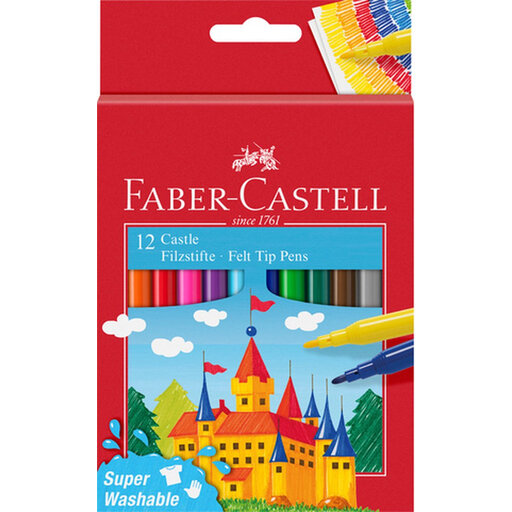
Why it suits this profile: This set is designed for colouring and drawing on paper, card and wood. Its sturdy tip and 12 colours make it a straightforward choice for home, school or your first collection of creative supplies.
Its intended use is clearly described, so you won’t mistake this set for acrylic markers or permanent markers designed for hard surfaces.
12 assorted colours, a sturdy tip, an EN 71 reference and, according to the product information, washable from hands and most fabrics.
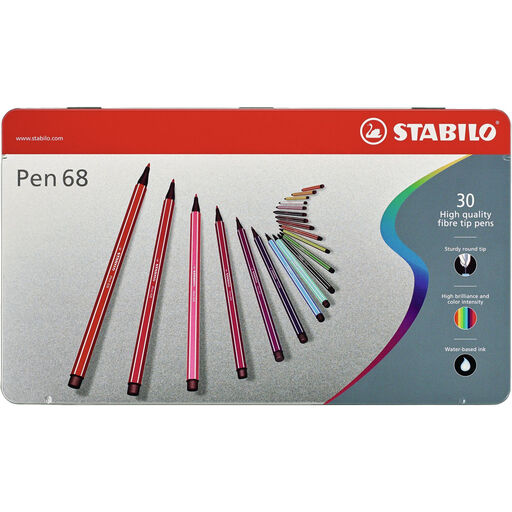
Why it suits this profile: The 30-colour set is well suited to illustration, colouring, journalling and hobbies where colour choice and an even line are important.
The writing width of approximately 1 mm is clearly stated, so you won’t end up with a broad colouring marker when you need fine lines.
Water-based, odourless ink, a pressure-resistant tip and, according to the product information, suitable for watercolour techniques.
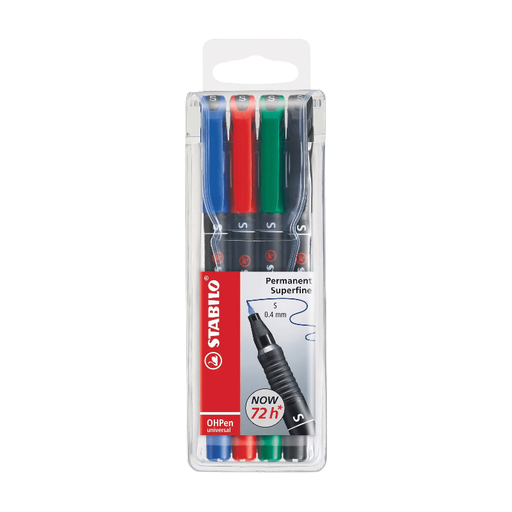
Why it suits this profile: This set is designed for writing on smooth surfaces such as plastic, glass, metal and ceramics. That makes it useful in the office, for presentations and for specific marking tasks.
The product description specifically lists the smooth surfaces it is suitable for. Do check whether you need permanent or water-based ink.
Superfine tip, four colours, grip zone and, according to the product information, protection against drying out for up to 72 hours without the cap.
We’ve put together a complete, up-to-date list of products that meet these strict selection criteria and the applicable European safety requirements.
Water-based felt-tip pens and highlighters are usually practical for school. Choose a set with a sturdy tip, a cap that closes securely and colours that show up clearly on standard paper. For young children, also check the recommended age and safety information.
A highlighter is usually designed for highlighting text and often has a chisel tip with two writing widths. The term “marker pen” is used more broadly and can also refer to permanent markers for glass, plastic, card or metal. Always check the stated surface and type of ink.
Replace the cap as soon as you’ve finished using a marker and press it firmly into place. Store the set according to the product instructions, for example horizontally or in a case. Don’t leave acrylic markers uncapped unnecessarily, and only activate pump-action markers when you’re ready to use them. This helps reduce waste and keeps the ink flowing more evenly.
