
Vandaag of morgen in huis

Kwaliteit gegarandeerd

Welkomstaanbiedingen ontgrendelen: GRATIS bezorging | Tot 80% korting | Gratis 30 dagen JoyPlus-proefperiode
Download de app
Choosing a new lamp may seem straightforward, but a good-looking photo says little about how it will perform day to day. For example, a desk lamp may not provide enough light for working from home, while a bedside lamp can be too bright or too cool-toned for the bedroom. The right fitting, positioning and energy consumption also determine whether your purchase remains practical.
When buying lamps, watch out for these common pitfalls:
The amount of light is measured in lumens (lm). A bedside lamp usually needs far fewer lumens than a desk lamp for reading or working. For a workspace, high light output is not the only consideration; it should also be possible to direct the beam effectively.
The colour temperature in Kelvin (K) helps you choose the right atmosphere:
A dimmable lamp can be useful when you use the same light fitting at different times. However, check whether the dimming function is built into the lamp or whether you need a suitable dimmer and light source.
Check the fitting before buying. An E27 LED bulb has a large screw fitting and is often used in floor lamps, table lamps and pendant lights. E14 is smaller and is commonly found in compact fittings and wall lights.
Pay attention to the difference between a lamp with:
Lower wattage does not automatically mean less light. For example, a Philips UltraEfficient LED bulb is listed in the product information as 2.3 W, 485 lm, 2700 K and energy label A. The specifications also state that this version is not dimmable. Another Philips LED bulb in the range is listed as 13 W and 1521 lm. Always compare lumens, wattage, fitting and energy label together.
A lamp with a suitable IP rating is required for a damp area. Products with IP20 are designed for dry indoor spaces and must be kept away from water and moisture. This applies, for example, to many table lamps, desk lamps and wall lights.
Place a lamp on a stable surface and keep cables out of walkways. With a clip-on lamp, make sure the clamp is firmly secured. Switch off the power before replacing a separate light source, and never use a lamp with a damaged cable or plug.

Why it suits this profile: This metal clip-on lamp uses a replaceable E27 light source. You can choose an LED bulb up to the maximum 40 W yourself and adjust the colour temperature later.
The adjustable head and joints help overcome the limitations of a fixed beam. However, check the table thickness beforehand and only use the lamp indoors, in a dry area with an IP20 rating.
E27 fitting, adjustable head and joints, integrated push button and approximately 1.6 metres of cable.
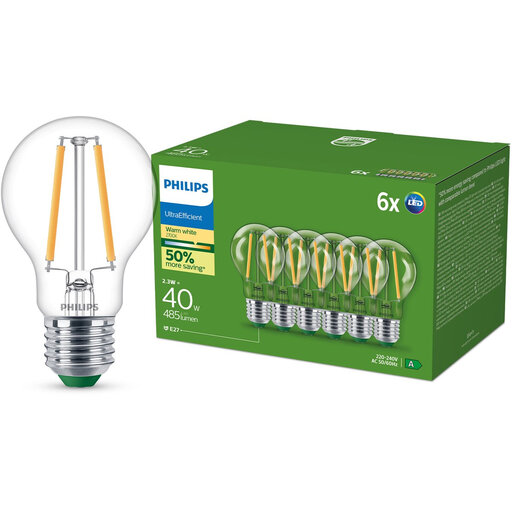
Why it suits this profile: Handy for anyone who wants to fit several light fittings with the same large socket, create warm lighting and compare consumption per light point.
The product details specify the fitting, light output, colour temperature and energy label. This allows you to check your choice rather than relying solely on the word ‘efficient’.
E27 fitting, 2700 K warm white light, energy label A according to the product information and a six-pack. Not dimmable.
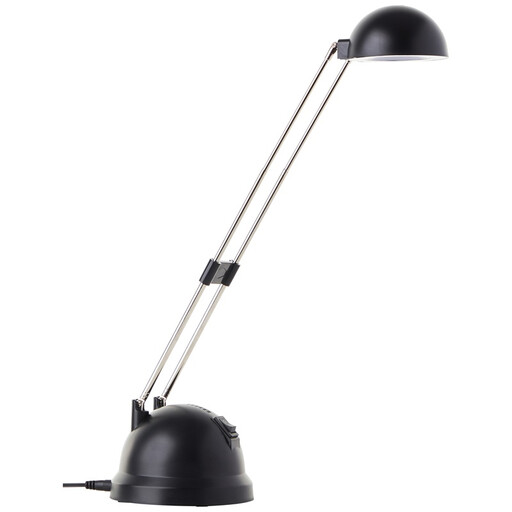
Why it suits this profile: For a dedicated work or reading area, this table lamp provides integrated LED lighting with 650 lm, plus an adjustable arm and lamp head.
The light output and colour temperature are clearly specified: 650 lm and 2700 K. Bear in mind that, according to the product information, the integrated LED light source is not replaceable.
8.5 W integrated LED, 650 lm, warm white 2700 K light, height-adjustable design and swivel lamp head.
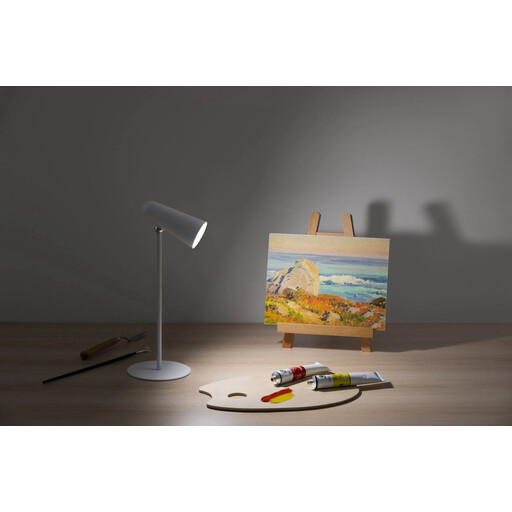
Why it suits this profile: This rechargeable lamp is ideal when you want to move your lighting without needing a socket every time, for example on a desk, shelf or bedside table.
The flexible, cordless design means that a cable does not dictate where you can place it. However, check the 5 V charging voltage before buying and bear in mind that the lithium-ion polymer battery needs to be recharged.
3.5 W power, 2000 mAh battery and flexible use without a direct connection to a socket.
We have put together a complete, up-to-date list of products that fully meet these strict selection criteria and the applicable European safety regulations.
Look at lumens, adjustability and the space available. A desk lamp with a swivel head directs light onto paper or the keyboard. A clip-on lamp frees up space on the work surface, but the clamp must fit securely onto the edge of the desk.
This depends on the wattage, number of hours used and your energy tariff. Use this simple calculation: wattage ÷ 1000 × number of hours used × electricity price. An LED bulb with lower wattage may therefore use less electricity, but always compare the light output in lumens as well.
No. Check whether the product page or packaging states that the LED bulb is dimmable. With a non-dimmable E27 LED bulb, a standard dimmer may cause flickering or poor light control. With integrated LED lighting, the dimming function must be specifically built into the fitting.
