
Vandaag of morgen in huis

Kwaliteit gegarandeerd

Welkomstaanbiedingen ontgrendelen: GRATIS bezorging | Tot 80% korting | Gratis 30 dagen JoyPlus-proefperiode
Download de app
A pack of kitchen paper might seem simple to compare. Yet a low price per pack can be misleading. One pack, for example, contains many rolls with few sheets, while another product has fewer rolls but longer sheets. Likewise, terms like “super absorbent” don’t automatically tell you how much liquid a sheet actually soaks up.
If you want to buy kitchen paper without wasting money, you need to look beyond the offer on the front. These points will help you choose kitchen rolls for spills, grease, wiping dishes and everyday cleaning.
A pack of eight kitchen rolls might seem like a bargain, but the number of sheets per roll varies a lot. Always check:
For example, a pack with 6 rolls of 65 sheets contains 390 sheets. That’s a much clearer way to compare than just “6 rolls” on the packaging.
2-ply kitchen paper is often suitable for everyday use, such as mopping up water or cleaning surfaces. 3-ply kitchen paper may feel thicker, but the price per sheet can also be higher. The ply thickness, sheet size and paper texture all affect how well a roll performs.
A thicker sheet isn’t automatically the best value. For small spills, 2-ply kitchen paper can be perfectly adequate. For grease, wet cloths or heavier cleaning, a stronger sheet may be more practical.
Words like “oil-absorbent”, “water-locking”, “compostable” and “food-safe” should be assessed against the product information. A brand claim is not independent proof. According to the product description from C&S, the paper is intended to absorb oil and retain moisture; this is a claim from the brand’s product information.
Also pay attention to the intended use. Kitchen paper for cleaning is not the same as baking paper, steaming paper or an oven liner. Do not use kitchen paper in the oven, microwave, near an open flame or with hot oil, unless the product information explicitly allows it.
For spilled coffee, water or sauce, you need absorbent kitchen paper. An embossed texture or multi-ply construction can help hold moisture, but the practical absorption also depends on the sheet type and size.
For kitchen paper against moisture, look at:
For kitchen paper against grease, it’s important that the packaging mentions oil absorption. Only use the paper for normal household tasks and never with hot oil or direct contact with a flame.
Strong kitchen paper is especially useful when you’re cleaning a worktop, hob or table with a damp sheet. A sheet that tears straight away leads to more usage and loose paper fibres.
So don’t just compare 2-ply with 3-ply. Also look at the description “wet or dry use”, the paper material and any information about linting. BREEZE, for example, states that according to the product information, the product can be used wet and dry and is intended for low-lint cleaning. This remains a manufacturer’s claim.
Store kitchen rolls in a dry place, out of direct sunlight and away from heat sources. Paper stored in damp conditions loses its usability. Keep plastic packaging away from young children due to the risk of suffocation.
Kitchen paper should not be flushed down the toilet. Dispose of used paper according to your local waste rules. Claims about compostability or biodegradability only apply when the product information and local waste processing support them.
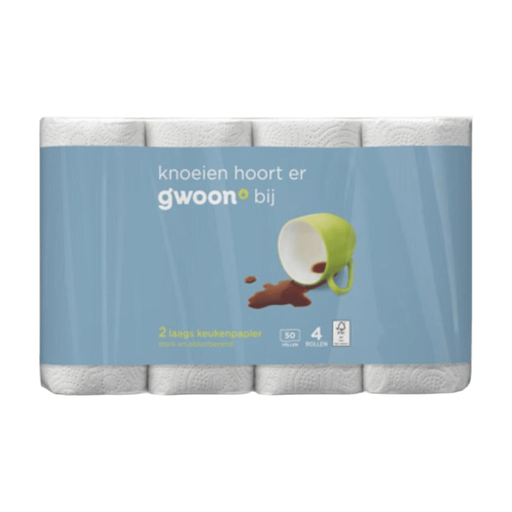
Why this fits the profile: A straightforward pack for everyday use in a smaller household or as a top-up to your stock.
The packaging states 2 plies and 4 rolls, so you don’t have to rely on a vague absorbency claim alone.
2-ply construction; pack of 4 rolls; suitable for general household use according to the product description.
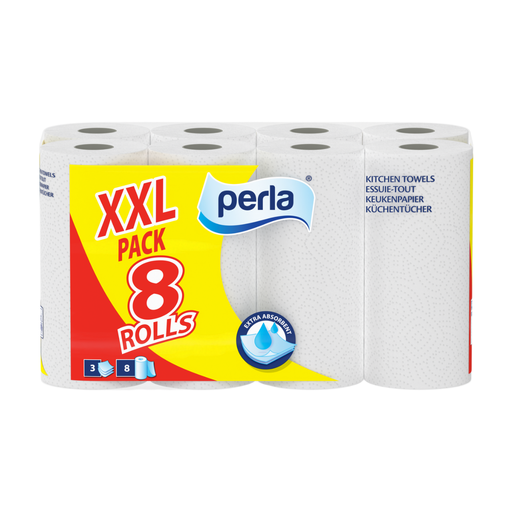
Why this fits the profile: For households that value a thicker sheet and a larger stock for daily cleaning.
The number of plies and rolls is clearly stated in the product name: 3 plies and 8 rolls. Do compare the price per roll or per sheet.
3-ply paper; 8 rolls per pack; described as strong and absorbent.
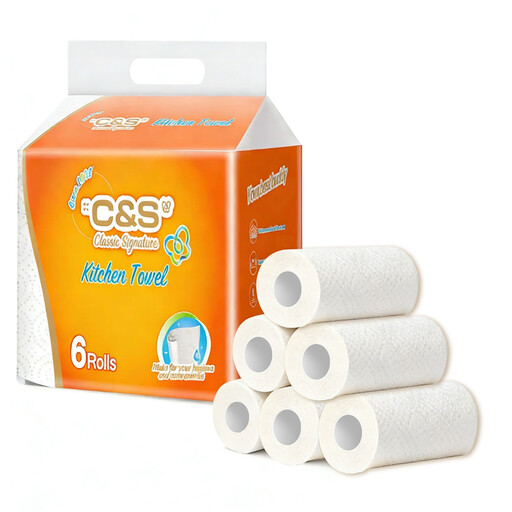
Why this fits the profile: Handy for families and households that regularly deal with spills, grease removal and cleaning multiple rooms.
The packaging shows the total of 390 sheets, divided into 6 rolls of 65 sheets. This makes it easier to estimate your stock.
2-ply paper; 390 sheets in total; according to the product description, intended for absorbing oil, retaining moisture and cleaning surfaces.
For steaming, baking or use in an air fryer, you need a different product. The COOKER KING steaming papers of 18 cm are described as non-stick liners for steamer baskets and air fryers, according to the product description. The 22 cm product is a different size. These items are therefore not a substitute for standard kitchen roll.
Use kitchen rolls for the cleaning and drying tasks they are designed for. Choose baking or steaming paper when heat resistance, food contact or a specific diameter is required.
We’ve put together a full, up-to-date list of products that fully meet these strict selection criteria and comply with current European safety regulations.
For light cleaning tasks, 2-ply kitchen paper is often a practical choice. Choose 3-ply when you prefer a thicker sheet or when the roll is regularly used for wet and heavier household tasks. Also compare the number of sheets and the price per sheet.
Kitchen paper generally doesn’t have a limited shelf life like fresh food. However, store the rolls in a dry, clean place out of direct sunlight. Always check the information on the packaging. Dampness can damage the paper structure before you even use the roll.
That depends on the total number of sheets, the sheet size and the delivery costs. Where possible, work out the price per roll or per 100 sheets. A large pack is especially worthwhile when you have enough storage space and can keep the paper dry.
