
Vandaag of morgen in huis

Kwaliteit gegarandeerd

Welkomstaanbiedingen ontgrendelen: GRATIS bezorging | Tot 80% korting | Gratis 30 dagen JoyPlus-proefperiode
Download de app
When you’re buying kitchen knives, you’ll quickly come across terms like “professional”, “extra sharp” and “Damascus steel”. These descriptions don’t always tell you enough about everyday use. A knife may look appealing, yet still be awkward to handle because of a handle that’s too heavy, the wrong blade length, or tricky maintenance.
With this practical buying guide, you can compare chef’s knives, santoku knives, meat knives and slicing knives on verifiable features. That way, you’ll avoid a bad purchase for the kitchen, barbecuing or a DIY project.
A product title that says “sharp kitchen knives” tells you very little about the angle, the steel or the maintenance. Every knife loses its sharpness with use. What matters more is whether the knife can be re-sharpened and whether the material is suitable for the tasks you have in mind.
Look out for information such as stainless steel, a stated blade length, and how the knife should be sharpened or maintained. A sharp edge is also no reason to use a knife unsafely: a stable chopping board and a good grip are still essential.
A long chef’s knife is good for large cutting motions, but can be awkward in a small workspace. A santoku knife typically has a wider, relatively straight blade and works well with vegetables, herbs, fish and meat. A cleaver is designed for different movements than a fine slicing knife.
So don’t just check the overall length – pay particular attention to the blade length. A knife of 16 or 17 cm often gives a different balance than a 20 cm model.
“Dishwasher safe” doesn’t automatically mean it’s the most suitable cleaning method. Heat, moisture and contact with other items can affect the edge and the handle. For many models, hand washing and immediate drying are recommended for a longer lifespan.
Also check whether the handle fits flush against the blade. A full-tang construction, where the steel runs through the handle, can contribute to balance and sturdiness. It’s no guarantee of a comfortable grip, though: the shape and weight also need to suit your hand.
Use this guide as a starting point:
Stainless steel generally requires less maintenance than steel that can oxidise more quickly. Product descriptions may also mention terms like high-carbon stainless steel or SK5 steel. These are material designations, not an automatic guarantee of a particular lifespan or sharpness.
What’s most relevant for a kitchen knife is whether the manufacturer gives maintenance instructions and whether the blade is suitable for regular sharpening. Use a ceramic or suitable chopping board and avoid hard surfaces such as glass.
A non-slip feel, finger guard and a shape that fits your hand are practical points to consider. Also look at:
For utility knives, a locking mechanism, retractable blade and replaceable blades are more important than a decorative handle. Never use a utility knife as a kitchen knife.
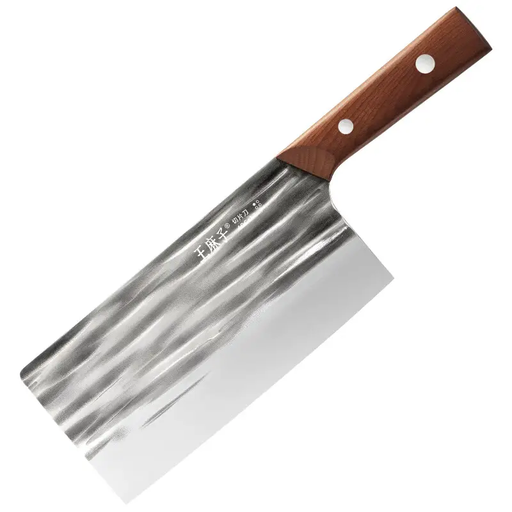
Why this fits the profile: The product description mentions a stainless steel blade, an ergonomic handle and use for meat, vegetables and everyday preparation.
The description states concrete applications and maintenance: hand wash and dry after use. That gives more guidance than just a claim about sharpness.
Stainless steel, ergonomic handle and versatile use for household cooking tasks.
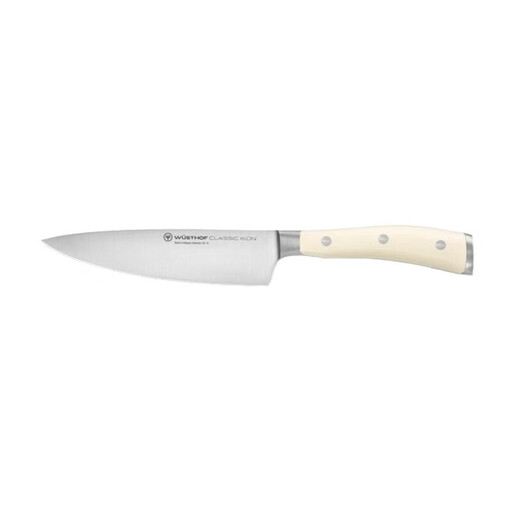
Why this fits the profile: According to the product information, this chef’s knife has a 16 cm blade, high-quality stainless steel, a full-tang design and a synthetic handle with three rivets.
The dimensions, construction and material type are clearly described. According to Wüsthof’s own product information, the knife is forged and precision-ground; check for yourself whether those features match your expectations.
16 cm blade, full tang and finger guard according to the product description.
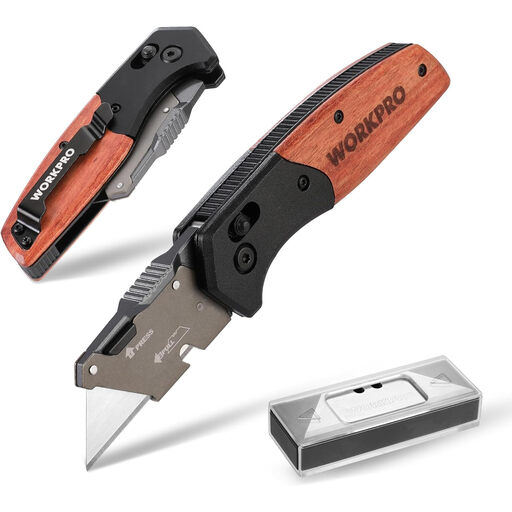
Why this fits the profile: This is a utility knife for cardboard, carpet, plasterboard and packaging materials, not for food. The model weighs 130 grams and includes ten replacement SK5 blades.
The application and safety instructions are clearly defined. The sliding lock, quick-change function and retractable design help with safe storage, provided they are used correctly.
Replaceable SK5 blades, sliding lock and belt clip for DIY work on the go.

Why this fits the profile: According to the product information, the 17 cm santoku knife is intended for herbs, vegetables, fruit, fish and meat. The blade is made from X50CrMoV15 high-carbon stainless steel.
The shape, length and steel type are specified. According to Wüsthof’s own research and product information, it has a 14° double edge; treat this as a product specification, not a guarantee for every user.
17 cm blade, high-carbon stainless steel and hand washing as recommended maintenance.
We’ve put together a full, up-to-date list of products that fully meet these strict selection criteria and comply with current European safety regulations.
A kitchen knife stays usable when you treat it properly:
For a meat knife, steak knife or bread knife, the same basic rules apply: choose the knife based on the task and don’t force it for material it wasn’t designed for.
A chef’s knife of 16 to 20 cm is a versatile choice for vegetables, herbs, meat and poultry. If you do a lot of fine chopping, you might also consider a santoku knife. Look at the available space, your hand size and the weight before you order.
That varies from product to product. Some models are described as dishwasher safe, while other product information recommends hand washing. Hand washing and immediate drying are usually the safer maintenance choice, but always follow the manufacturer’s instructions.
That depends on use, chopping board and steel type. Don’t wait until the knife needs a lot of force. Regular light maintenance is generally more practical than infrequent heavy sharpening. Use a suitable sharpener and have damaged edges assessed before you continue cutting.
