
Vandaag of morgen in huis

Kwaliteit gegarandeerd

Welkomstaanbiedingen ontgrendelen: GRATIS bezorging | Tot 80% korting | Gratis 30 dagen JoyPlus-proefperiode
Download de app
Buying a kitchen knife seems straightforward, until you have to choose between a chef’s knife, a Santoku knife, a cleaver or a small paring knife. A knife might look sturdy in photos, yet still not suit your chopping board, grip or daily cooking routine. That’s why home chefs, hobby cooks and professional chefs should focus on concrete features rather than flashy marketing jargon.
A sharp kitchen knife cuts well, but sharpness alone tells you little about long-term use. You should also check the steel, the grind angle and the maintenance. A thin edge can be precise, but it isn’t automatically suitable for bones, hard squash or frozen items.
A chef’s knife is versatile, but it isn’t designed for every job. A cleaver for bones requires a different construction than a fruit knife or a boning knife. If you use one knife for deboning meat, chopping vegetables and peeling fruit, you can put unnecessary strain on the edge or the blade.
A dark coating, a wooden handle or a decorative Damascus pattern can be appealing. However, you must check whether the product description also gives information about material, blade length, handle and cleaning. According to a brand’s own research, a particular coating or hardness may offer benefits, but that is not an independent guarantee for every user.
For everyday slicing, chopping and mincing, a chef’s knife of around 16 to 20 cm is practical for most users. A 16 cm blade is nimble on a smaller chopping board. A 20 cm chef’s knife offers more cutting surface for large vegetables, meat or fish, but also requires more space and control.
A Santoku knife typically has a wider, straighter edge and is suitable for vegetables, fish and meat. The dimples on some blades can, according to the product description, help prevent slices from sticking. A vegetable knife, paring knife or fruit knife is handier for small preparations and precision work.
For heavier tasks, choose a separate knife:
Stainless steel, such as X50CrMoV15, is used in various kitchen knives. The exact performance depends on the heat treatment, grinding and thickness of the blade. A stainless steel kitchen knife is not maintenance-free: dry it after washing and avoid prolonged soaking.
Always check whether the knife is dishwasher safe. Some models state this explicitly, while for others hand washing is recommended. An edge generally stays usable for longer when you:
A non-slip handle and good balance help with controlled cutting. Pay attention to the shape, the material and how the blade is attached to the handle. A full-tang construction, according to the product description, runs through the handle; this can contribute to sturdiness, but does not in itself tell you how comfortable the knife is for you.
A knife with a half bolster can offer space to sharpen a larger part of the blade. Also check whether the knife is suitable for left- and right-handed use. Store sharp knives out of reach of children and do not use them for prying or twisting.
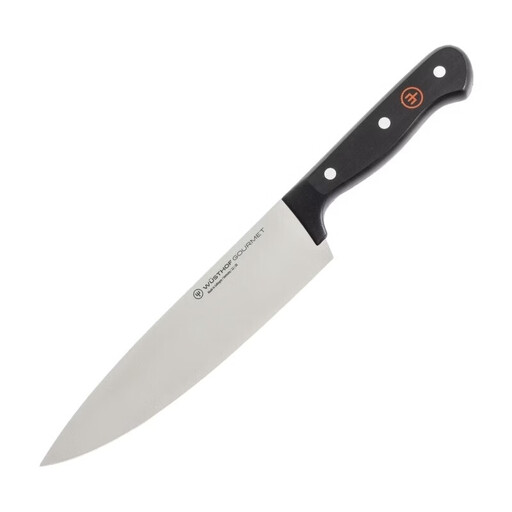
Why this fits the profile: This 20 cm chef’s knife is designed for slicing, dicing and chopping. The plastic handle and stated weight of 184 grams make it suitable for everyday kitchen preparation.
The specifications mention concrete dimensions, materials and usage tasks, rather than just a general claim about sharpness.
20 cm blade; suitable for slicing, dicing and chopping; according to the product description dishwasher safe, with hand washing recommended for a longer lifespan.
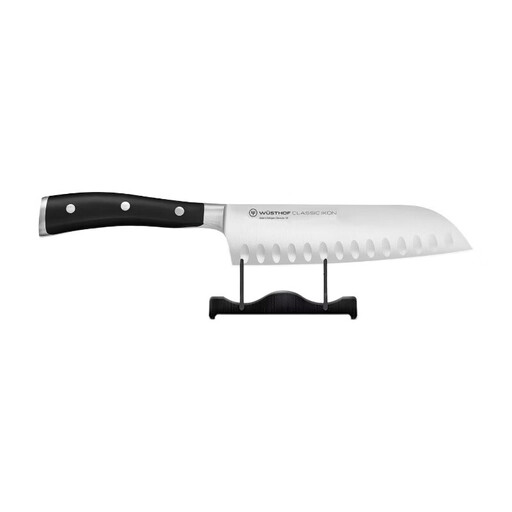
Why this fits the profile: The 16 cm version is nimble for herbs, vegetables, fruit, fish and meat. According to the product information, the knife is made in Solingen from X50CrMoV15 stainless steel.
The stated grind angle of 14 degrees per side and the recommended hand washing provide clear maintenance information.
X50CrMoV15 steel; half bolster; suitable for left- and right-handed use; Granton edge according to the product description.
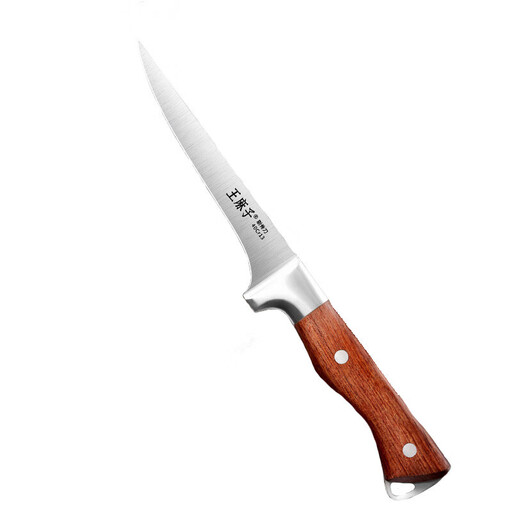
Why this fits the profile: This boning knife is designed for skinning and deboning beef, lamb and pork. That makes it more logical for butchery work or intensive meat preparation than a general chef’s knife.
The knife shape is linked to a specific task. This prevents you from using a universal knife for work around bones.
40Cr13 steel according to the product name; designed for skinning and deboning; suitable for commercial kitchen and butchery applications according to the product description.
We have compiled a full, up-to-date list of products that fully meet these strict selection criteria and comply with current European safety regulations.
A chef’s knife of 16 to 20 cm is a practical starting point for most households. You can use it to prepare vegetables, herbs, fruit, meat and fish. Later, add a paring knife or fruit knife for small precision work, and a boning knife or cleaver when you regularly carry out those tasks.
The lifespan of the edge depends on the steel, the grind angle, the usage and the chopping board. A knife generally stays sharp for longer when you do not cut on glass, stone or metal, and you maintain it regularly with suitable sharpening tools. Replacing a blunt knife is not always necessary; professional or careful sharpening can be a practical option.
Not automatically. First, look at the task for which you need the knife, the blade length, the handle, the steel and the maintenance instructions. A simple vegetable knife can be more suitable than an expensive chef’s knife when you mainly prepare fruit and small vegetables. For intensive use, a specialised shape is often more useful than extra decorative finishing.
