
Vandaag of morgen in huis

Kwaliteit gegarandeerd

Welkomstaanbiedingen ontgrendelen: GRATIS bezorging | Tot 80% korting | Gratis 30 dagen JoyPlus-proefperiode
Download de app
A kettle may seem like a simple kitchen appliance, but the differences between models can make a real difference in everyday use. Think about boiling time, capacity, ease of cleaning and how the appliance switches off. A compact 1-litre kettle is often enough for a student, while a family or office may be better suited to a 1.7-litre kettle.
When comparing models, don’t focus only on a high wattage or modern looks. The right choice depends on how you’ll use it, the water hardness in your home and the space available on your worktop.
A fast-boiling kettle with more power can heat water quickly, but the actual boiling time also depends on the amount of water, its starting temperature and the heating element. A 2200-watt model is most useful if you regularly boil a full kettle. For one cup of tea, it’s more economical to fill it with only the amount of water you need.
A capacity of 1.7 litres sounds practical, but it takes up more space and can encourage you to boil too much water. For a student room, small office or single-person household, a 1-litre kettle may be more convenient. Check the minimum fill level, too. A low minimum is useful when you only need one or two cups.
Look specifically for verifiable features such as automatic shut-off, boil-dry protection and overheat protection. Each feature has a different purpose:
Check the product specifications rather than relying solely on words such as “safe” or “intelligent”. Hot steam and water can still cause burns, even with an appliance designed with safety in mind. So never fill the kettle above the maximum mark.
A 1.7-litre kettle is a practical size for everyday use by several people. You can use it to make several cups of tea or coffee, or prepare instant meals, all at once. A 1.5-litre capacity is a middle-ground option for households that need less water at a time.
As well as the maximum capacity, look at:
A cordless kettle is usually a jug that you can lift off its power base. Check whether the base swivels through 360 degrees. This is handy for both left- and right-handed users.
A stainless steel kettle often has a metal interior or casing. Always check which part is made from stainless steel; “steel design” doesn’t necessarily mean the whole kettle is made of steel.
A glass kettle lets you see the water level at a glance and can have a neutral look. Borosilicate glass is often mentioned in product descriptions for its heat resistance, but always follow the manufacturer’s instructions for use and cleaning.
For plastic models, BPA-free is a relevant product specification. According to the product information, the Melissa 16130301 is sold as BPA-free. Don’t make general health claims based on this: check the documentation for the specific model and the parts that come into contact with water.
Hard tap water can cause limescale to build up in many Dutch households. A kettle with a limescale filter can catch loose limescale particles as you pour. A removable filter is easier to clean than a fixed one.
A filter won’t prevent limescale from building up inside the kettle or on the heating element. So descale your kettle according to the manual, for example with citric acid or a suitable descaling product if the manufacturer allows it. Don’t use abrasive materials on the inside.
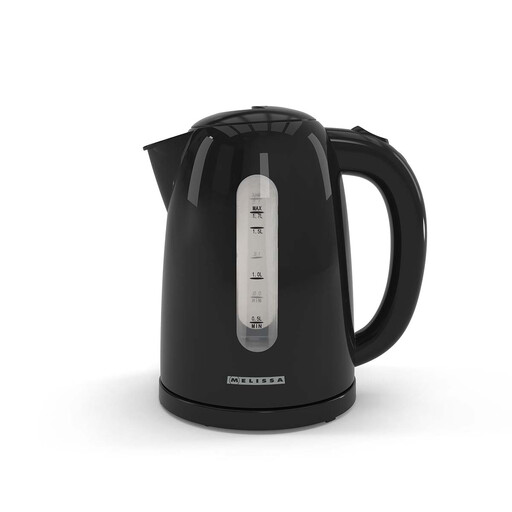
Why it suits this profile: It’s easy to use, and its 1.7-litre capacity gives you room to make several cups at once. That makes it a practical choice for first-time buyers who want a kettle for tea, coffee or instant meals.
The product information lists automatic shut-off, boil-dry protection, a water-level indicator and a limescale filter. This makes its key features easy to check.
2200 watts, concealed heating element, 360° base, BPA-free plastic according to the product information, and cable storage.
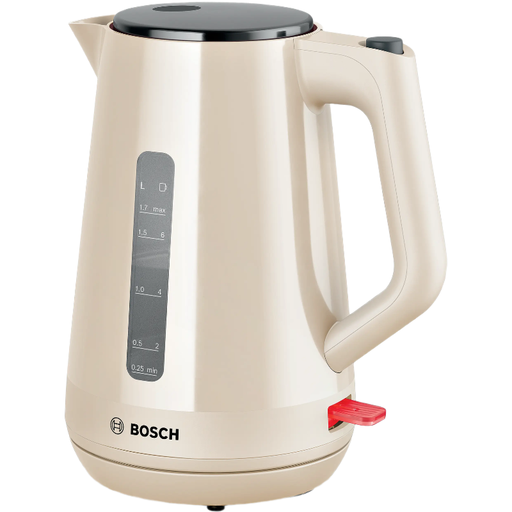
Why it suits this profile: The stainless steel finish, 1.7-litre capacity and one-touch lid make it a good fit for households looking for a straightforward kettle for regular use.
The specifications list automatic shut-off and boil-dry protection. The water-level indicator also helps you avoid heating a full kettle unnecessarily.
Stainless steel construction according to the product information, 1.7-litre capacity, powerful heating and a one-touch lid.
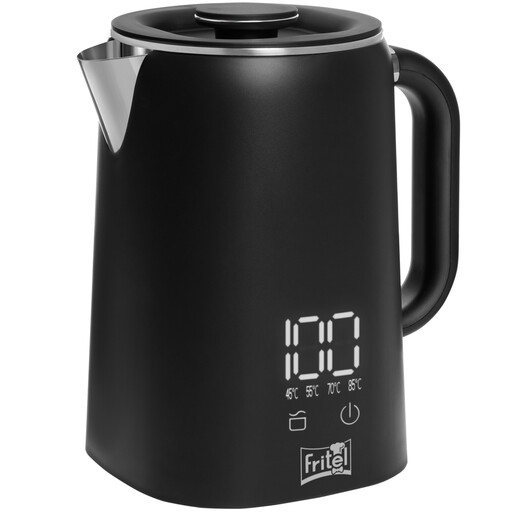
Why it suits this profile: Adjustable temperature settings and a keep-warm function are handy for tea lovers and offices where hot drinks are made throughout the day.
Rather than relying on high power alone, this model offers temperature selection, automatic shut-off and boil-dry protection according to the product information.
Temperature display from 45 to 100 °C, four keep-warm settings, keeps water warm for up to two hours, and a stainless steel interior according to the product specifications.
We’ve put together a complete, up-to-date list of products that meet these strict selection criteria and the applicable European safety regulations.
Its lifespan depends on use, maintenance, limescale build-up and the quality of its components. Regular descaling, avoiding boiling the kettle dry and handling the power base carefully can help reduce wear. There’s no fixed lifespan that applies to every model.
Not automatically. A keep-warm function can save you from having to boil the water again if you use it again soon, but it keeps drawing power in the meantime. Use this function when you’re making several hot drinks one after another. For one cup, it usually makes more sense to boil just the amount you need.
Fill the kettle between the MIN and MAX marks. For tea or coffee, use only the amount you need. Too little water can activate the boil-dry protection; too much water may cause the kettle to overflow or hot water to splash out as it boils.
