
Vandaag of morgen in huis

Kwaliteit gegarandeerd

Welkomstaanbiedingen ontgrendelen: GRATIS bezorging | Tot 80% korting | Gratis 30 dagen JoyPlus-proefperiode
Download de app
A freshly squeezed juice is a simple way to start your day right. But the search for the perfect juicer can quickly become overwhelming. The market is flooded with appliances that promise the world but often end up collecting dust in a cupboard. Many models are difficult to use, a nightmare to clean, or simply not suited for the fruits and vegetables you want to juice.
Before you buy a juicer, it's important to recognise the common pitfalls. This will help you avoid buyer's remorse and choose an appliance you'll actually enjoy using every day.
To choose the right juicer, it's crucial to understand the difference between the main types. Your intended use will determine which appliance is most suitable.
Centrifugal Juicer: This type works like a centrifuge. Fruits and vegetables are spun at high speed (thousands of RPM) against a grater. The juice is forced through a sieve, and the pulp is collected separately.
Slow Juicer (Cold Press): A slow juicer, also known as a cold press, crushes and grinds ingredients at a low speed (usually between 40 and 80 RPM). The juice is slowly pressed through a fine screen.
Citrus Press: This appliance is designed exclusively for juicing citrus fruits like oranges, lemons, and grapefruits. There are manual and electric orange press models.
easy to clean, compact, and affordable.Don't be distracted by marketing terms. In practice, two specifications are most important for daily convenience:
Based on objective specifications, we have selected a number of models that suit different user profiles and avoid the pitfalls mentioned earlier.
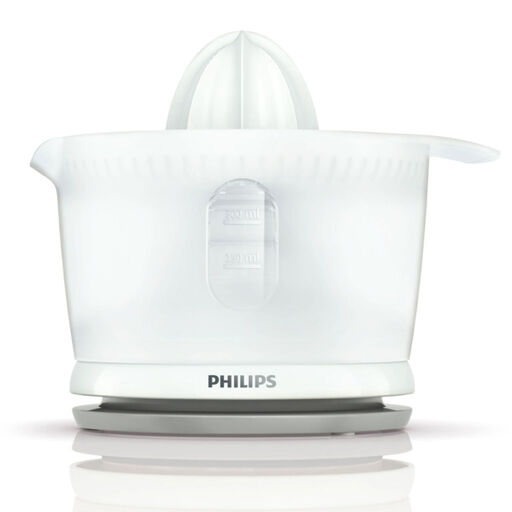
Why This Fits Their Persona: Ideal for those who want a fresh glass of orange or lemon juice without any hassle. No complex settings or cleaning routines—just press and enjoy. Perfect for the countertop.
This is a pure citrus press and doesn't pretend to be anything more. The 'easy to clean' claim is not an empty promise here: the few removable parts are dishwasher-safe.
Compact design with cord storage and a 500 ml juice jug. All detachable parts can go in the dishwasher.
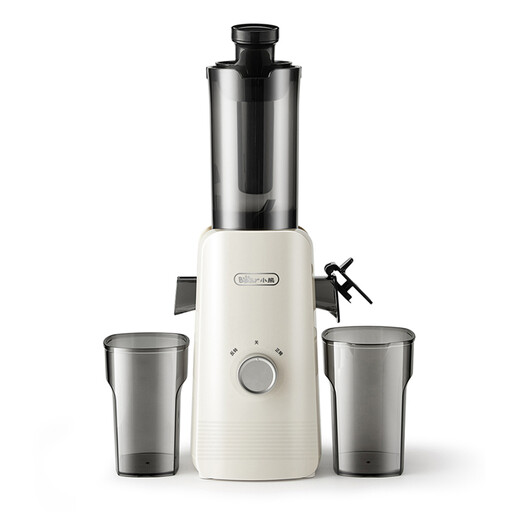
Why This Fits Their Persona: Perfect for those who want to get the most out of their ingredients, from leafy greens to ginger. The cold-press technology is focused on nutrient retention and high juice yield.
This is a slow juicer, where the focus is on the pressing technique, not high wattage. The wide 80 mm feed chute tackles the pitfall of endless chopping.
Wide 80 mm feed chute for whole fruits. The slow rotation (50-80 RPM) ensures a high juice yield and less oxidation. Quiet operation (approx. 60 dB).
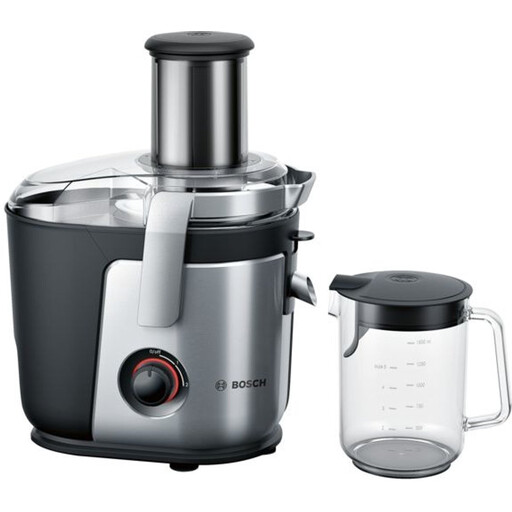
Why This Fits Their Persona: Speed and volume are key here. This powerful centrifugal juicer quickly processes large quantities of hard fruits and vegetables, ideal for a family that wants juice on the table fast in the morning.
The extra-wide 84 mm feed chute makes pre-cutting unnecessary. According to Bosch, the ceramic blade is easier to clean than traditional metal sieves, and the removable parts are dishwasher-safe.
Powerful 1000W motor with 2 speeds for hard and soft ingredients. Large capacity with a 1.5-litre juice jug and a 3-litre pulp container.
We have compiled a complete, up-to-date list of products that meet these strict selection criteria and comply with Dutch safety regulations.
A slow juicer presses at a low speed, which means less heat and oxygen are involved in the process. This generally results in a juice with less foam and a fuller texture. Manufacturers claim that this helps to better preserve nutrients. A centrifugal juicer is faster, but the juice can oxidise (discolour) more quickly and often separates into a watery layer and a foam layer.
A centrifugal juicer makes significantly more noise than a slow juicer, comparable to a high-speed blender. A slow juicer produces a soft, grinding sound and is therefore much quieter to use, which can be pleasant in the early morning.
Absolutely. The leftover pulp from fruits and vegetables is rich in fibre and can be easily reused. For example, you can add it to soups, sauces, muffins, (vegetarian) burgers, or even use it as a base for crackers. This way, you reduce waste and add extra fibre to other meals.
