
Vandaag of morgen in huis

Kwaliteit gegarandeerd

Welkomstaanbiedingen ontgrendelen: GRATIS bezorging | Tot 80% korting | Gratis 30 dagen JoyPlus-proefperiode
Download de app
Jelly sweets might seem simple to choose, but the differences between fruit jelly, Asian jelly, drinkable jelly and classic sweets are significant. The packaging may promise a fruity flavour, while the product actually contains only a small amount of fruit juice. Portion sizes, sweeteners and thickening agents are also not always immediately clear.
As a Joybuy Product Recommendation Officer, I therefore filter based on verifiable information: ingredients, nutritional values, portion size, packaging and when to enjoy them. This way, you avoid relying solely on a striking image or marketing claim.
A jelly with mango, lychee or peach flavour can be mostly water, sugar, syrup, flavouring and gelling agents. Always check the ingredients list and the stated percentage of fruit, juice or fruit purée.
For example, the SHENG XIANG ZHEN White Peach Jelly Cups state 8% white peach. The SHENG XIANG ZHEN Mandarin Orange Jelly states 5% fruit juice. That gives you more context than just the name "fruit jelly".
Jelly cups weighing 180g are considerably larger than a pouch of 120g or 150g. So compare the nutritional values per 100g and per package. A product with few kilocalories per 100g can still provide more energy due to a large portion size.
With multipacks too, it's wise to check how many individual portions you actually get. A 1kg bag is handy for a party, but less suitable if you want to prepare small portions in advance.
Always look at the label. Vegan jelly can be made with konjac powder, carrageenan or other gelling agents, whereas traditional jelly sweets often contain gelatine. Haribo Starmix, for example, lists gelatine in the ingredients and may contain milk, wheat and gluten-containing cereals.
A product claim is no reason to skip other information. Check for allergens, sweeteners, sugar content and storage instructions on the packaging.
Pay particular attention to:
The product information for DELIEF Vegan Collagen Konjac Jelly Peach, for example, states 5 kcal per 100g, 1g of carbohydrates and 0g of fat. The mango variety states 4 kcal per 100g and 0g of sugar. These are product specifications, not health claims.
A multipack is economical if you eat jelly regularly or want to serve several people. For individual moments, smaller portions are more convenient. After opening, follow the instructions: some products need to be refrigerated or consumed within a certain period.
Konjac jelly also has a firm or elastic texture. Always read the warnings on the label for children and supervise them when the packaging advises it.
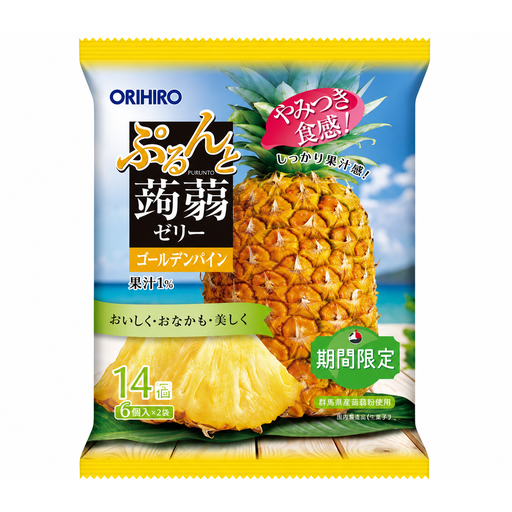
Why this fits the profile: A straightforward pack with six 20g portions is ideal if you want to try an Asian jelly first without buying a large stock.
The nutritional information is also stated per 20g product. This makes the portion easy to assess rather than just looking at the total weight.
6 portions of 20g, pineapple juice as an ingredient and 14 kcal per portion according to the product information.
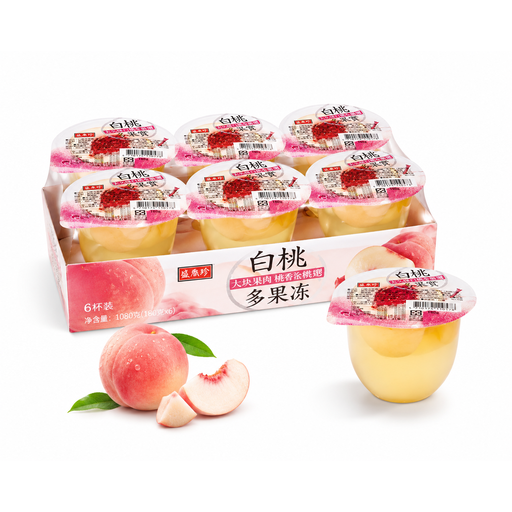
Why this fits the profile: This Taiwanese fruit jelly combines an individual cup with pieces of white peach and a clearly stated fruit percentage.
The product information mentions 8% white peach and states the nutritional values per 100g. You can better compare flavour expectations with the actual composition.
6 cups of 180g, white peach as an ingredient and 75 kcal per 100g according to the product listing.
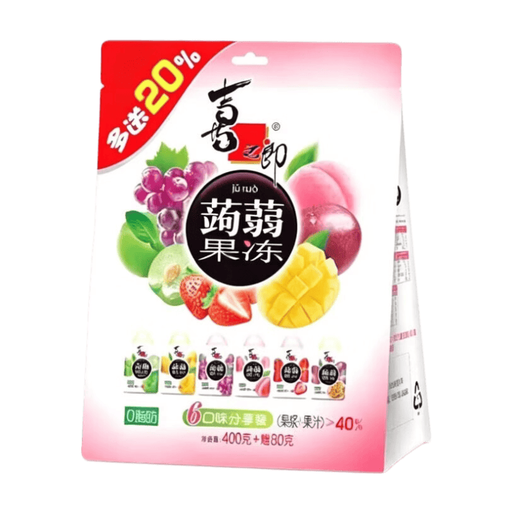
Why this fits the profile: The 400g pack plus an extra 80g is practical for households, shared supplies or multiple snacking moments.
The packaging states six flavours and a minimum of 40% fruit content per pouch according to the product information. Always check the actual label upon delivery.
480g total, six fruit flavours and nutritional values of approximately 107 to 111 kcal per 100g.
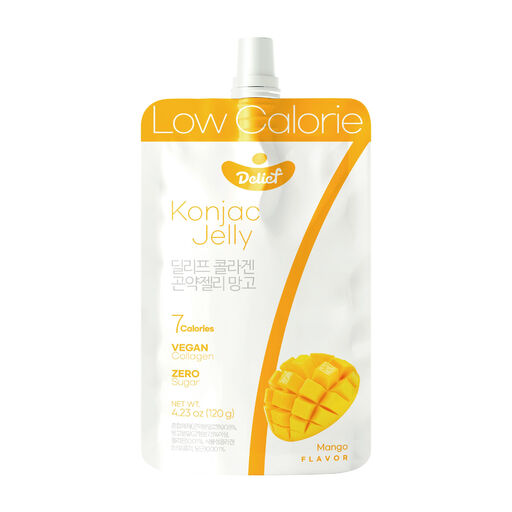
Why this fits the profile: A small pouch with mango flavour and a very low energy value according to the label, designed for an individual snacking moment.
The product information states vegan, 0g of sugar and 4 kcal per 100g. Always check the packaging for allergies and dietary choices.
120g per pouch, mango flavour, konjac powder and a stated 0.8g of carbohydrates per 100g.
We have compiled a full, up-to-date list of products that fully meet these strict selection criteria and comply with current European safety regulations.
No. Konjac jelly usually uses konjac powder as a gelling agent and often has an elastic or firm texture. Regular fruit gums can contain gelatine, sugar syrup or other gelling agents. So look at the ingredients list, not just the product name.
An individually wrapped jelly stick, pouch or drinkable jelly is practical for school, work or travel. Pay attention to the seal, the weight per portion and the storage instructions. Jelly cups are especially handy when you can transport them upright.
No, the amount varies greatly per product. DELIEF Konjac Jelly Mango states 0g of sugar per 100g according to the product information, while Yuki & Love Litchi Flavoured Jellies states 21g of sugar per 100g. So always compare the nutritional values per 100g and per portion before you buy jelly sweets.
