
Livraison le jour même et le lendemain

Qualité garantie

Débloquez vos offres de bienvenue: Livraison GRATUITE | Jusqu'à -80 % | 30 jours d'essai gratuits à JoyPlus
Téléchargez l'application
Jasmine rice is a firm favourite among lovers of Thai dishes, curries, nasi goreng and stir-fries. Yet the choice in the shop can often seem simpler than it really is. Packets use words like “aromatic”, “AAA” and “Hom Mali”, while the real differences lie in origin, grain structure, contents and ease of storage.
As Joybuy Product Recommendation Officer, I’ve filtered the key information from product descriptions so you can choose jasmine rice based on verifiable features rather than marketing claims alone.
Thai jasmine rice, Cambodian fragrant rice and Vietnamese aromatic rice may share similar characteristics, but they are not the same product. If you’re specifically after Thai flavour and aroma, it pays to look at the country of origin and the exact name on the packet.
The term Thai Hom Mali rice appears in the product name of several items. Always check whether the ingredients list and origin information back this up. According to the product description, Green Dragon Thai Hom Mali consists of 100% Thai Hom Mali fragrant rice and lists Thailand as the source. Don’t confuse a brand claim with an independent quality guarantee.
Jasmine rice is a fragrant long-grain rice, but it behaves differently from basmati. Once cooked, jasmine rice is usually soft and slightly sticky. Basmati tends to stay drier and more separate. For curries and many Thai dishes, the softer texture is actually more practical because the rice absorbs the sauce well.
If you’re after separate grains for biryani or pilaf, it’s worth comparing basmati too. For rice with curry, rice for nasi goreng and Thai meals, jasmine rice often suits the desired texture better.
A 10 kg, 18 kg or 20 kg bag may seem good value per kilogram, but it takes up space and needs to be sealed properly. Rice should be stored in a cool, dry place away from direct sunlight. Once opened, an airtight container is wise to keep out moisture, odours and contaminants.
For a small household, jasmine rice 1 kg or 2 kg can be more convenient. Families who eat rice several times a week might look at 4.5 kg or 5 kg. A bulk pack of rice at 18 kg or 20 kg is best suited to large families, restaurants, catering businesses and other heavy users.
At a minimum, check:
In the available product information, several varieties are described as 100% rice. The Green Dragon variant states 100% Thai Hom Mali fragrant rice. Sunlee THM states 100% long grain jasmine rice and Thailand as the origin. Double Panda ST25 is, according to the product description, Vietnamese ST25 fragrant rice from Vietnam. These are verifiable product details; the taste experience can vary depending on the harvest, preparation and personal preference.
Most jasmine rice is long-grain and aromatic. Also consider the texture you want:
Wash the rice according to the instructions on the packet. The water-to-rice ratio varies by brand, cooking method and desired firmness. A rice cooker, pan, steaming and boiling can each give a different result. So follow the instructions on the bag rather than blindly using one fixed ratio.
Use this guide:
Don’t just look at the price of the bag. Divide the selling price by the number of kilograms and factor in storage space, how quickly you’ll use it, and the risk of the rice losing its aroma if the bag is opened frequently.
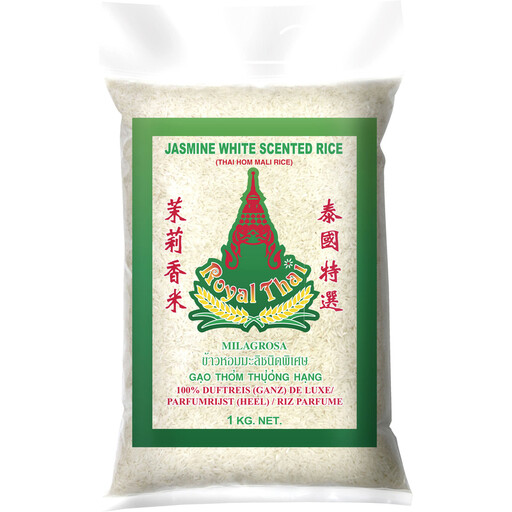
Why this fits the profile: The 1 kg pack lowers the barrier to entry when you’re trying jasmine rice for the first time or have limited space.
You’re not immediately tied to a bulk pack. The product description states Thailand, 1 kg and long-grain jasmine rice.
Thai origin according to the product information, long grain and a compact pack.
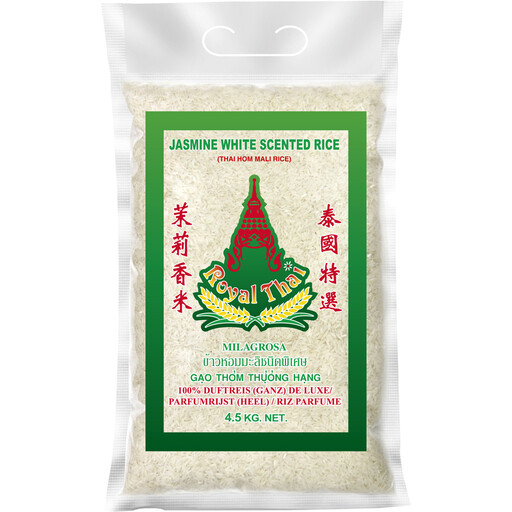
Why this fits the profile: The 4.5 kg pack offers a useful middle ground between a small trial bag and a bulk supply.
The product description mentions 100% rice, long grains and use for fried rice, rice bowls and everyday dishes.
Thai origin according to the product information, aroma as per the product description and suitable for multiple cooking methods.
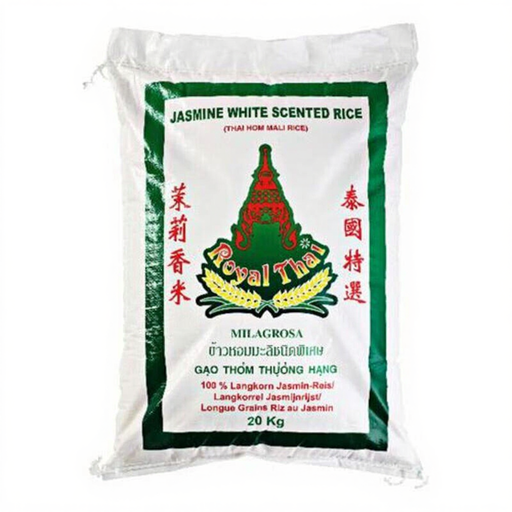
Why this fits the profile: The 20 kg bag is aimed at high-consumption families, restaurants, catering and food service.
The contents are clearly stated as 20 kg. This means you can calculate in advance whether the supply matches your consumption and storage space.
Large supply, Thai fragrant long-grain rice according to the product description and suitable for everyday meals or catering.
We’ve put together a full, up-to-date list of products that fully meet these strict selection criteria and comply with current European safety regulations.
Rinse the jasmine rice if the packet advises it, and measure the water and rice carefully. After cooking, let the rice rest for a few minutes with the lid on the pan. This allows the moisture to distribute more evenly through the grains.
For rice for curry, the texture can be soft and slightly sticky. For rice for nasi goreng, cooled rice often works better because the grains are less likely to clump together during stir-frying. If you’re after a stickier result, you could consider a product with broken rice or one that explicitly states a softer texture. That’s different from sticky rice, which is a separate variety that holds together much more firmly.
The names are sometimes used interchangeably in the UK, but check the product name and ingredients list. Jasmine rice usually refers to aromatic long-grain rice. “Pandan rice” can be a trade name or alternative description. So look mainly at the origin, rice type and cooking instructions.
Unopened rice generally stays fresh until the date on the packet. After opening, storage is key: keep the rice cool and dry, seal the bag well and ideally use an airtight container. Always check the packet for the current best-before information.
For a small household, 1 kg is a good starting point. A 4.5 kg or 5 kg bag suits regular use. Only choose 10 kg, 18 kg or 20 kg if you have enough storage space and will use the rice within a reasonable period.
