
Livraison le jour même et le lendemain

Qualité garantie

Débloquez vos offres de bienvenue: Livraison GRATUITE | Jusqu'à -80 % | 30 jours d'essai gratuits à JoyPlus
Téléchargez l'application
Anyone looking to buy jasmine rice will quickly find dozens of bags labelled with terms like “fragrant”, “AAA”, “Hom Mali” and “premium”. These words don’t always tell the full story. The right choice depends mainly on origin, grain structure, packaging and the dish you’re cooking.
For a family, a 1 kg or 5 kg bag is often practical. Meal preppers, large households and catering professionals tend to look at rice 10 kg, rice 18 kg or rice 20 kg. Below, we explain what to look out for and which options suit different usage scenarios.
“AAA”, “fragrant” and “premium” are labels you should always check alongside the ingredients list and origin. Look for 100% jasmine rice on the packet and make sure the country of origin is clearly stated.
With Thai rice, for example, you’ll come across Thai jasmine rice and Thai Hom Mali rice. These terms refer to rice with a distinctive aroma and soft texture, but always check the label. Not every fragrant rice comes from Thailand.
An 18 kg or 20 kg bag may seem good value per kilogram, but rice takes up storage space. Once opened, the packaging needs to be sealed properly and stored in a dry place. So only buy bulk packs if you use rice regularly or have a suitable storage container.
Jasmine rice is not the same as Golden Sella basmati rice, sticky rice, brown rice or red rice. The differences in aroma, cooking time and texture are noticeable:
First, look at the combination of rice type, country of origin and ingredients. Royal Umbrella Thai Hom Mali, for example, states 100% Thai Hom Mali jasmine rice and Thailand as the origin. Sunlee THM Jasmine Rice is described as 100% long-grain jasmine rice from Thailand.
For Cambodian jasmine rice, Red Dragon AAA and Orchidee Premium AAA are examples of long-grain rice from Cambodia. For a Vietnamese variety, look out for ST25. Blue Silk Premium ST25 and Double Panda Premium ST25 list Vietnam as the origin.
The desired texture depends on your dish. For curries, stir-fries and rice bowls, soft, slightly sticky jasmine rice often works well. If you’re after dry grains for pilaf or biryani, you might prefer Golden Sella basmati.
Also pay attention to the cooking instructions. The product description for Blue Silk ST25 recommends one cup of rice to approximately one and a quarter cups of water, followed by ten minutes of resting. Other varieties suggest a ratio of one part rice to two parts water. Ultimately, use the instructions on the packet, as the variety, harvest and processing can differ.
Choose the size based on your consumption:
Also check the bag’s seal, the best-before date and the storage instructions. Store rice in a cool, dry place away from direct sunlight. Once opened, it’s best to transfer a large bag into an airtight food container.
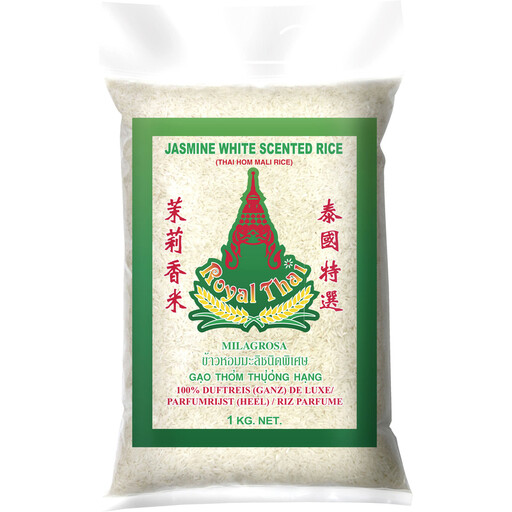
Why it fits this profile: The 1 kg pack limits waste and is ideal for trying Thai jasmine rice for the first time.
You don’t buy a large stock before knowing whether this soft, fragrant long-grain rice suits your dishes.
1 kg, origin Thailand and, according to the product description, suitable for Asian and international dishes.
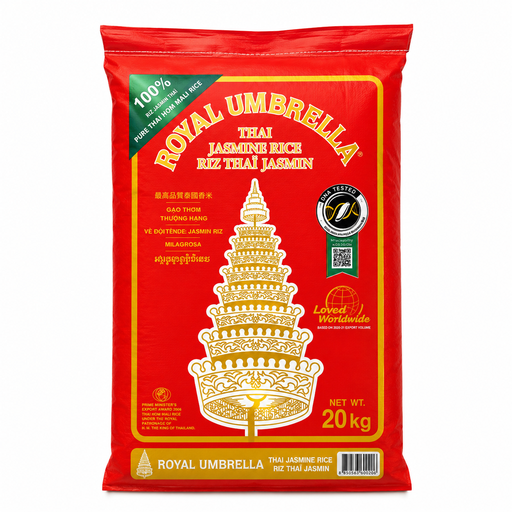
Why it fits this profile: This bulk pack is aimed at users who serve Thai rice often and value a clearly specified origin.
The product information explicitly states 100% Thai Hom Mali Jasmine Rice and Thailand as the country of origin.
20 kg, soft and slightly sticky texture according to the product description, suitable for Thai dishes.
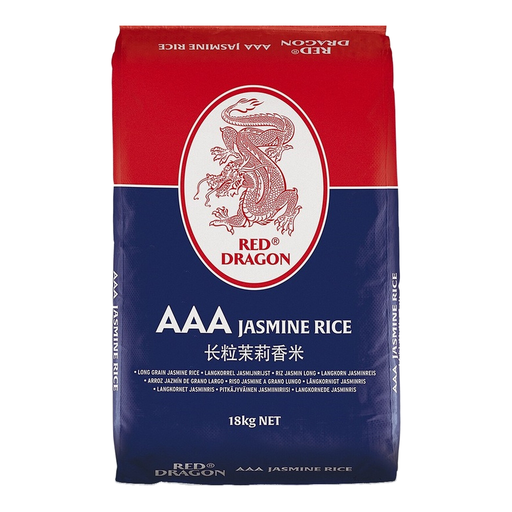
Why it fits this profile: A handy medium size for families, meal preppers and small professional kitchens that use fragrant rice regularly.
The pack is larger than 1 kg but remains more manageable than an 18 kg or 20 kg bag.
100% Cambodian jasmine rice, long-grain and, according to the product description, suitable for stir-fries, curries and rice bowls.
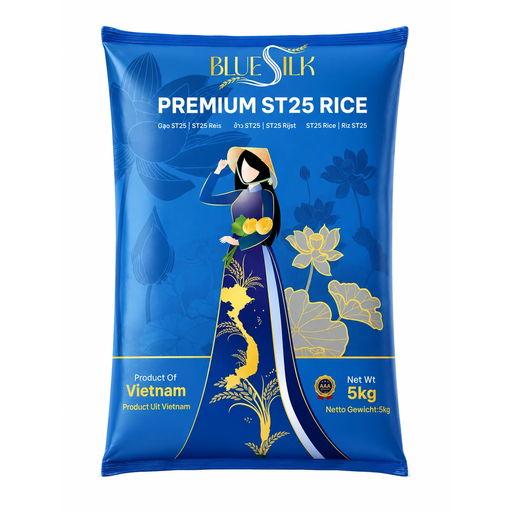
Why it fits this profile: A 5 kg pack of Vietnamese ST25 rice for anyone wanting to compare a fragrant long-grain rice alongside Thai varieties.
The product details mention the ST25 variety, Vietnam and 100% Vietnamese rice, so the choice remains verifiable.
5 kg, soft texture according to the product description and cooking advice of one cup of rice to approximately one and a quarter cups of water.
We’ve put together a full, up-to-date list of products that fully meet these strict selection criteria and comply with current European safety regulations.
This varies by brand and processing. A common starting point is one part rice to approximately one to one and a half parts water. Always check the packet. Rinse the rice first and let cooked rice rest for a few minutes before serving.
Unopened rice can generally be stored until the date on the packet, provided the bag is kept cool and dry. After opening, the quality is better preserved when you seal the rice airtight. If in doubt, check the smell, colour and presence of moisture or insects.
A bulk pack can have a lower price per kilogram, but that depends on the offer and the brand. Calculate the price per kilo and consider storage space, consumption and shelf life. For daily use by a large family or catering kitchen, rice 18 kg or rice 20 kg can be practical; for occasional cooking, 1 kg or 5 kg is usually more manageable.
