
Vandaag of morgen in huis

Kwaliteit gegarandeerd

Welkomstaanbiedingen ontgrendelen: GRATIS bezorging | Tot 80% korting | Gratis 30 dagen JoyPlus-proefperiode
Download de app
Buying jam might seem straightforward, but the options vary considerably in flavour, fruit percentage, sweeteners, texture and jar size. A pot of strawberry jam can contain 45, 50 or more grams of fruit per 100 grams. What's more, terms like extra jam, fruit spread and confiture don't automatically mean the same thing.
If you only look at the front of the packaging, you could end up paying for something that doesn't quite suit how you actually use it. With the following checks, you can make a more informed choice for breakfast, brunch, snacks, desserts or baking.
Pictures of big strawberries, raspberries or blueberries catch your eye easily. Always check the ingredients list and the grams of fruit per 100 grams of product instead. According to the product description, Hero Strawberry Jam contains 50 grams of strawberries per 100 grams. The g'woon varieties with strawberry, apricot, blueberry and pineapple also often list 50 grams of fruit per 100 grams.
With Bonne Maman Four-Fruit Confiture, the product information states 50 grams of fruit per 100 grams. The ingredients include strawberries, cherries, gooseberries and raspberries. That's quite different from a single-fruit strawberry jam.
Some brands highlight that their jam contains no artificial colours, flavourings or preservatives. According to its own product description, Hero's strawberry variety contains only natural ingredients and no artificial flavours, colours or preservatives. However, that doesn't mean the product is sugar-free or low in sugar.
So compare the nutritional values per 100 grams. Hero Strawberry Jam lists 50 grams of sugar per 100 grams. Bonne Maman Strawberry Jam lists 59 grams of sugar per 100 grams. The Bonne Maman reduced-sugar variety contains 39 grams of sugar per 100 grams, according to the product description. Always look at the full label, not just one marketing claim.
A 450-gram jar might seem handy for a family or frequent use, but an opened jar takes up space and needs to be stored correctly. A 170-gram jar could be more suitable if you want to try different flavours or only use jam occasionally.
Always check the instructions on the label after opening. The product information provided advises keeping the jar tightly closed, cool and dry, away from sunlight, heat and moisture. The exact shelf life after opening can vary from product to product.
The fruit content is a practical starting point when comparing jam with lots of fruit. Also pay attention to the type of fruit:
A mixed confiture can be interesting if you want several fruit flavours in one jar. For a specific taste, choose a single-fruit variety instead.
The basis of most jam is fruit, sugar, lemon juice and pectin. Pectin is a setting agent that helps achieve the right spreadable texture. For g'woon Extra Jam Blueberry, the product information lists blueberries, sugar, concentrated lemon juice and pectin.
Also look out for added glucose or glucose-fructose syrup. Sera Apricot Jam contains apricots, glucose-fructose syrup, sugar, citric acid and pectin, according to the ingredients list. That can be relevant if you want to compare different sources of sweetness.
With a product described as jam without artificial additives, still check the full label. The term may refer to colours, flavours or preservatives, but not automatically to all ingredients.
The nutrition table makes products easier to compare. Pay particular attention to:
A lower sugar value can go hand in hand with a different texture or taste. According to the product information, Bonne Maman More Fruit Minimum Sugar Forest contains 163 kcal and 39 grams of sugar per 100 grams. That's a specific product specification, not a general statement about nutritional value or suitability for a particular diet.
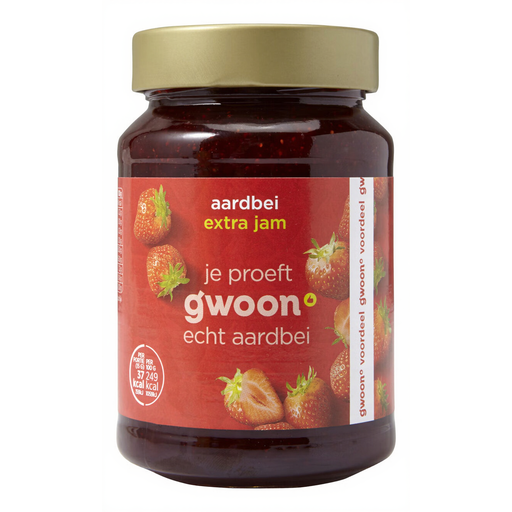
Why this fits the profile: The 450g jar is practical for everyday use on bread, crackers or in yoghurt.
The product description states 50 grams of strawberries per 100 grams, so you can check the fruit content.
450 grams; strawberries as the main ingredient; pectin as a setting agent.
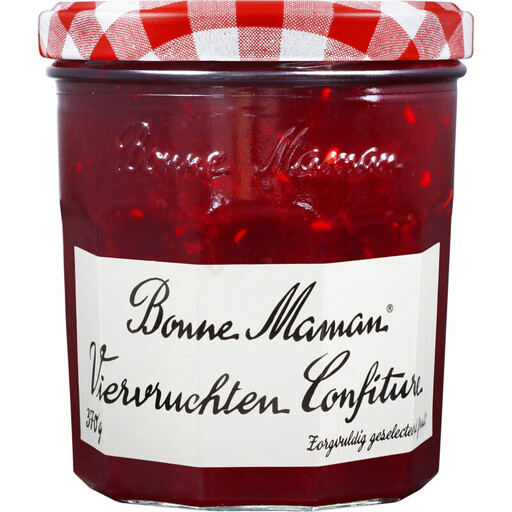
Why this fits the profile: Ideal for anyone looking for a mixed fruit flavour and a medium-sized jar.
The ingredients and fruit content are clearly stated: 50 grams of fruit per 100 grams of product.
370 grams; a blend of four fruit varieties; pectin as a setting agent.
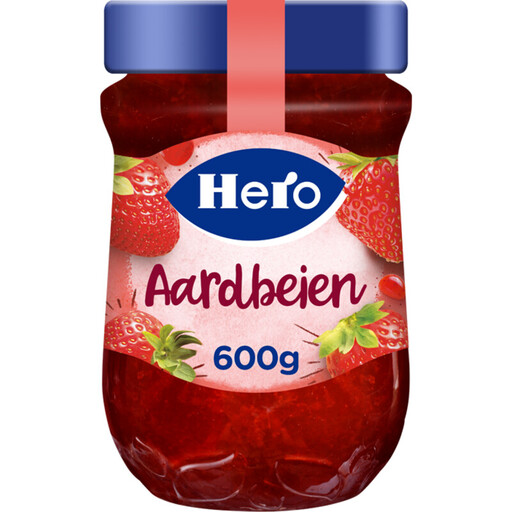
Why this fits the profile: The larger jar suits households where jam is eaten daily or used in baking.
The label states 50% strawberries. According to its own product description, it contains no artificial flavours, colours or preservatives.
600 grams; 50% strawberries; suitable for bread, toast, croissants and yoghurt.
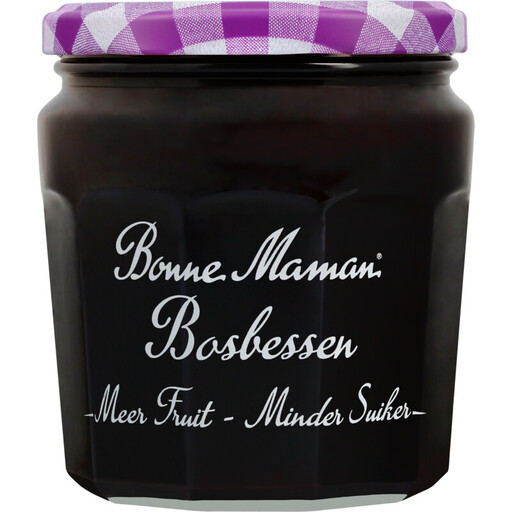
Why this fits the profile: An option for anyone who specifically looks at sugar content when comparing, and wants a high proportion of blueberries.
The packaging states 30% less sugar than traditional jam; always compare this with the table per 100 grams.
335 grams; 60 grams of blueberries per 100 grams; 39 grams of sugar per 100 grams according to the product information.
We've put together a full, up-to-date list of products that fully meet these strict selection criteria and comply with current European safety regulations.
That varies by variety. Among the options, several products list 50 grams of fruit per 100 grams, such as Hero Strawberry Jam, g'woon Extra Jam Blueberry and g'woon Extra Jam Apricot. Bonne Maman Fruit Spread Rosehip lists 60 grams of rosehip per 100 grams. Always check the current packaging, as recipes and labels can change.
The name often refers to a spreadable fruit product, but the composition can differ. So don't just look at the product name. Compare the fruit percentage, the sweeteners used, the setting agent and the nutritional values per 100 grams.
That depends on the brand, the packaging and the storage instructions. Store jam according to the label, keep the jar tightly closed and only use clean utensils. Before use, check the smell, colour, texture and the information on the packaging. If in doubt, it's best not to use the product.
