
Vandaag of morgen in huis

Kwaliteit gegarandeerd

Welkomstaanbiedingen ontgrendelen: GRATIS bezorging | Tot 80% korting | Gratis 30 dagen JoyPlus-proefperiode
Download de app
Buying international beer might seem straightforward: pick a country, a brand or a pack size, and place your order. But there are real differences in volume, alcohol content, packaging and flavour style. If you only look at a flashy label or the word “premium”, you could end up with a multipack that doesn’t suit the occasion or the meal you’ve planned.
This buying guide will help you compare foreign beers objectively. You’ll find practical points to consider for Japanese beer, Thai beer, Polish beer and Belgian pilsner, plus a selection tailored to different uses.
A 24-bottle beer crate or a 24-can box might seem handy for a barbecue or party. But do check the volume per pack. A crate of 330 ml beer contains significantly less liquid than a similar pack of 500 ml beer. So compare the price per litre, not just the price per crate.
For a small gathering, a beer six-pack can be more practical. You’ll have less leftover, and you can try a flavour style before committing to a large box.
Terms like premium lager and premium pilsner beer sound appealing, but they aren’t a uniform European quality classification. Instead, look at verifiable details:
A higher price doesn’t automatically mean the flavour will suit you.
Kirin Ichiban, for example, is available as individual bottles and as a 24-can box. Singha and Leo Beer also come in different pack sizes. Before you check out, make sure you’re selecting a single product, a six-pack or a full box.
Also check the product page and packaging for the exact alcohol information. Some listings may show a rounded percentage in the product name, while the full product details give a more specific figure.
The products in the range vary from around 4.7% to 6.8% ABV. Sapporo, for instance, states 4.7% vol., while Kirin Ichiban states 5.0% vol. Jupiler Pilsner is listed at 5.2% ABV and Karpackie Mocne at 6.8%.
A lower alcohol percentage can work well for a longer evening or a meal where the beer shouldn’t be too dominant. A stronger beer calls for smaller servings and a more deliberate choice. Alcohol is intended only for those aged 18 and over. Do not drink if you need to drive.
The most common sizes are 330 ml, 320 ml, 250 ml and 500 ml. Smaller packs are ideal for individual consumption and won’t sit around after opening. Bottles or cans of 500 ml can be more efficient when stocking up for several people, but may not be the right portion size for everyone.
Also check whether the product comes in cans or bottles. If you want something that chills quickly and is easy to clear away, beer in cans can be a practical choice. Take a look at the range of beer in cans for that.
Most pilsners contain water, barley malt and hops. Some recipes also use rice or maize. Asahi Super Dry, for example, lists water, barley, yeast and hops; Kirin Ichiban and Sapporo include rice alongside barley malt and hops.
If you need to avoid allergens, it’s always wise to check the label. Barley and gluten-containing grains are listed as allergens in many pilsners. The information on the packaging is definitive, as recipes and labelling can change.
Store beer in a cool, dry place away from direct sunlight. Avoid large temperature fluctuations and check the best-before information on the pack.
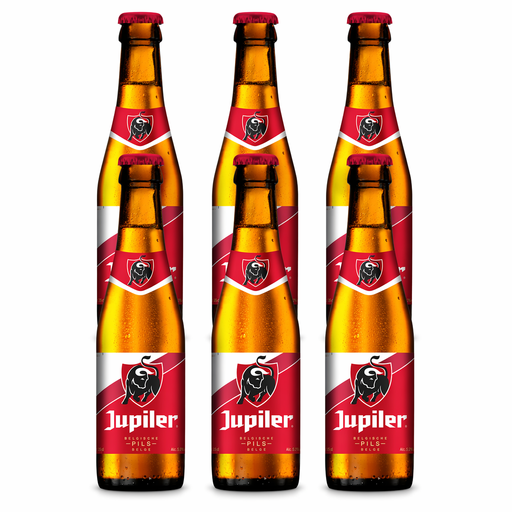
Why this fits the profile: A six-pack of 250 ml bottles is a manageable way to try Belgian pilsner without committing to a full box straight away.
The packaging clearly shows the number of units and the size, so you won’t accidentally buy a large crate.
250 ml per bottle, 5.2% ABV according to the product information, and a recipe with barley malt, maize, water and hops.
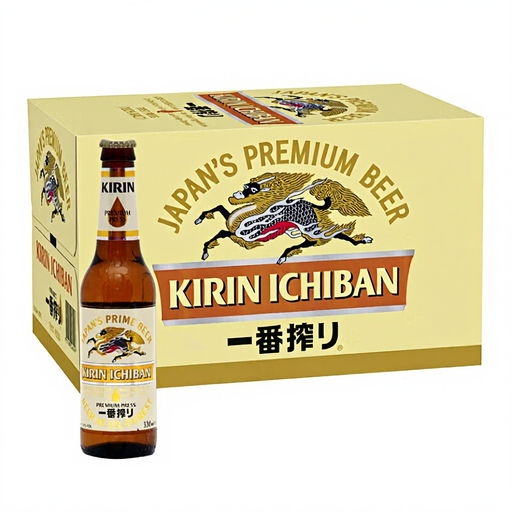
Why this fits the profile: This Japanese lager is ideal for dinner parties and tastings where a consistent size and a full supply are desirable.
The box states 24 cans of 330 ml, so the total quantity is clear upfront.
5.0% ABV, 330 ml per can and ingredients including water, barley malt, hops and rice.
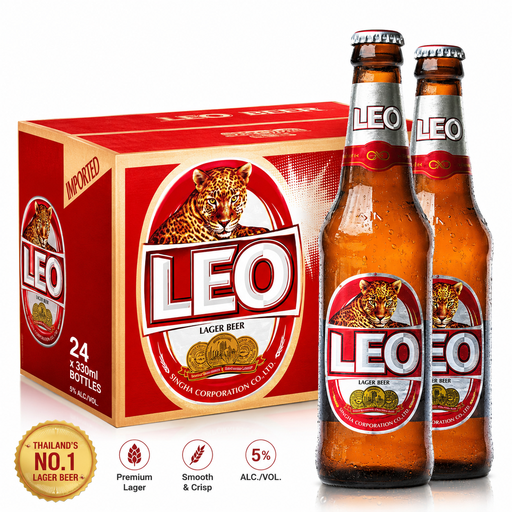
Why this fits the profile: A box of 24 bottles is practical for a barbecue, party or meal with spicy Asian dishes.
The packaging, bottle volume and alcohol percentage of 5% are clearly stated in the product listing.
24 bottles of 330 ml; according to the product description, it pairs well with Thai dishes, grilled meat, seafood and barbecue.
Check the number of units, the volume per bottle, the alcohol percentage and the price per litre. Also compare cans and bottles, as they can differ in storage and convenience. Finally, look at the best-before information and allergens on the label.
Not necessarily. In the selection mentioned, Kirin Ichiban is 5.0%, Sapporo is 4.7% and Jupiler Pilsner is 5.2%. So the country of origin doesn’t automatically tell you about the strength. Always compare the alcohol percentage on the product page or packaging.
Thai beers such as Singha or Leo Beer are linked in the product information to spicy Asian dishes, grilled meat and seafood. For a specific choice, you can also consider bitterness, alcohol percentage and size. The final flavour combination is still a matter of personal taste.
We’ve put together a full, up-to-date list of products that fully meet these strict selection criteria and comply with current European safety regulations.
