
Vandaag of morgen in huis

Kwaliteit gegarandeerd

Welkomstaanbiedingen ontgrendelen: GRATIS bezorging | Tot 80% korting | Gratis 30 dagen JoyPlus-proefperiode
Download de app
Instant noodles are handy for a quick lunch, a late-night snack or to keep in the cupboard. However, Asian noodles vary greatly in flavour, preparation method, portion size and salt content. If you only look at an eye-catching packet or an appealing multipack, you could end up with noodles that are too spicy, don't suit the occasion you had in mind, or simply sit unused in the cupboard.
The label spicy noodles doesn't follow a fixed scale. A noodle soup with chilli powder can taste very different from a dry sauce with chilli oil. Samyang Buldak, for example, is known for its intense heat, whereas kimchi noodles tend to be more sour, savoury and mildly spiced.
So pay attention to the preparation method and the flavour description:
A box of 20 portions is practical for students, families or fans of Korean ramen. But first check the portion size per sachet, the best-before date and whether you'll actually want to eat that flavour often enough. An instant noodle multipack with one strong flavour can be less convenient than several smaller packs offering variety.
Also compare the net weight. A pack of 20 × 120g contains a different amount per portion than a box of 20 × 137g. So don't just look at the price of the box, but also at the price per portion and grams per portion.
Not every packet works like a standard noodle soup. According to the product information, Paldo Volcano Chicken and Paldo Jjajangmen need to be boiled, rinsed with cold water and then mixed with the sauce. With Bibim Men, the noodles are also rinsed cold. If you prepare these products with lots of water as a soup, you'll get a very different result.
Before you buy, check whether you need:
First, choose between Korean instant noodles, Chinese noodles and other Asian noodles. Korean ramen often has firm wheat noodles and bold seasoning. Chinese varieties may include wide noodles, sweet potato noodles or a Sichuan flavour profile.
For a broth-based meal, Nongshim Shin Ramyun, Nongshim Kimchi and Neoguri are logical options to compare. For a dry, intensely seasoned preparation, Buldak, Bibim Men or Paldo Volcano are better suited.
Always check the actual packaging, especially if you have allergies or intolerances. The available product information lists wheat/gluten, soya, milk, fish, peanuts, sesame, mustard and crustaceans among others. The ingredients can vary between different varieties.
The salt content also deserves attention. The product information states, for example, 5.6g of salt per 100g for Nongshim Shin Ramyun 20 × 120g and 5.5g for Luobawang Snail Noodles. These values are per 100g and are not always the same as the amount you use per serving. So check the portion size and the label on the packet.
Store instant noodles according to the product information in a cool, dry place, away from direct sunlight and out of the way of heat and moisture. On receipt, check that the packaging is undamaged and look at the best-before date on the product itself. The information on a website may differ from the actual packaging; always read the ingredients, allergens and preparation instructions before use.
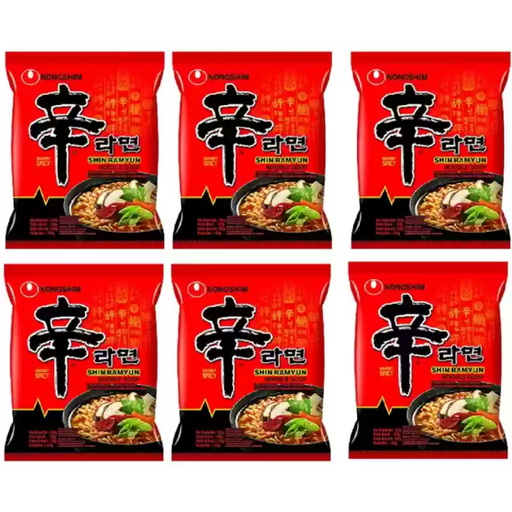
Why this suits the profile: A pack of six portions is manageable for anyone wanting to try Korean ramen without committing to a large stock. According to the product information, preparation takes around 4.5 minutes.
The six individual portions limit waste if you're not yet sure how much heat and broth you enjoy.
Six portions of 120g; prepare with 550ml boiling water; according to the product information, contains wheat, soya and several possible allergens.
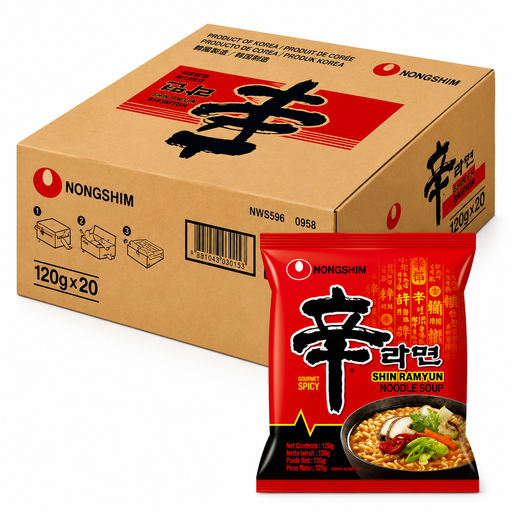
Why this suits the profile: The large box is ideal for households that regularly eat noodle soup and want a steady supply of Korean ramen.
The portions are individually wrapped and the preparation instructions are for a classic noodle soup, not for draining.
20 portions of 120g; cooking time of around 4 to 5 minutes; according to the product information, one portion contains wheat and soya among other ingredients.
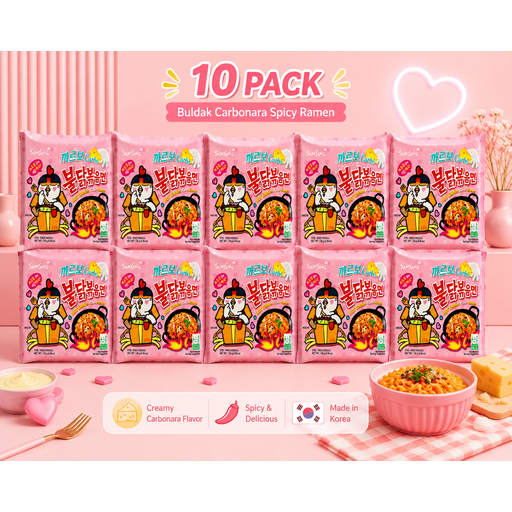
Why this suits the profile: For fans of spicy ramen who want to combine a dry sauce preparation with a creamy carbonara style. The box contains ten individual portions.
The product name and preparation method make it clear that this is a dry, spicy sauce noodle and not a mild noodle soup.
10 portions of 130g; carbonara-style seasoning mix; according to the product information, contains gluten, soya and milk.
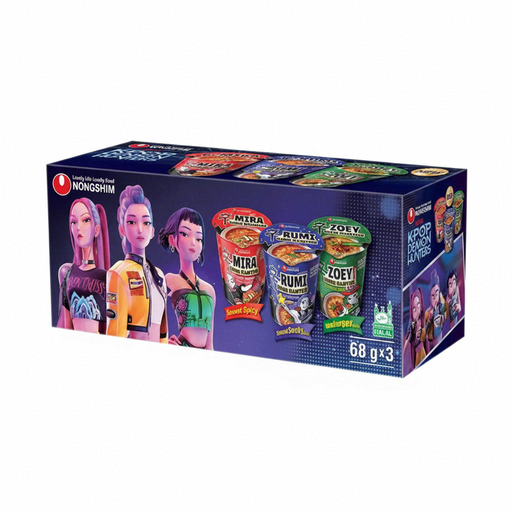
Why this suits the profile: A small set of three cup noodles with different flavours, ideal for anyone wanting variety or looking for a film and K-pop themed gift.
The three different cups mean you're not stuck with one large pack of the same flavour.
Three cups of 68g; prepare with boiling water and wait 3 to 4 minutes; do not microwave according to the product information.
We've put together a full, up-to-date list of products that fully meet these strict selection criteria and comply with current European safety regulations.
That depends on the product. Cup noodles are usually prepared by adding boiling water up to the indicated line and waiting 3 to 4 minutes. Sachet noodles can sometimes be soaked in a bowl of boiling water, but always check the label. According to the product information, Paldo Volcano and Jjajangmen require boiling, rinsing cold and mixing with the sauce.
The exact date is on the packaging. Store unopened noodles in a dry, cool place away from direct sunlight. Do not use a product with damaged packaging. Once prepared, it's best to eat instant noodles straight away, especially when sauce, oil or fresh toppings have been added.
That varies from child to child and from product to product. Heat levels are not uniform, and some varieties also contain relatively high levels of salt or allergens. Check the ingredients and warnings, use less sauce or seasoning if needed, and don't let children handle boiling water unsupervised.
