
Vandaag of morgen in huis

Kwaliteit gegarandeerd

Welkomstaanbiedingen ontgrendelen: GRATIS bezorging | Tot 80% korting | Gratis 30 dagen JoyPlus-proefperiode
Download de app
A good hand mixer is an indispensable tool in the modern kitchen. Whether you're whipping cream for an apple pie, mixing batter for pancakes, or even kneading bread dough, the right appliance saves you time and effort. But buying a mixer can be a minefield. The market is flooded with models that promise a lot but don't always deliver. As a Product Recommendation Officer at Joybuy, I see the challenges consumers face every day. Let's cut through the marketing jargon and focus on what really matters.
Before you pull out your wallet, be aware of these common pitfalls:
powerful hand mixer with 200W can completely outperform a poorly designed 500W model.hand mixer with dough hooks to knead a firm dough, and after two uses, the hooks are bent. Cheap, thin metal accessories are a common problem and render a mixer useless for heavier tasks.electric mixer often comes with a set of whisks and dough hooks. Without a convenient mixer with storage case, these loose parts quickly end up rattling around in your kitchen drawer, risking damage or getting lost. A tidy kitchen starts with smart storage.To avoid a bad purchase, it's wise to look beyond the marketing and focus on the specifications that truly matter. These are the three most important points to check.
Don't just focus on the wattage. Instead, look at the build quality and features. A good motor delivers consistent power without overheating, even at lower speeds. Proper speed control is essential here. A model with at least 5 speeds and a 'soft start' feature prevents flour and batter from flying all over your kitchen. A turbo or boost function is a plus for when you need that extra bit of power for a tough dough.
The quality of the included whisks and dough hooks determines the versatility of your hand mixer.
dough hooks are an absolute must. They should be thick and robust to handle the resistance of the dough without bending.A hand mixer should feel comfortable in your hand, even during extended use. An ergonomic handle and a balanced weight make a huge difference. Also, check the cord length; a cord that's too short severely limits your freedom of movement. The ultimate bonus is an integrated mixer with storage case. This is a snap-on system or a separate case where the mixer and all its accessories fit perfectly. This keeps everything neatly together, and you'll never be left searching.
Based on the criteria above, we've looked at products that offer a practical solution for the serious home cook. Instead of a long list, we're matching a popular model to a specific user profile.
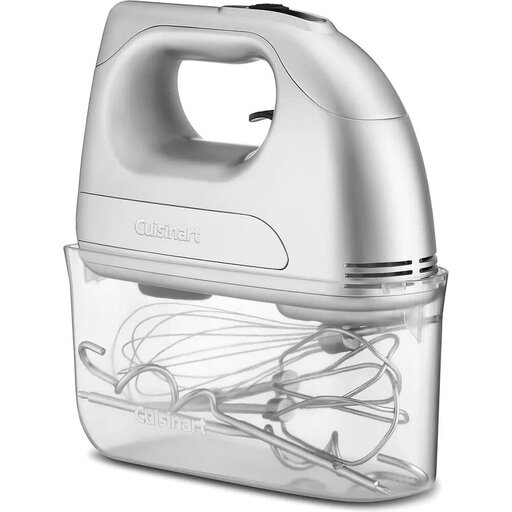
Why This Fits Their Persona: This user bakes and cooks regularly and is looking for a reliable, versatile `Cuisinart hand mixer` that can handle everything from light whipped cream to heavier doughs. Durability and ease of use are top priorities.
The efficient 200W motor delivers consistent power. The professional stainless steel dough hooks are designed for heavy-duty work, and the convenient storage case snaps onto the mixer, keeping all accessories neatly organized.
7 speeds plus an automatic boost function for complete control. Comes with professional whisks, dough hooks, and a handy storage case.
We have compiled a complete, up-to-date list of products that meet these strict selection criteria and safety regulations.
1. How many watts does a good hand mixer really need? For most home kitchen tasks, like whipping cream or mixing cake batter, an efficient mixer with 200 to 300 watts is more than sufficient. For regularly kneading heavy bread dough, a model with slightly higher power and a robust motor construction, like the Cuisinart HM7E, can be a wise choice. However, don't get fixated on the number; the quality of the motor and its power transmission are more important.
2. Can a hand mixer with dough hooks really knead bread dough? Yes, it can, provided you choose the right hand mixer. A model with a powerful motor that doesn't overheat quickly and, more importantly, sturdy, thick stainless steel dough hooks can easily handle smaller quantities of bread dough (up to about 500 grams of flour). For larger quantities or very frequent use, a stand mixer might be a better investment.
3. What is the difference between a hand mixer and a stand mixer? A hand mixer is a compact, portable device that you hold and move through the bowl yourself. It is ideal for quick, smaller tasks and is easy to store. A stand mixer is a larger, stationary appliance with a fixed bowl and a more powerful motor. It is better suited for large quantities and heavy, intensive work like kneading bread dough, but it takes up significantly more counter space.
