
Vandaag of morgen in huis

Kwaliteit gegarandeerd

Welkomstaanbiedingen ontgrendelen: GRATIS bezorging | Tot 80% korting | Gratis 30 dagen JoyPlus-proefperiode
Download de app
Buying a fridge seems simple, until you discover how much models can differ in size, energy consumption, noise level and layout. A mini fridge for a student room has different requirements from a fridge freezer for a family. A camping fridge or car fridge may not work in the same way as a household model either.
Most unsuitable purchases usually result from three common pitfalls:
Before buying, measure not only the space where the appliance will go, but also the route to the kitchen. Check doorways, stairs and the direction in which the door opens. Also make sure there is sufficient ventilation space around the appliance. A fridge placed tightly against a wall cannot dissipate heat as effectively.
A mini fridge of around 40 to 50 litres is suitable for a bedroom, office, student room or studio flat. Check whether it has a separate freezer compartment. Some compact models only have a fridge section or a small chill compartment that is not intended for long-term frozen storage.
A table-top fridge usually has a capacity of around 80 to 110 litres. This size provides more room for everyday groceries and will often fit under or next to a worktop. For example, the Salora CFT109W combines 95 litres of fridge space with a 14-litre freezer compartment. With this type of model, also check the freezing capacity, expressed in kilograms per 24 hours.
For a household with several people, a fridge with freezer or a spacious fridge freezer is more practical. Compare the net capacity of both compartments separately. The total capacity tells you little if the freezer compartment is too small for your needs.
A model with No Frost or Frost Free uses automatic defrosting according to the product description. This can reduce maintenance, but always check whether the technology applies to both the fridge and freezer sections. Low Frost reduces ice build-up, but does not mean that manual defrosting is eliminated entirely.
The stated litres refer to usable capacity, but the layout determines how practical that space is. Check:
A reversible door is useful in a small kitchen. However, check whether the hinges can actually be fitted on both sides and how much space the door needs to open fully.
Since the European energy label for fridges has used the A to G scale, it has become easier to compare models. Alongside the energy rating, check the stated annual energy consumption in kWh. This figure is more relevant to your potential electricity costs than a general claim such as “energy efficient”.
Only compare appliances with a similar capacity and layout. A large fridge freezer will generally use more electricity than a small fridge, even if both have a similar rating. Also avoid placing a fridge next to a radiator or in direct sunlight.
For an open-plan kitchen, bedroom or office, the noise level in dB may be important. A stated value of 35 to 40 dB falls into the range that many users consider relatively quiet, although the actual noise can vary when the compressor switches on.
For travel, the power connections are just as important. A camping fridge, car fridge or portable fridge may support 12V or 24V direct current. Some models also work with 100-240V alternating current. Check whether the cables and adapters are included and whether battery protection is available. A compressor cool box can cool and freeze; a thermoelectric model is often intended for cooling or temporarily keeping items warm and does not have a freezer function.
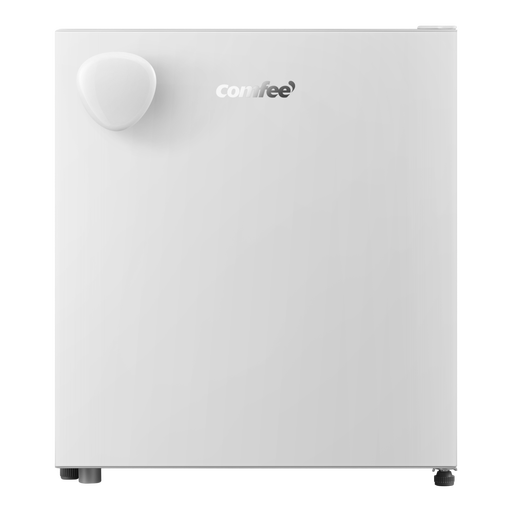
Why it suits this profile: This compact model is aimed at single people, student rooms and small spaces. Its stated width of 44.5 cm makes it suitable for installation in a narrow space.
The product information states a 43-litre capacity, three temperature settings, adjustable storage and a salad compartment. This makes the layout clearer than that of a basic drinks cooler.
Energy rating E, stated annual consumption of 110 kWh and a removable handle.
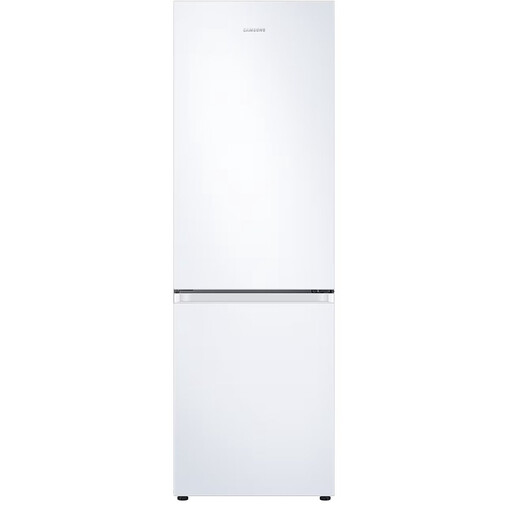
Why it suits this profile: This model is designed for households looking for a spacious fridge freezer with enhanced controls and storage.
The product details list separate fridge and freezer capacities, No Frost, a reversible door and a noise level of 35 dB. This allows you to compare the practical features clearly.
344 litres of net capacity, 230 litres of fridge space, 114 litres of freezer space and control via SmartThings according to the product information.
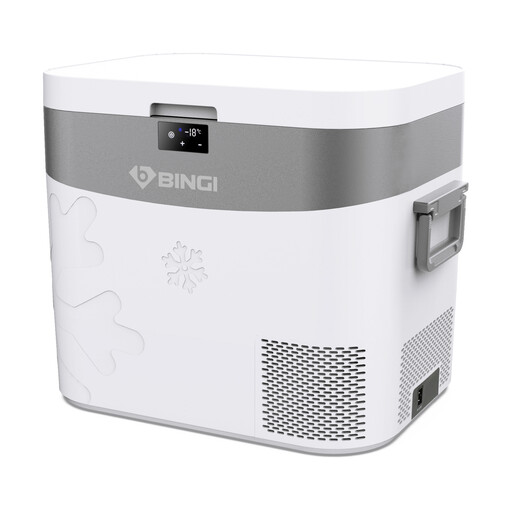
Why it suits this profile: This car fridge is suitable for camping, campervan trips, boats and picnics where you do not want to rely on a fixed mains socket.
The stated compressor cooling and range of -18 °C to 15 °C make it clear that this model offers more than temporary cooling. At least 10 cm of clear space is required around the ventilation openings.
22-litre capacity, 12/24V DC and 100-240V AC connections, plus built-in three-stage battery protection according to the product description.
We have put together a complete, up-to-date list of products that fully meet these strict selection criteria and the applicable European safety regulations.
For one person, a mini fridge or table-top model of around 80 to 120 litres may be sufficient, depending on how often you shop. A household with several people will usually benefit more from a fridge freezer with separately assessed fridge and freezer space. Do not look only at the total capacity; consider the layout as well.
This depends on the annual consumption in kWh, your electricity tariff, the ambient temperature and how you use the appliance. Multiply the stated annual consumption on the energy label by your tariff per kWh for a simple estimate. Compare models with a similar capacity; otherwise, the comparison may be misleading.
Lifespan varies by model, usage and maintenance. Correct positioning, adequate ventilation, regular cleaning and not leaving the door open for long periods all help to reduce unnecessary strain. Before buying, also check the statutory guarantee and any additional manufacturer’s warranty.
