
Vandaag of morgen in huis

Kwaliteit gegarandeerd

Welkomstaanbiedingen ontgrendelen: GRATIS bezorging | Tot 80% korting | Gratis 30 dagen JoyPlus-proefperiode
Download de app
Choosing a new fridge-freezer seems simple until you get tangled in marketing jargon, confusing energy labels, and specifications that raise more questions than they answer. As a result, many people make a choice they later regret. As a Joybuy Product Recommendation Officer, I'm here to help you cut through the noise and focus on what truly matters. Here are the three most common pitfalls and how to navigate them.
The most common mistake with a built-in fridge is incorrectly measuring the niche dimensions. A few millimetres of difference can mean the appliance won't fit or the door won't close properly, leading to energy loss and frustration. Manufacturers specify the niche height, width, and depth with millimetre precision. Don't rely on an estimate; measure the inside of the kitchen cabinet where the fridge will be installed at least twice.
Since 2021, energy labels have become stricter. A model with a D or E rating is often a very energy-efficient fridge compared to a ten-year-old appliance. The pitfall is buying a more expensive model with a slightly better label, when the price difference will only pay for itself after many years. Instead, look at the annual energy consumption in kWh on the label. This figure provides a much more practical view of the actual running costs.
No Frost technology, which prevents ice build-up in the freezer section, is a game-changer. After all, you'll never have to defrost manually again. The pitfall, however, is assuming that all "No Frost" systems are the same. Some can be relatively noisy or dry out the air in the fridge compartment, causing unwrapped vegetables to spoil faster. Therefore, look for additional technologies like separate cooling circuits or humidity control in the vegetable drawers.
Before buying a fridge, there are a few core specifications that will define your choice.
The first choice is between a freestanding fridge and a built-in model.
Always measure the available space, including the necessary ventilation clearance at the back and top (usually 5-10 cm).
In modern homes with an open-plan kitchen, a quiet fridge is not a luxury but a necessity. The noise level is expressed in decibels (dB).
Remember that the decibel scale is logarithmic: a difference of 3 dB is a doubling of the sound intensity.
The required capacity (in litres) depends on the size of your household:
Also, consider the ratio between the fridge and freezer sections. If you freeze a lot of food, a model with a spacious fridge with a freezer compartment or a 50/50 split is a good choice.
Based on these criteria, we have selected several models that suit different needs and situations.
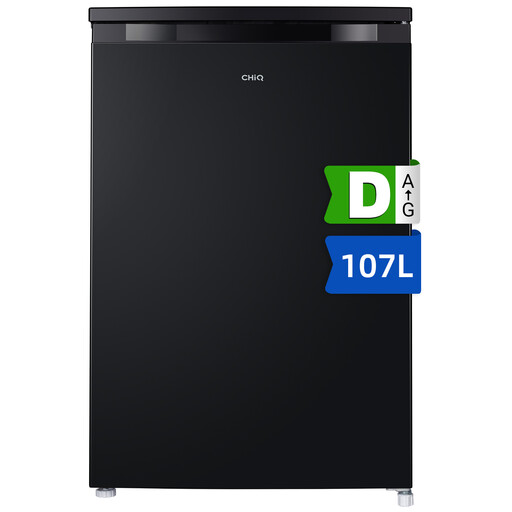
Why This Fits Their Persona: Perfect for a studio, small apartment, or as a secondary fridge. Its compact footprint (0.3 m?) fits anywhere, while the 107-litre capacity (94L fridge, 13L freezer) is ample for a one or two-person household.
This model has a favourable D energy label and low consumption, proving you don't need an A-label for efficiency in a compact size. It's a practical, no-nonsense choice.
Quiet (39 dB) and features a flexible layout. The separate freezer compartment is a bonus in this price category. According to CHiQ, the compressor comes with a 12-year warranty.
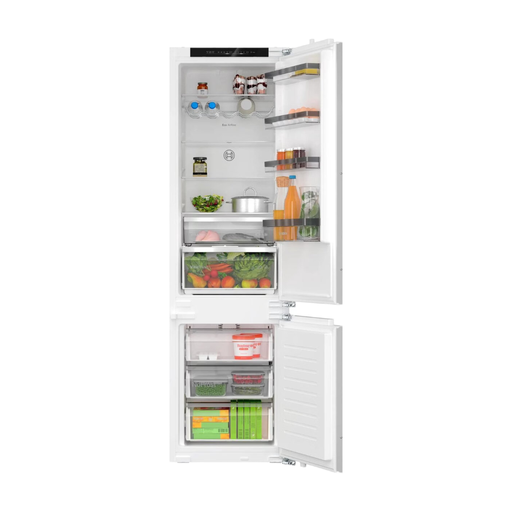
Why This Fits Their Persona: Ideal for families renovating their kitchen and seeking a seamless look. The XL niche size (194 cm) provides a generous 290 litres of space. The Bosch fridge is designed for peace and convenience in a busy household.
This model tackles the "No Frost" pitfall with separate cooling circuits, which prevents odour transfer. Furthermore, the VitaFresh XXL drawers provide the humidity control that standard No Frost systems lack.
Whisper-quiet at 34 dB, perfect for an open-plan kitchen. According to Bosch, the EcoAirflow system ensures an even temperature, keeping groceries fresh for longer.
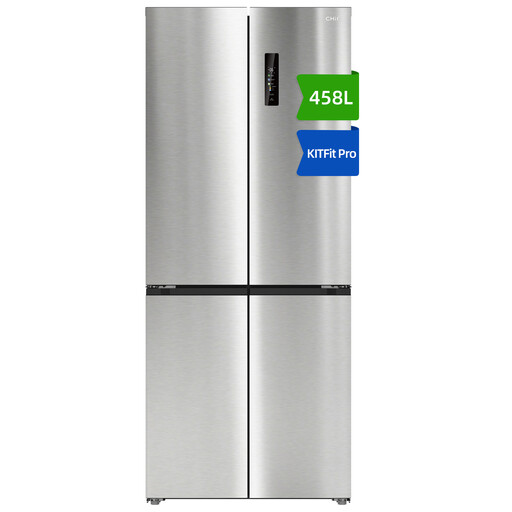
Why This Fits Their Persona: For those with the space and desire for a statement appliance. With a 458-litre capacity and a sleek stainless steel design, this model offers the presence and space of an American-style fridge but with a more modern 'cross-door' layout.
This model bypasses the 'integration nightmare' for freestanding units. Thanks to the KITFit Pro technology with bottom ventilation, the appliance can be placed with just a 4 mm gap next to cabinets for a sleek, near-integrated look.
Very quiet for its size (37 dB). The flexible Care+ Space, with three temperature settings, offers targeted cooling for meat, drinks, or vegetables, going a step beyond a standard crisper drawer.
We have compiled a complete, up-to-date list of products that fully meet these strict selection criteria.
A fridge-freezer lasts for 10 to 15 years on average. The actual lifespan heavily depends on the brand, the quality of the compressor, and maintenance. Regularly cleaning dust from the back and keeping the door seals clean can significantly extend its life.
The difference is greater than you might think. The decibel scale is logarithmic, meaning a 3 dB decrease represents a halving of the sound pressure. Therefore, a 35 dB model is noticeably quieter than a 38 dB one, and significantly quieter than a 41 dB one. In an open-plan kitchen or studio, this can be the difference between peace and constant background noise.
Yes, it certainly can be. The new energy labels, effective since 1 March 2021, are much stricter. An appliance that previously had an A++ or A+++ rating might now receive a D or E label. A model with an E label can still be far more efficient than your old fridge. It is wiser to compare the annual energy consumption in kWh to make a realistic estimate of the running costs.
