
Vandaag of morgen in huis

Kwaliteit gegarandeerd

Welkomstaanbiedingen ontgrendelen: GRATIS bezorging | Tot 80% korting | Gratis 30 dagen JoyPlus-proefperiode
Download de app
Choosing a new fridge-freezer seems simple, until you dive into the specifications. Manufacturers make grand promises with terms like 'extra spacious' and 'whisper-quiet', but reality often tells a different story. As a Product Recommendation Officer at Joybuy, I see the challenges consumers face every day. To help you avoid a bad purchase, I've outlined the three most common pitfalls.
Many marketing claims are designed to entice, but they don't always tell the whole story. Pay attention to the following points to avoid investing in an appliance that doesn't suit your needs.
A common mistake is to blindly trust the advertised litre capacity. Gross capacity is not the same as the net, usable space. Thick insulation walls, awkwardly placed drawers, or a large freezer compartment in a small model can significantly reduce the effective storage space. You might think you're buying a family-sized fridge, but in reality, the weekly groceries barely fit inside.
Tip: Look beyond the litres. Assess the layout: are the shelves adjustable? Is there a bottle rack? Will your favourite products fit easily?
A low purchase price is tempting, but it can prove costly in the long run. A refrigerator runs 24/7 and is one of the biggest energy consumers in your home. A model with a poor energy label (like E or F) can cost you dozens of euros more in electricity each year than a more efficient one. That initial 'saving' at the time of purchase will be gone within a few years.
Tip: Invest in a model with a good energy label. An energy-efficient C-rated fridge often offers an excellent balance between purchase price and low running costs.
In modern homes with an open-plan kitchen, a quiet fridge is not a luxury, but a necessity. Manufacturers often advertise with the term 'quiet', but what does that actually mean? A noise level of 42 decibels (dB) is significantly louder than 38 dB. That difference can make or break the comfort in your living space.
Tip: Always check the exact noise level in decibels. A model below 39 dB is generally considered quiet.
To make the right choice, focus on the specifications that truly matter. These are the three most important factors.
Since 2021, the energy label has been updated and now runs from A (most efficient) to G. The old A+++ labels are no longer comparable. Today, a model with a C or D energy label is a very efficient and wise choice. The annual energy consumption, expressed in kilowatt-hours (kWh), gives a concrete indication of the running costs. A lower kWh number means a lower energy bill.
The right capacity depends on your household:
Also, consider the finish. A sleek black fridge or a timeless stainless steel fridge can completely transform the look of your kitchen.
A No Frost fridge prevents ice build-up in the freezer section by continuously circulating cold, dry air. This has two major advantages: you'll never have to manually defrost again, and the appliance remains efficient, as ice build-up increases energy consumption. It's a feature that is often worth the extra investment.
Based on objective specifications, we have selected several models that suit different needs and avoid the pitfalls mentioned earlier.
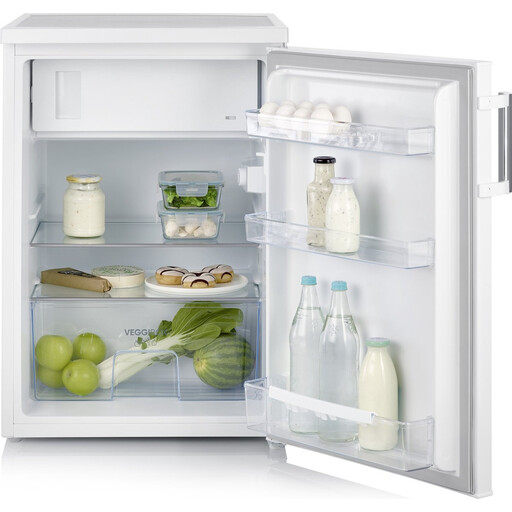
Why This Fits Their Persona: Ideal for first-time buyers, student rooms, or small kitchens. With 120 litres, this tabletop model offers a surprisingly practical layout without taking up much floor space.
With a C energy label and a noise level of just 37 dB, this model avoids the pitfalls of high energy costs and disruptive noise, which is crucial in a small living space.
Compact and efficient. The combination of low energy consumption and a quiet design makes it a smart choice for budget- and space-conscious households.
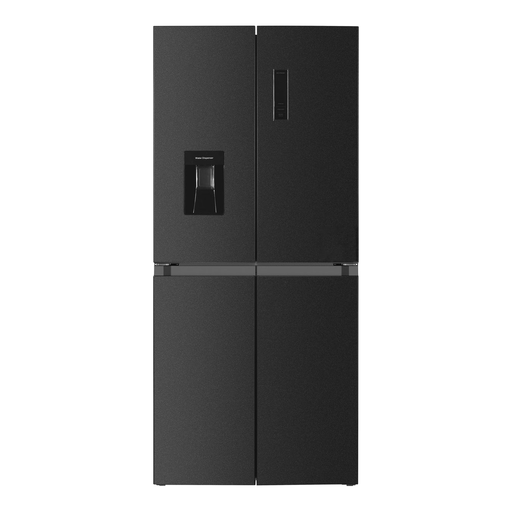
Why This Fits Their Persona: With a huge net capacity of 419 litres, a water dispenser, and a well-organised four-door layout, this model is perfect for busy families who stock up on groceries.
The Total No-Frost technology eliminates the frustration of defrosting. The 5-year warranty provides peace of mind against unexpected defects, a common concern with large appliances.
Very spacious and flexible storage. The combination of a water dispenser, No-Frost, and a long warranty period makes this a very complete model for families.
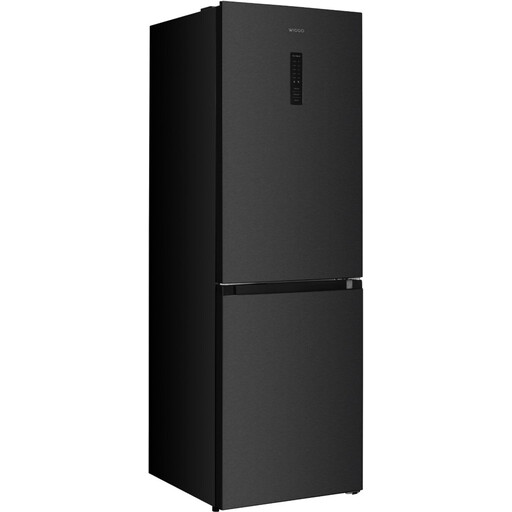
Why This Fits Their Persona: For those who value design as much as functionality. The Dark Stainless Steel finish lends a high-end, modern look to any kitchen.
This model proves that style doesn't have to be expensive to run. With an exceptional B energy label, it's one of the most efficient in its class, allowing you to completely avoid the pitfall of high energy costs.
Outstanding energy efficiency (B-rated) and a premium design. The Total No Frost feature and 5-year warranty make it a smart and stylish investment.
We have curated a complete, up-to-date list of products that meet these strict selection criteria and comply with local regulations.
No Frost completely prevents ice build-up through constant air circulation, meaning you never have to defrost. Low Frost significantly reduces ice formation, but you will still need to manually defrost the freezer compartment occasionally (about once a year). No Frost offers more convenience, while Low Frost is often slightly more energy-efficient and quieter.
The noise level is measured in decibels (dB). A refrigerator is considered quiet at a value of 38 dB or lower. This is comparable to a whisper in a library. Models around 41 dB are already clearly audible and can be disruptive in an open-plan kitchen. Every 3 dB increase represents a doubling of the perceived loudness.
The average lifespan of a fridge-freezer is about 10 to 15 years. The lifespan depends on the brand's quality, maintenance, and intensity of use. If your current fridge is over 10 years old and has a poor energy label, replacing it can save you money on your energy bill in the long run, even if it's still working.
