
Vandaag of morgen in huis

Kwaliteit gegarandeerd

Welkomstaanbiedingen ontgrendelen: GRATIS bezorging | Tot 80% korting | Gratis 30 dagen JoyPlus-proefperiode
Download de app
Choosing a new fridge-freezer seems simple until you get tangled in a web of energy labels, marketing jargon, and unclear specifications. Many people pay too much for features they don't need or end up with a model that becomes an annoyance after just a few months. As a Joybuy Product Recommendation Officer, I'll help you cut through the noise and make a choice that fits your household and your budget. Let's look at the three most common pitfalls.
Pitfall 1: The myth of 'large' capacity Manufacturers advertise a total capacity in litres, but this number says little about the actual usable space. An awkward layout with fixed shelves or thick walls can make a so-called large fridge surprisingly cramped. You end up paying for volume you can't use.
Pitfall 2: Fixating on the energy label An energy-efficient fridge-freezer with a C label sounds like a smart investment. But if the purchase price is hundreds of euros higher than a model with an E label, it can sometimes take more than ten years to recoup that extra cost. The total cost of ownership is more important than the label alone.
Pitfall 3: Overpaying for 'Total No Frost' A No Frost fridge is convenient because you never have to defrost the freezer section again. For a large, busy family, this is a godsend. But for a one or two-person household where the freezer is opened less frequently, a model with 'Low Frost' can be a much more affordable and equally practical choice.
To avoid a bad purchase, it's important to focus on the specifications that truly matter for your situation.
Before you buy anything, measure the available space accurately. For a freestanding fridge-freezer, allow for at least 5-10 cm of extra space at the back and sides for ventilation. A built-in fridge-freezer must fit precisely into your kitchen's niche.
As a guideline for capacity, you can use the following:
The new energy label runs from A (most efficient) to G. Models with a D or E label often offer a good balance between purchase price and running costs.
Do you have an open-plan kitchen? Then a quiet fridge is essential. Pay attention to the noise level, expressed in decibels (dB), and the noise class (A to D). A model rated at 39 dB or less (Class C) is generally considered quiet.
Based on these practical criteria, we have selected a number of models that suit different needs.
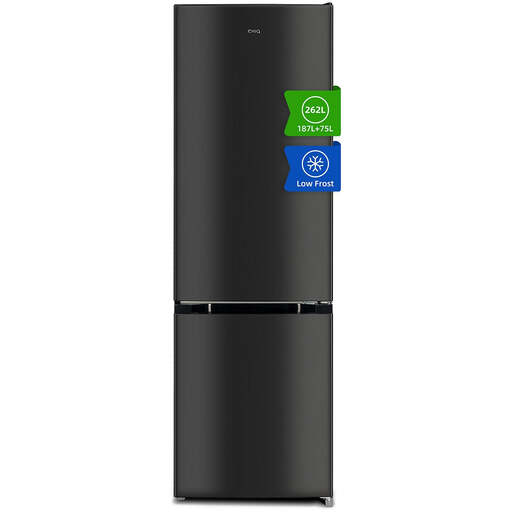
Why This Fits Their Persona: Ideal for smaller kitchens or 1- to 2-person households. The slimline fridge width of 55 cm and the reversible door make it flexible for any space. The 262-litre capacity is more than enough for weekly groceries.
You don't pay for the premium No Frost feature if you don't necessarily need it. The Low Frost technology is a practical and more affordable alternative that significantly reduces ice build-up.
Efficient use of space and a low noise level of 39 dB. According to the manufacturer CHiQ, you get a 12-year warranty on the compressor.
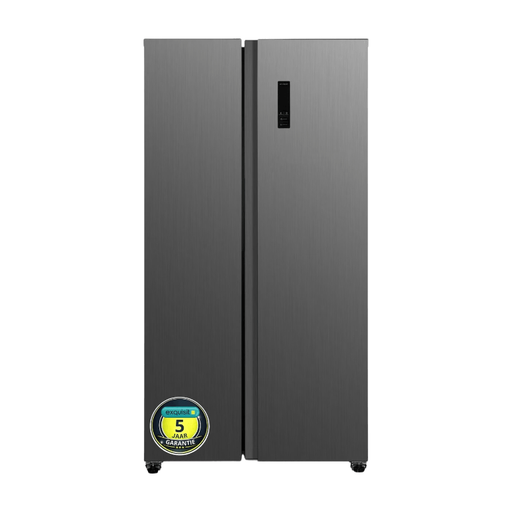
Why This Fits Their Persona: With 442 litres of total capacity, there is more than enough room for a large family's weekly shop. The American-style fridge layout provides an excellent overview of all your food items.
This model offers genuinely usable storage thanks to its wide shelves and numerous door compartments. The No Frost technology saves a busy family the time and effort of defrosting.
Very spacious capacity, quiet operation (39 dB), and a handy Ice Twister for ice cubes without a water connection.
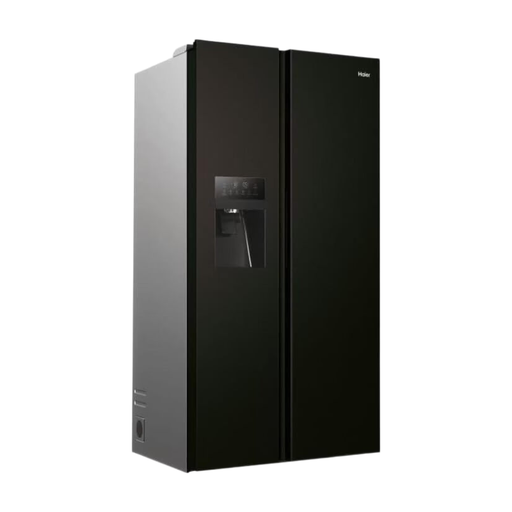
Why This Fits Their Persona: The sleek, black fridge finish and side-by-side design are an asset to any modern kitchen. The built-in fridge with an ice dispenser offers the luxury of chilled water and ice cubes at the touch of a button.
This model is more than just a beautiful object. Its huge 515-litre capacity and No Frost technology make it extremely practical and low-maintenance, bringing design and functionality together.
Stylish black design, enormous storage space, and the convenience of an integrated water and ice dispenser.
We have compiled a complete, up-to-date list of products that fully meet these strict selection criteria and Dutch safety regulations.
A fridge is generally considered quiet if its noise level is below 40 decibels (dB). For open-plan kitchens, it is advisable to look for models with a noise class of C or B, which often produce around 35-38 dB. This is comparable to the sound in a quiet library.
A freestanding fridge-freezer is a standalone appliance that you can place anywhere there is a power outlet, as long as there is sufficient ventilation space. A built-in fridge-freezer is specifically designed to be installed inside a kitchen cabinet. The fridge door is covered with a furniture panel that matches the rest of your kitchen for a seamless and sleek look.
Yes, it certainly can be a wise choice. Although a model with a better label (like C or D) is more economical in the long run, its purchase price is often significantly higher. If you have a more limited budget or don't use the fridge very intensively, an energy-efficient fridge-freezer with an E label can offer an excellent balance between the initial cost and the annual energy bill.
