
Vandaag of morgen in huis

Kwaliteit gegarandeerd

Welkomstaanbiedingen ontgrendelen: GRATIS bezorging | Tot 80% korting | Gratis 30 dagen JoyPlus-proefperiode
Download de app
A new fridge-freezer is a major investment for your household. It's an appliance you'll use every day, and it needs to be built to last for years. However, the market is saturated with marketing jargon and technical specs that create more confusion than clarity. This makes the risk of making the wrong choice very real. Before you make a decision, it's crucial to know what to look for. We'll discuss the three most common pitfalls and how you can avoid them.
Pitfall 1: The Vague Promise of "No Frost" Many manufacturers advertise "No Frost," but not all technologies are created equal. Sometimes, "Low Frost"—which only reduces ice build-up—is presented as a full-fledged No Frost solution. The result? You think you're done with defrosting, only to find yourself chipping away at ice in your freezer compartment a year later.
Pitfall 2: Unrealistic Capacity Claims Pay close attention to the difference between gross and net capacity. Gross capacity is the total internal volume, but net capacity—the actual usable space after accounting for shelves, drawers, and motor components—is what truly matters. A fridge that looks spacious on paper can be disappointing in reality.
Pitfall 3: Underestimating Noise Levels Especially in an open-plan kitchen, the sound of a refrigerator can be disruptive. A difference of just 3 decibels (dB) is perceived by the human ear as a doubling in loudness. A 40 dB model is noticeably louder than a quiet fridge of 37 dB. Don't be swayed solely by price and appearance.
To avoid a bad purchase, it's important to look beyond the marketing and focus on the specifications that truly count. These are the three most important factors to consider.
Since 2021, the energy label has been updated, now running from A (very efficient) to G (least efficient). An energy-efficient fridge with a good label, such as C or D, can save you dozens of euros annually on your energy bill. In addition to the label, always check the annual energy consumption in kWh on the product information sheet. This gives a concrete picture of the expected costs. A model with an E label can still be a sensible choice, depending on its size and features, if its consumption is low.
The range of options is diverse: from a compact table-top fridge for a student flat to a spacious American-style fridge for a large family. The most popular option is the freestanding fridge with a freezer section at the top or bottom.
Before you order:
Focus on technology that offers daily convenience:
Based on the criteria above, we have selected a number of models that suit different households.
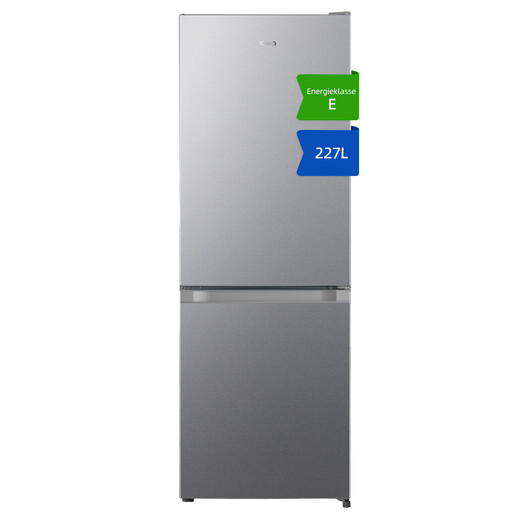
Why It's a Match: With a width of just 54 cm, this model fits perfectly into a compact kitchen, studio, or apartment. The total net capacity of 227 litres (153L fridge, 74L freezer) is more than enough for a one or two-person household.
This model is honestly specified as Low Frost, which reduces ice build-up without the false promise of being completely ice-free. The 39 dB noise level is clearly stated, so you know what to expect.
The slim design and reversible door offer maximum placement flexibility. The ratio of its compact exterior to its spacious interior is a major plus.
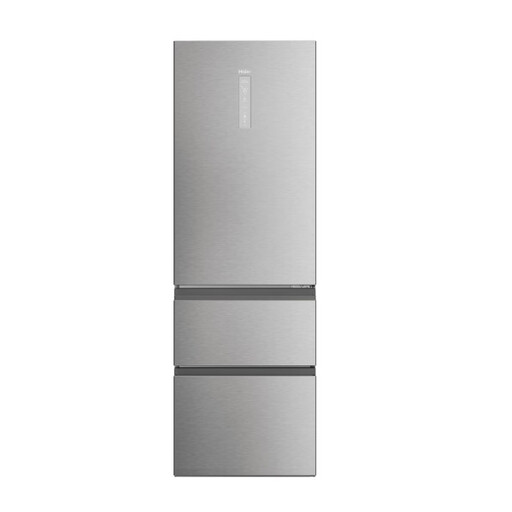
Why It's a Match: With 360 litres of net capacity and convenient freezer drawers, this model offers plenty of well-organised space for a family's groceries. The three-door layout is practical and helps retain cold air.
This model features Total No Frost, making manual defrosting a thing of the past. With a noise level of just 35 dB, it's an exceptionally quiet fridge, ideal for an open-plan kitchen.
The C energy label makes this a very energy-efficient choice for its size. The freezer drawers provide a better overview and easier access to frozen goods than a traditional freezer door.
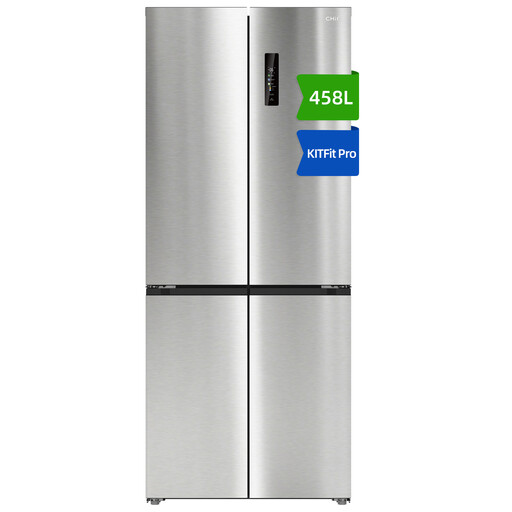
Why It's a Match: A massive 458-litre net capacity and a modern cross-door design with a stylish stainless steel finish. Ideal for those who buy in bulk, love to entertain, and want a sleek look in their kitchen.
The net capacity is clearly specified. The quiet 37 dB inverter compressor prevents the noise that is often an issue with large appliances. The No Frost technology is a given.
The KITFit Pro technology allows for a sleek, seamless installation with just 4 mm of side clearance, creating a premium, built-in look. The special Care+ drawer with adjustable temperature is ideal for delicate produce.
We have compiled a complete, up-to-date list of products that meet these strict selection criteria and comply with all relevant regulations.
The average lifespan of a fridge-freezer is typically between 10 and 15 years. This depends on the quality of the appliance, the brand, and how well it is maintained. Regular cleaning and ensuring adequate ventilation can extend its lifespan.
For most freestanding refrigerators, it is recommended to leave about 5 centimetres of space at the back and on both sides. This is necessary for proper air circulation, allowing the appliance to dissipate heat and operate efficiently. Always consult the manufacturer's manual for specific instructions, as some models have different ventilation requirements.
Yes, it can be. With the introduction of the new, stricter energy labels in 2021, many appliances that previously had an A+ or A++ rating are now classified as D, E, or even F. A model with an E energy label is therefore not necessarily an 'energy guzzler'. It's important to look at the absolute annual energy consumption (in kWh). A compact fridge with an E label can, in practice, be more efficient than a very large American-style fridge with a better label.
