
Vandaag of morgen in huis

Kwaliteit gegarandeerd

Welkomstaanbiedingen ontgrendelen: GRATIS bezorging | Tot 80% korting | Gratis 30 dagen JoyPlus-proefperiode
Download de app
Buying foreign beer might seem straightforward, but the range varies widely in origin, alcohol content, packaging and flavour. A single bottle to enjoy with a meal calls for a different choice from a case of beer for a barbecue or party. Check the product information, too: a prominent term such as “premium” doesn’t tell you much about what’s inside.
Here are three common pitfalls to watch out for:
If you’re looking for Asian beer, you can choose from Thai, Japanese and Korean beers, among others. European options include Polish beer and Belgian pilsner. The origin can help you compare products, but it doesn’t automatically mean you’ll enjoy the flavour.
Check whether the product is described as a lager, pilsner or another beer style. A Thai lager such as Singha, a Japanese beer such as Kirin Ichiban and a Polish pilsner such as Tyskie each have their own ingredients and flavour descriptions. The product page is the best place to find this information.
The alcohol content is usually shown as a percentage by volume. Many of the lagers in the range are around 4.5 to 5.6%. There are stronger options, too, such as Karpackie Mocne, which is listed as having an alcohol content of 6.8%.
Check the ingredients and allergen information as well. Many products contain barley malt and therefore gluten. The product information may, for example, list water, barley malt, hops and yeast as ingredients. If you’re unsure about allergens, always follow the information on the packaging.
Don’t just compare the price per case; check the volume per bottle or can as well. Common sizes include 250 ml, 320 ml, 330 ml and 500 ml. A 330 ml bottle is handy for one serving, while a tray of 500 ml cans is better suited to a larger gathering.
Bear in mind the difference between beer in cans and bottles:
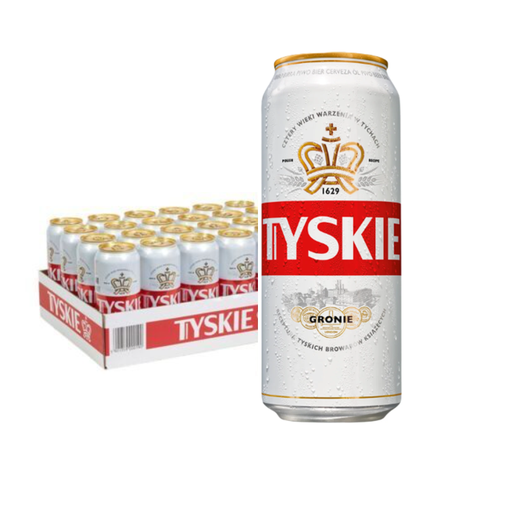
Why it suits this profile: The case contains 24 bottles of 50 cl. It’s a straightforward choice if you want to stock up on international beer for guests, a barbecue or a meal with several people. The product information lists an alcohol content of 5.6%.
The quantity and size are clearly stated, so you can work out in advance how much beer you’ll actually need.
24 bottles of 50 cl; ingredients listed as water, barley malt and hops; 5.6% alcohol according to the product description.
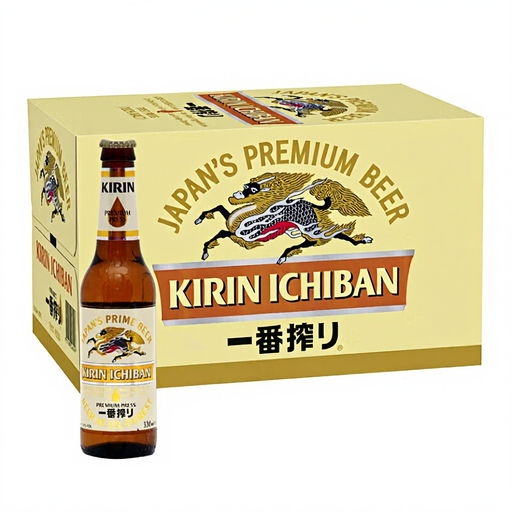
Why it suits this profile: This case is for fans of Japanese beer who want to keep a regular supply for meals or social occasions. According to the product description, the beer is made using the Ichiban Shibori method, and the pack contains 24 cans of 330 ml.
The product page gives specific details about size, quantity, ingredients and origin, rather than relying solely on general flavour descriptions.
24 x 330 ml; 5.0% alcohol according to the product information; suitable for keeping in stock for several meals.
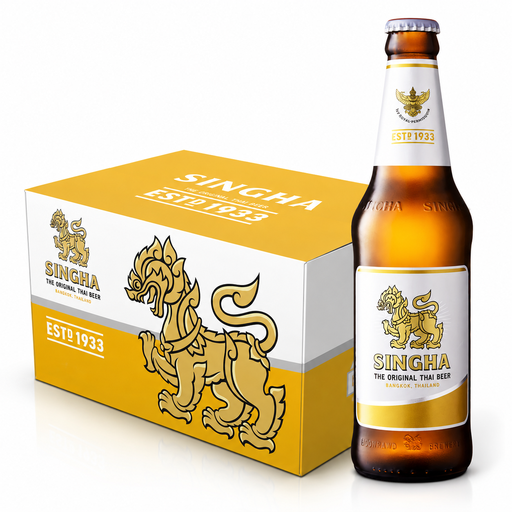
Why it suits this profile: The 330 ml bottles are ideal for individual servings with Thai or other Asian dishes, on a picnic or at a gathering. The product description lists 5.0% alcohol and barley malt, hops, water and yeast as ingredients.
The multipack has a set quantity and consistent size, so you won’t accidentally order a mix of different volumes.
24 bottles of 330 ml; 5.0% alcohol; the product information lists gluten due to the barley malt.
We’ve put together a complete, up-to-date list of products that meet these strict selection criteria and the applicable European safety regulations.
Use this quick checklist before you check out:
Alongside Singha, Leo beer, Kirin Ichiban, Asahi Super Dry, Tyskie beer and other international lagers, you’ll also find options such as Cass Fresh, Sapporo and Chang. This makes it easy to compare by country, size, alcohol content and occasion, rather than choosing by brand name alone.
Check the volume per pack, total quantity, alcohol content, ingredients, allergens and any storage instructions. Also make sure you know whether you’re ordering a single bottle, a six-pack or a full case. This helps you avoid misjudging the price or quantity.
No. Alcohol content varies by product. The range includes lagers at around 4.5 to 5.6%, as well as stronger options. Always compare the percentage shown on the label or product page.
Store beer in a cool, dry place away from direct sunlight. Avoid large temperature changes and check that the bottle or can isn’t damaged before use. Always refer to the packaging for the exact best-before information.
