
Vandaag of morgen in huis

Kwaliteit gegarandeerd

Welkomstaanbiedingen ontgrendelen: GRATIS bezorging | Tot 80% korting | Gratis 30 dagen JoyPlus-proefperiode
Download de app
A kettle may seem like a simple kitchen appliance, but you quickly notice the differences between models in everyday use. A capacity that is too small can be inconvenient for a family, a smooth surface may be difficult to keep clean, and a high wattage does not automatically mean lower energy consumption.
Marketing terms such as “rapid boil”, “healthy material” and “extra safe” also deserve a critical look. Always check which features are actually included in the product specifications. Also watch out for these common pitfalls:
A 1.5-litre kettle is well suited to students, couples and smaller households. It usually holds enough water for several cups of tea or coffee without taking up too much space on the worktop.
A 1.7-litre kettle is more practical for families, meetings and preparing instant meals for several people. Do pay attention to the minimum fill level, though. Some models require at least 0.25 or 0.5 litres. For a single cup, a clear cup marking or water-level indicator is useful.
Do not fill the kettle above the MAX mark. Overfilling can cause splashing or hot water to escape from the spout while the water is boiling.
Power is measured in watts. Models rated at 2,100 to 2,200 watts are often chosen as fast kettles for everyday use. A 3,000-watt model, such as the Morphy Richards Signature Opulent, is designed for rapid boiling according to the product specifications.
In practice, however, the difference depends on:
Only boil as much water as you need. This usually saves more energy than simply looking for a higher wattage.
An stainless steel kettle often has a sturdy metal housing and a neutral appearance. With a metal model, check that the handle and exterior provide sufficient protection against heat. According to the product specifications, a double-walled design can keep the outside cooler, as with the Tefal Smart & Light.
A glass kettle lets you see the water level immediately. Borosilicate glass is mentioned in various product descriptions because of its heat resistance, but it is still important not to drop a glass jug or knock it against a hard surface. Check the glass regularly for cracks or damage.
Also pay attention to the materials that come into contact with the water. Claims such as BPA-free or food-safe should come from the official product specifications. Do not automatically regard brand claims as independently proven performance.
An electric kettle with automatic shut-off switches off when the water boils, according to the product specifications. Boil-dry protection switches the appliance off when there is too little or no water in it. These features reduce the risk of unnecessary heating, but always follow the safety warnings in the manual.
A kettle with a limescale filter catches loose limescale particles when you pour. A removable filter is easier to clean. It does not prevent limescale from forming inside the kettle, so regular descaling is still necessary.
A kettle with temperature control is suitable for users who want to select different temperatures. According to the product information, the Tefal Smart & Light offers five settings from 40 to 100 °C. This is useful when you do not want to use boiling water for every drink.
A kettle with a keep-warm function can maintain the water at a specific temperature for a set period. According to the listed specifications, the Tefal Smart & Light keeps water warm for 30 minutes. With other models, check how long this function remains active and whether the temperature can be adjusted.
A cordless kettle sits on a separate base with a rotating connection. A 360° base is convenient for both left- and right-handed users. The cord is usually stored in or around the base, helping to keep the worktop tidy.
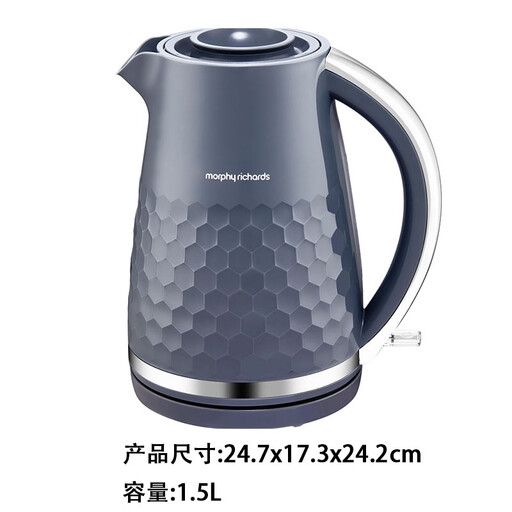
Why it suits this profile: A straightforward model for everyday tea and coffee, with a water-level window and cordless 360° base.
The product specifications list automatic shut-off, boil-dry protection and a removable limescale filter. Before buying, however, check the current price and delivery details.
1.5-litre capacity, 3,000 watts according to the product information, water-level indicator and easy-fill system.
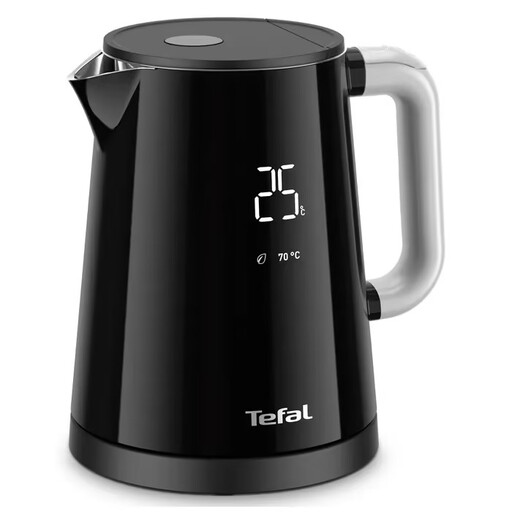
Why it suits this profile: For anyone who values temperature selection, heat insulation and clear controls more than a large capacity.
The product specifications mention five temperature settings, a removable limescale filter and automatic shut-off. This means you do not have to rely solely on vague marketing terms.
Adjustable from 40 to 100 °C, 30-minute keep-warm function according to the product information, and a double-walled housing.
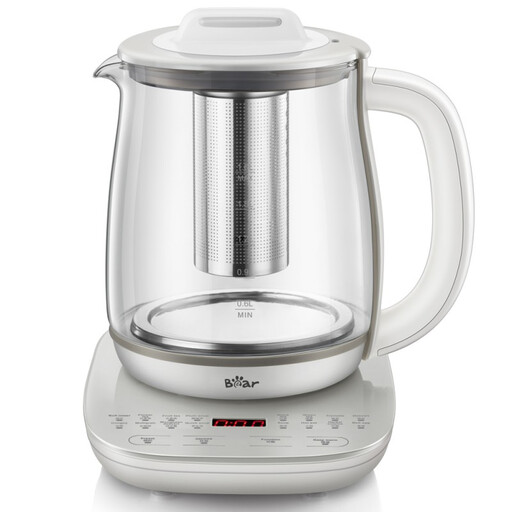
Why it suits this profile: Designed for users who want to do more than boil water, with preset programmes for tea, soup and other preparations.
The listed features are specific: 16 programmes, a timer of up to 9.5 hours and a 360° base. This is a different type of appliance from a simple kettle.
1.8-litre capacity, glass housing according to the product information, and a 304 stainless steel interior with tea strainer.
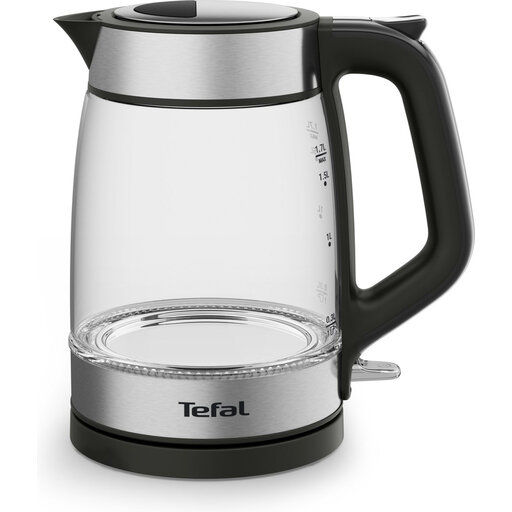
Why it suits this profile: The large capacity and clear volume markings are practical when several people need tea, coffee or hot water at the same time.
The specifications list 2,200 watts, automatic shut-off, boil-dry protection and a removable limescale filter. The glass housing makes the water level visible.
1.7-litre capacity, LED lighting, 360° base and integrated cord storage according to the product information.
We have compiled a complete, up-to-date list of products that fully meet these strict selection criteria and the applicable European safety regulations.
For normal household use, models of around 2,000 to 2,200 watts are common. Higher power can reduce boiling time, but it is most important to fill the kettle with the right amount of water. Also check that the model is suitable for a UK plug socket and the stated mains voltage of 220–240 volts.
This depends on the hardness of the water and how often you use the kettle. If you see flakes or white deposits, or notice that boiling takes longer, it is time to descale. Clean a removable limescale filter separately and follow the manufacturer’s instructions. Do not use abrasive products on glass or metal.
Consumption is mainly determined by the wattage, the amount of water and the length of use. For example, a 2,200-watt kettle uses 2.2 kilowatt-hours if it theoretically heats continuously for one hour. In practice, one boiling cycle takes much less time. Heating only the amount of water you need helps keep consumption down.
