
Vandaag of morgen in huis

Kwaliteit gegarandeerd

Welkomstaanbiedingen ontgrendelen: GRATIS bezorging | Tot 80% korting | Gratis 30 dagen JoyPlus-proefperiode
Download de app
Buying dog food sounds simple, until you have to choose between dry dog food, wet dog food, grain-free dog food, puppy food and all kinds of options for sensitive stomachs. Packaging is covered in terms such as “natural”, “premium” and “with added nutrients”. On their own, these words say little about whether the food is suitable for your dog.
As a Joybuy Product Recommendation Officer, I therefore focus mainly on verifiable information: life stage, dog size, ingredients, analytical constituents and the legally required designation of the food.
“With chicken” or “with lamb” does not automatically mean that the product consists mainly of that protein source. Check the ingredients list and see whether the product is labelled as complete food or complementary food.
Complete food is intended to be given as a daily meal according to the feeding guidelines on the packaging. Complementary food, such as a snack or topper, does not replace a complete meal. For example, according to the product information, the INABA Churu Dog Multipack is complementary food and contains at least 90% moisture. Use these tubes as a reward, topper or training treat, not as your dog’s main food.
Grain-free dog food may suit a specific dietary choice, but “grain-free” is not a general guarantee of better digestion. The overall composition, protein source and your dog’s individual tolerance are at least as important.
If your dog has persistent diarrhoea, vomiting, itching or weight loss, it is sensible to consult a vet. Veterinary dog food is intended for specific situations; do not replace veterinary advice by simply trying a different bag of dry food.
The feeding guide on the packaging is a starting point. An active working dog often has different energy requirements from a calm pet dog. Age, weight and whether your dog has been neutered can also have an impact. Weigh out the portion and adjust it gradually if your dog’s body condition changes.
Treats also count towards your dog’s daily energy intake. If you give your dog treats regularly, it is sensible to adjust the main meal accordingly.
Choose adult dog food, puppy food or senior dog food based on your dog’s life stage. Puppies have different nutritional needs from adult dogs. Kibble size may also be relevant.
Smaller kibble is often more practical for small breeds. Medium and large breeds have options with different kibble sizes and feeding guidelines. Always check the age category on the label. A product for adult dogs is not automatically suitable for a young puppy.
Do not just look at the protein percentage; also consider its source and the ratio of fat, fibre, ash and moisture. A product with 25% crude protein cannot be directly compared with wet food containing 9.5% protein, because wet food contains much more moisture.
Also look at:
Claims about supporting skin, coat, joints or digestion come from brands’ product descriptions. Based on independent research or a brand’s claims, these should not be interpreted as evidence of a medical effect. Instead, look at the actual composition and discuss health problems with a vet.
A large bag of dry dog food can be cost-effective, but only if your dog tolerates the food well and you can store it in an airtight container. Store dry dog food in a cool, dry place and seal the bag properly after use. Wet food and opened treats often have a shorter shelf life once opened.
When introducing a new food, switch gradually, usually over around seven to ten days. This makes it easier to see how your dog responds to the change.
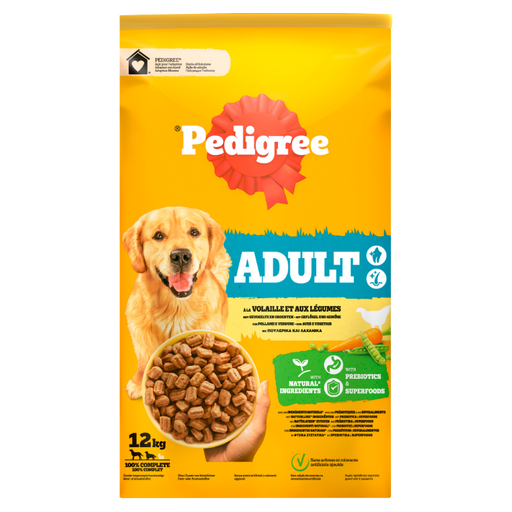
Why it suits this profile: A large pack for owners who want to give their adult dogs dry food every day while keeping portion costs down.
The product information states that this is a complete dry meal for adult dogs. Check the portion table and keep the bag properly sealed.
12 kg pack; chicken variety; according to the product description, contains fibre and vitamin E, with specially shaped kibble.
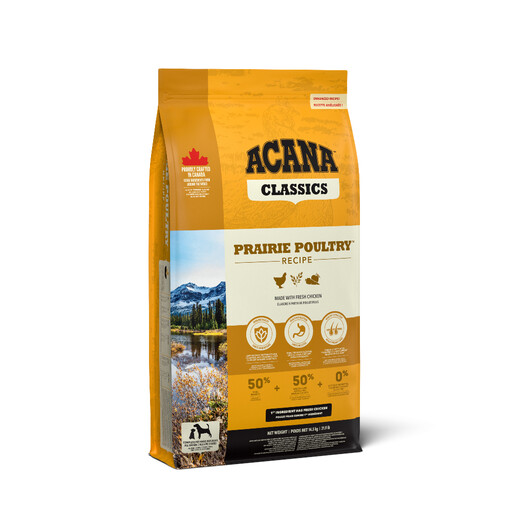
Why it suits this profile: For anyone who values a detailed ingredients list and a larger bag for daily feeding.
The packaging states specific percentages, including 50% animal ingredients and 27% crude protein. Compare these values with your dog’s needs.
14.5 kg; chicken and turkey listed as animal ingredients; oats, vegetables and added probiotic cultures according to the product information.
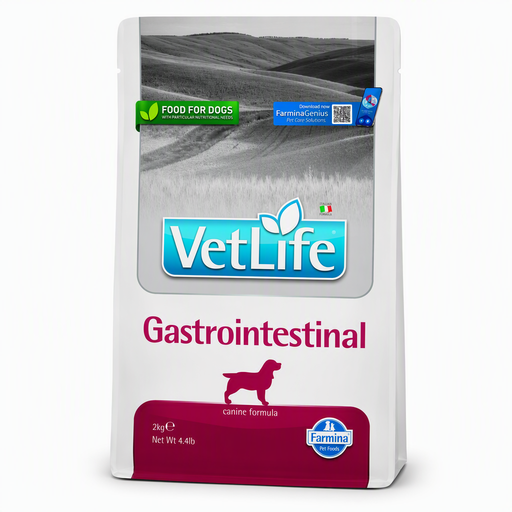
Why it suits this profile: A smaller pack for owners looking for targeted food for adult dogs with specific dietary needs.
The product name and description mention a gastrointestinal indication. Preferably use veterinary dog food after consulting a vet.
2 kg pack; intended for adult dogs of all breeds according to the product information; store in a dry place away from direct sunlight.
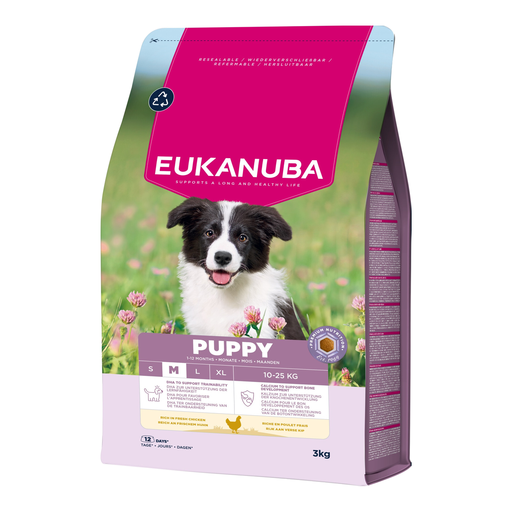
Why it suits this profile: Designed for puppies of medium-sized breeds, with a smaller pack so you can assess whether your puppy accepts it first.
The product information specifically mentions puppies of medium-sized breeds aged 1 to 12 months. This avoids confusion with adult dog food.
3 kg; chicken listed as an animal ingredient; DHA, calcium and a fibre blend are included in the product description.
We have put together a complete, up-to-date list of products that fully meet these strict selection criteria and the applicable European safety regulations.
Dry dog food is practical to portion and easy to store. It is suitable as a daily food when labelled as complete food. Wet dog food generally contains more moisture and can be useful for dogs that drink very little or prefer a softer texture. However, pay attention to the nutritional value per amount of product.
Dog treats and INABA Churu tubes are suitable as rewards or toppers. The Churu multipack contains chicken and seafood varieties, with chicken, tuna and salmon according to the composition. Once opened, a tube should be refrigerated according to the product information and used within 24 hours.
Mix the new food gradually with the old food, for example over seven to ten days. Increase the proportion of new food step by step. Stop if clear symptoms appear and ask a vet for advice.
This depends on the best-before date, packaging and storage. Keep the bag in a cool, dry place and seal it properly. Do not use food that smells different, has become damp or has visibly changed.
Not automatically. Chicken and lamb are different protein sources, but suitability depends on age, activity level, any sensitivities and the overall composition. Check the label and, if symptoms persist, choose a suitable diet together with a vet.
