
Vandaag of morgen in huis

Kwaliteit gegarandeerd

Welkomstaanbiedingen ontgrendelen: GRATIS bezorging | Tot 80% korting | Gratis 30 dagen JoyPlus-proefperiode
Download de app
A digital thermometer may seem straightforward, but the wrong model can quickly prove inconvenient. An ear thermometer is not designed for food, a meat thermometer does not measure body temperature, and a contactless reading requires the correct distance and conditions. If you only focus on “super-fast” or “extra accurate” in a product title, you also risk overlooking important specifications.
When buying a digital thermometer, pay particular attention to three things: the correct measurement purpose, the stated measurement tolerance, and how the device is maintained. Below are practical points to consider and product choices for different households.
A body thermometer and a kitchen thermometer do not work the same way. A digital fever thermometer is designed for a limited range around body temperature. A food thermometer, on the other hand, often has a wider range for meat, sugar, oil or oven cooking.
Some models have an object mode, for example for milk, bath water or surfaces. That does not automatically mean the same reading is suitable as a medical body temperature. Always check which measurement modes the manufacturer lists and follow the instructions for use.
A fast thermometer that gives a reading within one second is handy with children or during cooking. However, speed alone does not indicate how reliable a measurement is. Therefore, also check:
According to the product information for some Typhur and ThermoMaven models, a NIST-certified measurement tolerance of ±0.5 °F is stated. That is a manufacturer’s product specification and not a guarantee that every home measurement will give the same result under all conditions.
A waterproof thermometer is easier to clean, especially after contact with marinade, fat or food. An IP67 rating, according to the usual IP classification, refers to protection against dust and temporary immersion under specified conditions. Still read the maintenance instructions: with different models, the probe may be rinsed, but the housing should be kept away from prolonged water contact.
For a baby or sleeping child, a contactless thermometer, forehead thermometer or infrared thermometer can be practical. No direct contact is needed, which can make use more hygienic. However, the reading can be affected by distance, sweat, draughts, direct sunlight or a cold skin.
An ear thermometer measures quickly, but placement in the ear is important. Models with a positioning signal, pre-warmed tip or hygiene cap can help make the procedure more consistent. A classic pen-shaped thermometer is often simpler and more affordable, but requires direct contact and more time.
For a body thermometer, a range around 32 °C to 43 °C is common. The Treesmile T11, for example, states a display range of 32.0 °C to 42.9 °C and a resolution of 0.1 °C. The stated error margin differs per temperature range. Therefore, use the value as an indication and not as a medical diagnosis.
For cooking, a wider range is important. A BBQ thermometer or kitchen thermometer for meat can, for example, measure up to 250 °C or 300 °C. An infrared model such as the Tilswall states a range of -50 °C to 800 °C, but the product description expressly states that this model is not intended for people.
For body temperature, an easy-to-clean probe, a protective cap or disposable filters are relevant. The Braun ThermoScan 7 comes with hygiene caps; according to the product information, a clean cap must be used for every measurement.
For food, a probe made of stainless steel or another material suitable for food contact is practical. Clean the probe after each use according to the manual and do not touch a hot probe directly. A probe with a cable and timer is handy for the oven or barbecue, while an instant-read model is mainly suitable for quickly checking the core temperature in between.
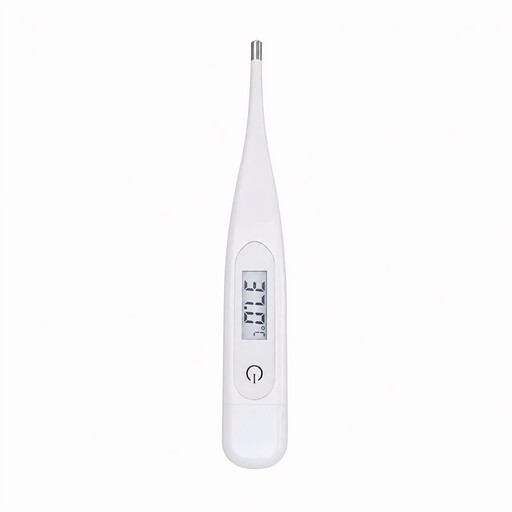
Why this fits the profile: This pen-shaped body thermometer is suitable for households looking for a simple model for the medicine cabinet. The temperature can be displayed in °C or °F.
The clear measurement range and stated error margins make it easier to assess the specifications in advance rather than relying solely on speed.
Resolution of 0.1 °C, audible measurement signal, mercury-free design and compact size.
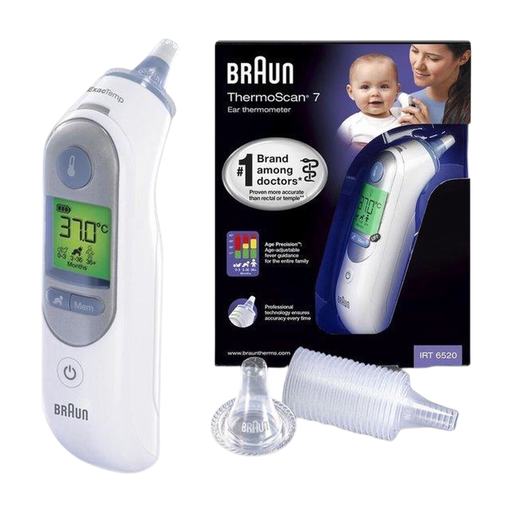
Why this fits the profile: This model is aimed at families looking for an ear thermometer with age settings and aids for correct placement.
The ExacTemp indicator helps with positioning. Hygiene caps limit direct contact between the probe and ear, but must be replaced according to the instructions.
Pre-warmed tip, nine memory readings, colour-coded display and included protective caps.
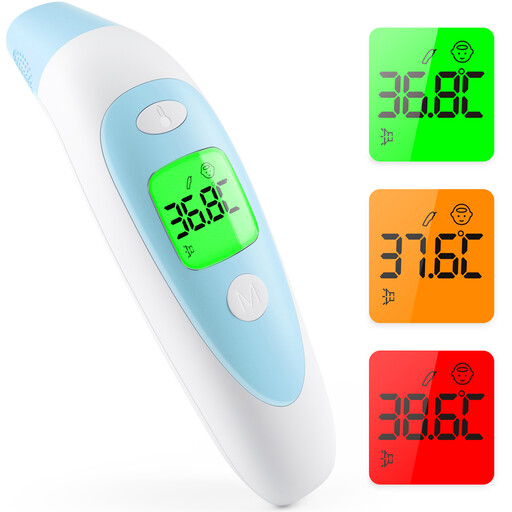
Why this fits the profile: The combination of ear, forehead and object modes is practical for families who want one device for body temperature and, for example, milk or bath water.
The different modes are clearly separated. Check before use that the correct mode is selected; an object measurement does not replace a body temperature measurement.
Memory for 32 readings, silent mode, °C/°F switching and a stated measurement time of less than one second.
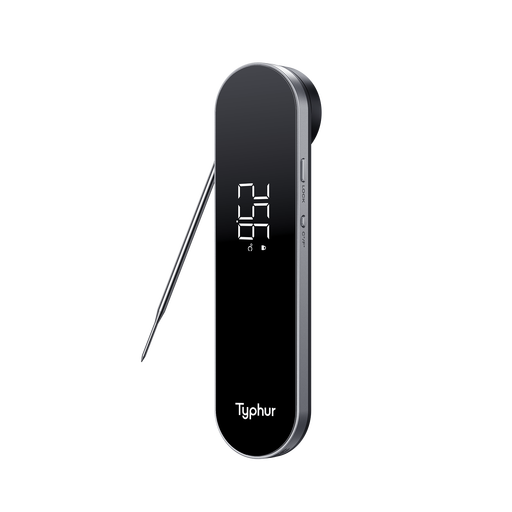
Why this fits the profile: For home cooks, grillers and barbecue enthusiasts who want to quickly check the core temperature of meat, baked goods or sweets.
The product information states an IP67 rating and a food-safe probe. This makes cleaning more practical, while the thermometer is clearly intended for cooking and not for body temperature.
Stated response time of 0.5 seconds, temperature range of -58 °F to 572 °F, rotating display and magnet for storage.
We have compiled a full, up-to-date list of products that fully meet these strict selection criteria and comply with current European safety regulations.
The lifespan depends on battery use, cleaning and storage. A probe that is cleaned after every use and stored dry will generally remain more practical in use. Replace batteries when the display becomes dimmer or readings seem unstable. With a body thermometer, also regularly check that the housing, probe and protective cap are undamaged.
In addition to the purchase price, batteries, hygiene caps or disposable filters can determine the running costs. A pen model often uses one small button cell. An ear thermometer with disposable filters requires additional consumables. Kitchen models with a reusable probe usually do not need filters, but must be carefully cleaned after every contact with food.
No, unless the manufacturer expressly specifies the model as a body thermometer. A meat thermometer, BBQ thermometer or industrial infrared thermometer has a different design and measurement range. For a fever, use a dedicated digital fever thermometer, ear thermometer or forehead thermometer and follow the instructions for use. If you have concerns about a reading or accompanying symptoms, it is advisable to consult a healthcare professional.
