
Vandaag of morgen in huis

Kwaliteit gegarandeerd

Welkomstaanbiedingen ontgrendelen: GRATIS bezorging | Tot 80% korting | Gratis 30 dagen JoyPlus-proefperiode
Download de app
A good desk is the foundation of a productive work or study space. But when buying a desk online, it's easy to fall for glossy photos and marketing hype. Many desks look great at first glance but turn out to be wobbly, too small, or uncomfortable in practice. The result? Frustration and wasted money.
As a Joybuy Product Recommendation Officer, I see the choices people make every day. Below, I'll share the three most common pitfalls and how to avoid them, so you can choose a desk that truly suits your needs.
A wobbly desk is disastrous for your concentration. Many manufacturers claim a "sturdy design," but in reality, this doesn't always mean much. The weak point is often thin materials and poor frame construction. A desk that moves with every keystroke is not a functional workspace.
One of the biggest purchasing mistakes is a desk that turns out to be too small. You need space for your monitor, laptop, keyboard, mouse, and a notepad. A depth of less than 50 cm is often too tight. People choose a small desk to save space but end up with a cluttered and chaotic work surface.
An industrial desk might look great, but if the height isn't right for you, you'll suffer from neck and shoulder pain after a few hours of work. The correct posture is crucial, especially for a home office desk where you spend many hours. A fixed height that doesn't work for you is a recipe for physical discomfort.
To avoid a bad purchase, focus on a few concrete specifications. These determine whether a desk is functional and durable.
Measure your available space accurately, but also think about how you use that space.
The material of the desktop and frame determines its lifespan and sturdiness.
Consider extra features that can make your workday easier.
Below are a few popular choices, tailored to different user profiles.
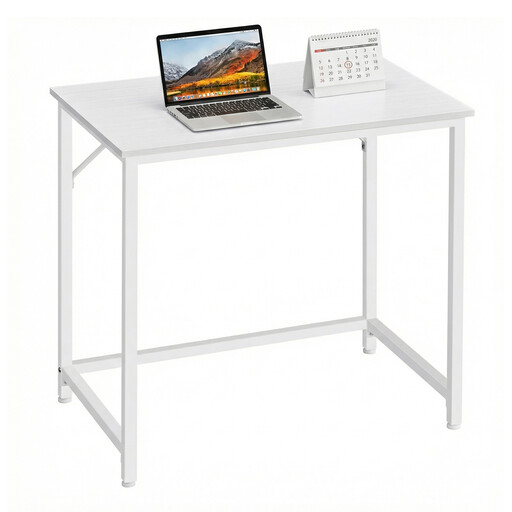
Why This Fits Their Persona: Perfect for a student dorm or a small work nook in the living room. The minimalist design and compact dimensions make it a practical and stylish choice without taking up much space.
This desk avoids the pitfall of a too-small work surface by being upfront about its dimensions (80x50 cm). It's designed for compact use, and its steel frame provides enough stability for a laptop and textbooks.
Quick assembly and adjustable feet that ensure stability, even on an old, uneven floor.
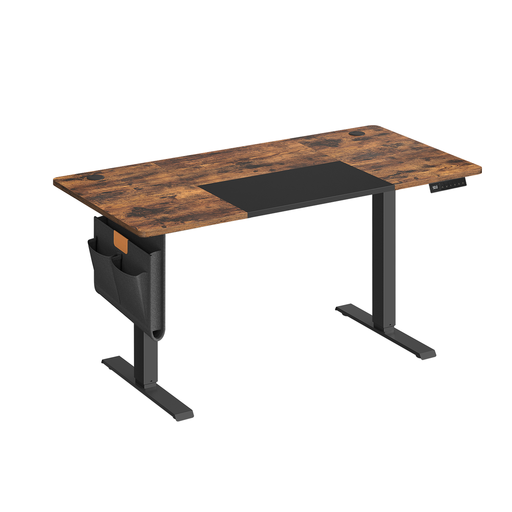
Why This Fits Their Persona: For the professional who spends hours at their desk every day. The ability to switch between sitting and standing isn't a luxury, but a necessity for a healthy posture.
This sit-stand desk directly tackles the ergonomics pitfall. You're not tied to a fixed height. Plus, the spacious 140x60 cm work surface offers plenty of room for a serious setup with multiple monitors.
Smooth height adjustment (72-120 cm), a quiet motor, and handy extras like a USB-C port and cable management.
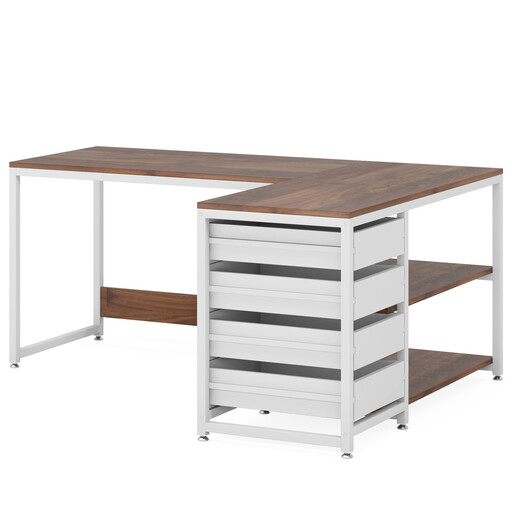
Why This Fits Their Persona: For the user who needs a large work surface and wants to keep everything organised at the same time. Ideal for gamers, creatives, or home workers with lots of paperwork and accessories.
This corner desk solves the pitfalls of insufficient space and clutter in one go. The L-shape creates an abundance of space, while the 4 drawers and 2 shelves ensure your work surface stays clear and organised.
Maximum work and storage space in one. The design is reversible, so you can assemble the drawers on the left or right side.
We have compiled a complete, up-to-date list of products that fully meet these strict selection criteria and user requirements.
For a standard fixed-height desk, approx. 72-75 cm is a common height. However, the ideal height depends on your body height and office chair. A good rule of thumb is that your elbows should form a 90-degree angle when you are sitting with your shoulders relaxed. An electric sit-stand desk offers the flexibility to adjust the height perfectly to your body.
This varies greatly by model. A simple, small desk often has a maximum static load capacity of around 50 kg. Heavier models, especially those with a robust steel frame, can support significantly more, sometimes up to 100 kg. Always check this specification in the product description before placing heavy equipment like multiple monitors or a computer tower on the desk.
If you work from home for more than a few hours a day, an electric desk can be a very worthwhile investment in your comfort and health. Alternating between sitting and standing postures is recommended by many ergonomists to reduce strain on the back and neck. For occasional use or if you're on a tight budget, a good fixed-height desk is often sufficient, provided its height is comfortable for you.
