
Vandaag of morgen in huis

Kwaliteit gegarandeerd

Welkomstaanbiedingen ontgrendelen: GRATIS bezorging | Tot 80% korting | Gratis 30 dagen JoyPlus-proefperiode
Download de app
Coconut water is popular as a refreshing thirst-quencher, a drink for when you’re out and about, or a post-workout boost. However, many packs look alike, even though their ingredients and formats can differ considerably. If you only look for words such as “natural”, “electrolytes” or “low calorie”, you could end up with a coconut drink containing added sugar or one that is less practical than expected.
Pay particular attention to three things: the ingredients list, the pack size and the storage instructions. This makes it easier to find 100% coconut water, an option with or without added sugar, and a format that suits everyday use.
The front of the pack may say “natural coconut water”, while the ingredients list also includes cane sugar, fructose or vitamin C. This does not necessarily make the product unsuitable, but it is a different choice from coconut water with no added sugar.
Always check the ingredients. With 100% coconut water, for example, the list will contain only “coconut water”. Other products may contain 98.5% coconut water and cane sugar, or 99% coconut water with fructose.
Coconut water naturally contains minerals, including potassium. Brands may highlight this as part of their marketing. According to product information from various brands, coconut water naturally contains electrolytes, but the amount varies from product to product.
Therefore, treat coconut water with electrolytes as a product specification rather than a medical solution. For everyday thirst, water is also a suitable choice. During intense exercise, in hot weather or after significant fluid loss, individual circumstances may be relevant.
A coconut water multipack of 12 x 1 litre is useful for families, offices or catering businesses, but an opened carton must be refrigerated and used within the period stated on the packaging. For a bag, lunchbox or sports session, 330 or 500 ml packs are often more practical.
Also calculate the total volume. A box of 12 x 1 litre contains 12 litres, while 12 packs of 330 ml contain 3.96 litres in total. The lower price per pack therefore tells you little unless you compare the price per litre.
Start by choosing according to your own preferences:
A product containing natural sugars is not the same as a sugar-free product. Check the nutritional values per 100 ml rather than relying solely on the front of the packaging.
The selected products generally state around 18 to 23 kcal per 100 ml. Sugar content varies. Cocomax, for example, states 4.5 grams of sugar per 100 ml, while Vita Coco 6x1L states 2.2 grams of sugar per 100 ml according to the product information and contains vitamin C.
Always compare the same unit. A large carton may seem light per serving, but a 250 ml glass contains four times the values listed per 100 ml.
Pay attention to:
Unopened cartons are generally stored in a cool, dry place. After opening, coconut water should be refrigerated according to the product information. The recommended usage period varies by product, for example 48 hours, 72 hours or up to 7 days. Always follow the instructions on the packaging.
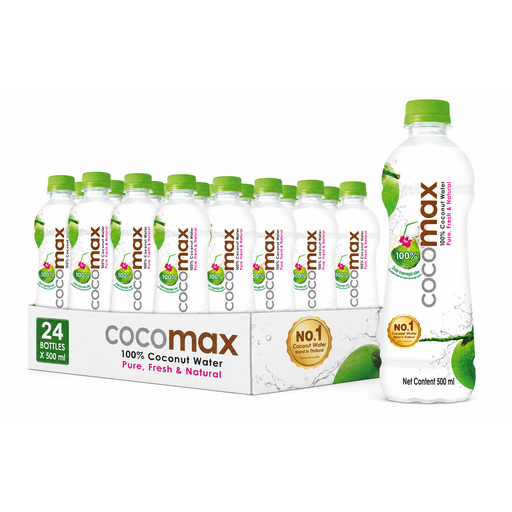
Why it suits this profile: The multipack with smaller cartons is ideal for households that want to divide portions without opening a one-litre carton each time. The product information states that it contains 100% coconut water with no added sugar.
The ingredients information does not list cane sugar or fructose. However, check the current label when your order arrives.
12 packs of 500 ml; according to the product information, 21 kcal and 4.5 g of sugars per 100 ml.
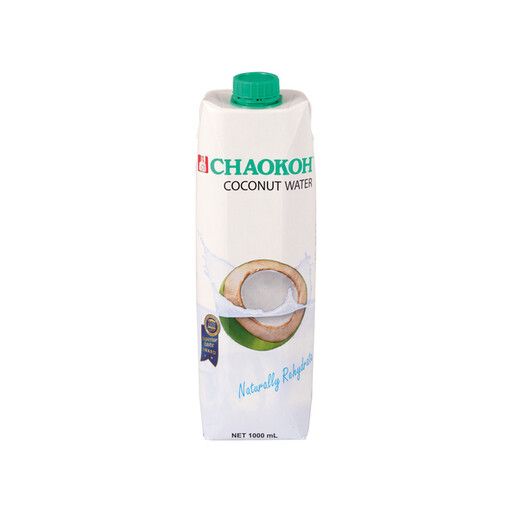
Why it suits this profile: This one-litre pack is aimed at those who value a pure composition and clear nutritional information. The product information states that it contains coconut water from young coconuts grown in Thailand.
The product listing states that it contains 100% coconut water, with no added sugars, preservatives or artificial additives.
20 kcal and 4.2 g of sugars per 100 ml according to the stated nutritional values; refrigerate after opening.
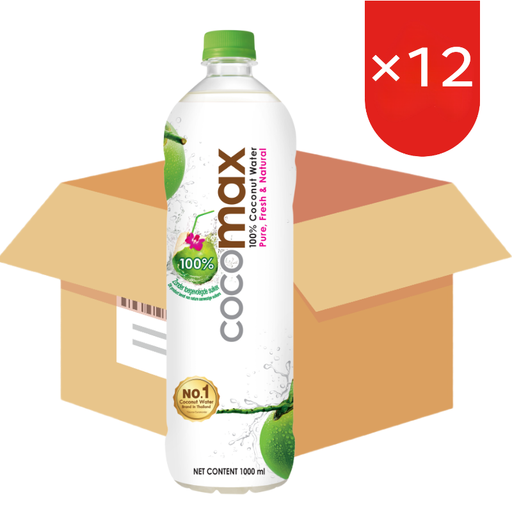
Why it suits this profile: A box of twelve one-litre cartons is suitable for families, sports clubs, offices or anyone who regularly uses coconut water in drinks, smoothies and tropical mixed drinks.
The large multipack makes the volume per litre clear. The product information does not list any added sugar.
12 x 1 litre; according to the stated values, 21 kcal, 5.3 g of carbohydrates and 0.03 g of salt per 100 ml.
We have put together a complete, up-to-date list of products that fully meet these strict selection criteria and the applicable European safety regulations.
Drink coconut water chilled or use it as the base for a smoothie with banana, mango or pineapple. A one-litre carton is convenient for several glasses, while a single-serve pack is easier to take to the office or gym. Coconut water after exercise can form part of a normal drinking occasion, but it does not replace personalised nutritional or hydration advice.
When storing it, pay attention to the seal and the date on the packaging. Shaking before use may be necessary if the product is naturally slightly cloudy or if some of its contents have settled.
No. Coconut water is the liquid from the coconut. Coconut drink may contain additional ingredients, such as cane sugar, fructose, flavourings or vitamins. Therefore, check the ingredients list and the percentage of coconut water.
No. Even 100% coconut water naturally contains sugars. “No added sugar” means that no extra sugar has been added to the product. For a meaningful comparison, check the sugar content per 100 ml.
This varies by brand and packaging. Product information often states a period of between 48 hours and 7 days in the fridge. Close the carton securely and always follow the storage instructions on the current label.
