
Vandaag of morgen in huis

Kwaliteit gegarandeerd

Welkomstaanbiedingen ontgrendelen: GRATIS bezorging | Tot 80% korting | Gratis 30 dagen JoyPlus-proefperiode
Download de app
Coconut milk might seem like a straightforward product, but the difference between tins, cartons, coconut cream and santen is significant. If you only look at the brand name or an attractive packet, you could end up with a product that’s too thin for a curry, a portion that’s too small, or a variety with unexpected additives.
For home cooks, vegans, people with lactose intolerance and business buyers, there are three main pitfalls to watch out for:
The fat content per 100 ml gives you a practical indication of the texture and intensity. There’s no single correct value; the application determines what’s most useful.
Don’t just rely on words like “rich”, “creamy” or “authentic”. Compare the fat content and the ingredients on the label. Brand descriptions are not an independent guarantee of taste or performance.
A 400 ml coconut milk tin usually works for one curry for several people or a dessert recipe. A small 165 ml tin is more convenient if you only need a little and want to avoid leftovers. For families, catering and business buyers, 1 litre coconut milk can be more efficient, especially if the product is used up quickly.
Also consider the type of packaging:
Once opened, coconut milk should generally be kept refrigerated and used within the time stated on the packaging. Natural separation or solidification can occur; shaking or stirring may be needed.
Coconut milk often consists of coconut extract and water, but some varieties also contain stabilisers, emulsifiers or thickeners. That’s not necessarily a problem, but it can affect your choice.
For a vegan coconut milk or lactose-free option, always check the current packaging. Product information can change. The product description for Aroy-D Original 1 litre lists coconut extract, water and polysorbate 60, with an indication for vegetarian and vegan use. The Aroy-D 400 ml variety, on the other hand, lists coconut extract and water without stabilisers.
Pay extra attention to allergens. Coconut is not on the list of the 14 main EU allergens, but individual allergies are still possible. Some product listings may also show unusual or contradictory information. The physical label is therefore the final authority.
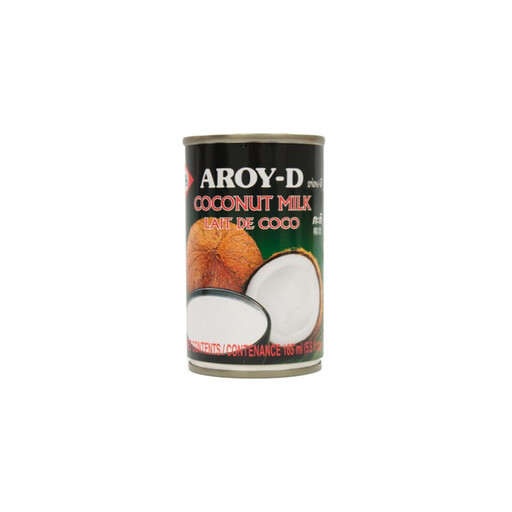
Why this fits the profile: The small portion is ideal for a first recipe, a drink or a small amount of sauce. You don’t have to open a whole litre.
The 165 ml content limits waste for small recipes. Do check the label and current best-before information before buying.
165 ml, coconut extract and water according to the product description, suitable for curries, desserts and drinks.
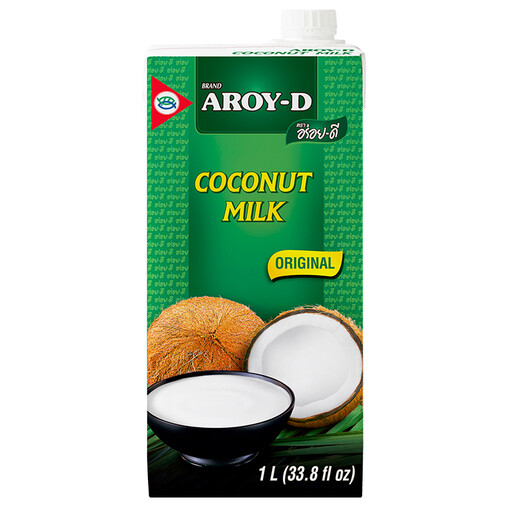
Why this fits the profile: The litre pack suits home cooks who regularly prepare Thai dishes, soups and desserts.
The stated fat content of 19 g per 100 ml makes the composition verifiable. A litre is only good value if you use it up in time.
1 litre content, 70% coconut extract according to the product information and a stated fat content of 19 g per 100 ml.
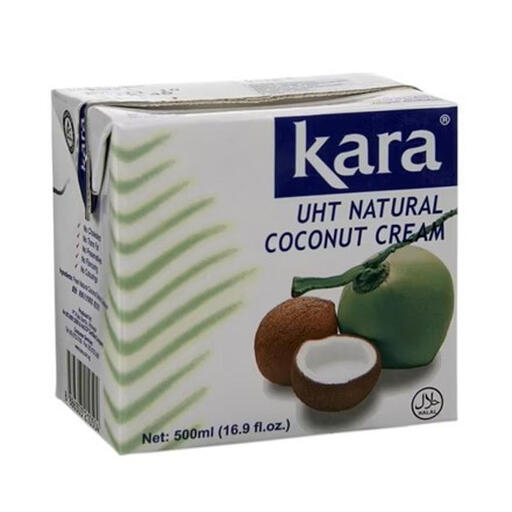
Why this fits the profile: The concentrated texture is ideal for sauces, cocktails, desserts and preparations where coconut cream is desired.
The fat content of 24% makes it clear that this is coconut cream, not a light coconut milk. This allows you to adjust the quantity more precisely.
500 ml UHT pack, 24% fat and, according to the product information, no colourings, flavourings or preservatives.
We’ve put together a full, up-to-date list of products that fully meet these strict selection criteria and comply with current European safety regulations.
Many varieties consist of coconut extract and water and are labelled as vegan. Always check the ingredients and allergens on the packaging. For example, Go-Tan Coconut Milk 250 ml lists milk as an allergen, so you shouldn’t choose this variety without checking it’s lactose-free or vegan.
For a hearty curry, many home cooks choose a variety around 17-22% fat, because it gives more texture than coconut milk with 5-7% fat. Aroy-D 19%, Sunlee 17-19% and Sunlee 20-22% are examples within this range. The desired taste and thickness will still depend on the recipe.
Store opened coconut milk according to the instructions on the label, usually refrigerated and tightly sealed. Use the product within the stated time. If you see natural separation, stir or shake it first. Do not use a tin or carton if it is bulging, leaking or damaged.
