
Vandaag of morgen in huis

Kwaliteit gegarandeerd

Welkomstaanbiedingen ontgrendelen: GRATIS bezorging | Tot 80% korting | Gratis 30 dagen JoyPlus-proefperiode
Download de app
Buying Chinese snacks might seem straightforward, but product packaging can hide important differences. A small bag can contain a relatively high amount of salt, a snack labelled “mala” might taste more sour or sweet than expected, and a vegetarian option could still contain soya, wheat or sesame. So when you order Chinese snacks online, it pays to look beyond the flavour image or brand name.
This buying guide will help you make targeted choices from konjac snacks, tofu snacks, seaweed snacks, soya snacks and other Asian snacks. We focus on objective information such as nutritional values, portion size, ingredients, allergens and packaging format.
Konjac snacks and kelp snacks are often marketed as low-calorie options. However, the nutritional value varies considerably from product to product and is usually given per 100 grams. A snack may be low in energy per 100 grams but still high in salt or oil. So always check the full nutritional table rather than relying on a single claim on the front.
For comparison: some konjac snacks show 68 to 131 kcal per 100 grams in the product information, while a soya snack or cereal bar can provide around 203 to 430 kcal per 100 grams. That doesn’t automatically make a product suitable for every situation; portion size and your personal preference still matter.
Spicy Chinese snacks can contain chilli, Sichuan pepper, garlic, pickled ginger or sesame. “Mala” typically refers to a combination of heat and a tingling sensation from Sichuan pepper. The intensity is not standardised. So check the ingredients list for chilli and Sichuan pepper if you’re specifically looking for Sichuan snacks or mala snacks.
Tofu, konjac, kelp and soya products often fit a vegetarian diet, but they may contain soya, wheat, sesame, peanuts or mustard. Products containing wheat gluten are also unsuitable for anyone who needs to avoid gluten. Always check the allergen information on the product page and on the packaging when you receive it.
Compare at least:
Also pay attention to the total weight. A 50-gram pack isn’t necessarily better value than a bag of 180 or 360 grams. Individual sachets can be handy for on the go, the office or portion control, though.
Ingredients are listed in descending order by quantity. With a vegetarian snack, you might look for konjac flour, soya, wheat gluten or plant-based protein. If a product contains fish, egg or other animal-derived ingredients, it won’t be suitable for all vegetarians.
Examples from the range:
Ready-to-eat snacks can be eaten straight away, but do check the storage advice. Many products need to be kept cool and dry and should be consumed quickly after opening. A bulk pack with 20 individual portions works differently from a bag that needs to be resealed after opening.
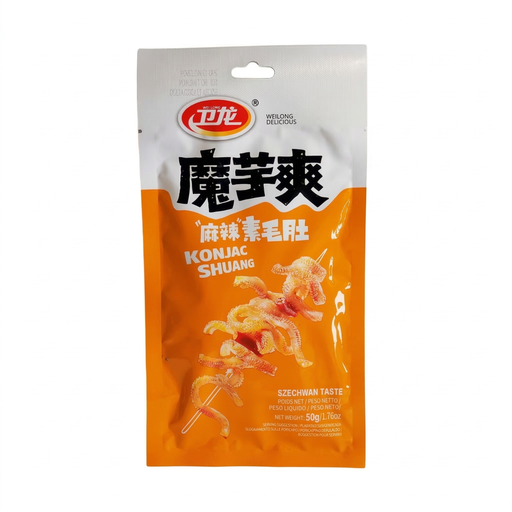
Why this suits the profile: A small 50-gram pack is practical for trying a spicy konjac snack first without committing to a large stock.
The product information states 84 kcal and 2.8 g salt per 100 g. This lets you assess the nutritional value rather than relying solely on the term “low-calorie”.
Chewy texture, Sichuan-style flavour with chilli and Sichuan pepper, ready to eat and konjac-based.
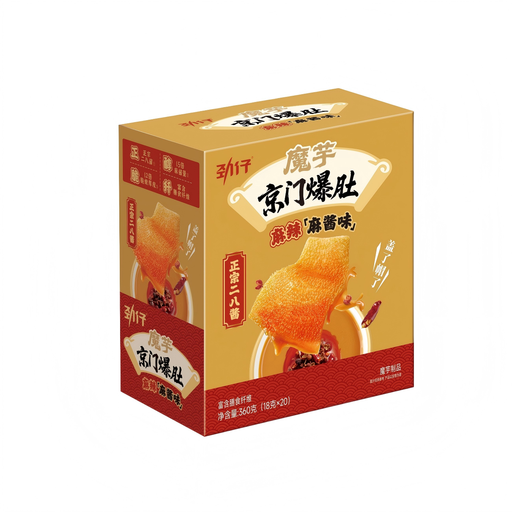
Why this suits the profile: The combination of sesame, chilli and Sichuan pepper is ideal for enthusiasts looking for a pronounced mala profile.
The flavour direction is clearly described with sesame paste, peanut butter, chilli and Sichuan pepper. The 20 sachets of 18 g make portion control easy.
360 grams total, 20 individual packs, plant-based ingredients according to the product description and 196 kcal per 100 grams.
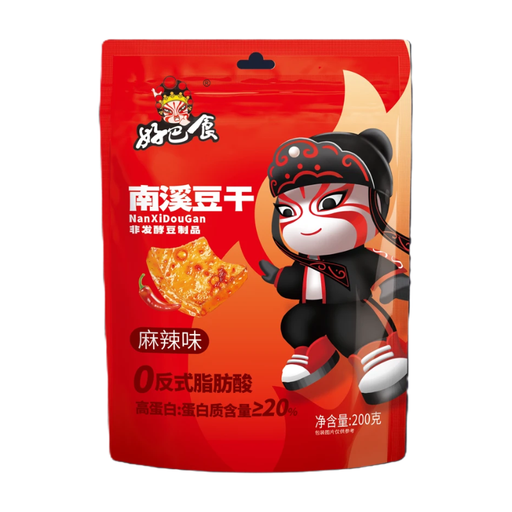
Why this suits the profile: The firm tofu texture and Sichuan seasoning suit anyone looking for a more filling vegetarian snack for home, on the go or with a drink.
The product information states 20 g protein and 2.5 g salt per 100 g. Soya and wheat are also listed as allergens, so you can check your choice in advance.
200-gram pack, plant-based base according to the ingredients list, chewy texture and flavour with chilli and Sichuan pepper.
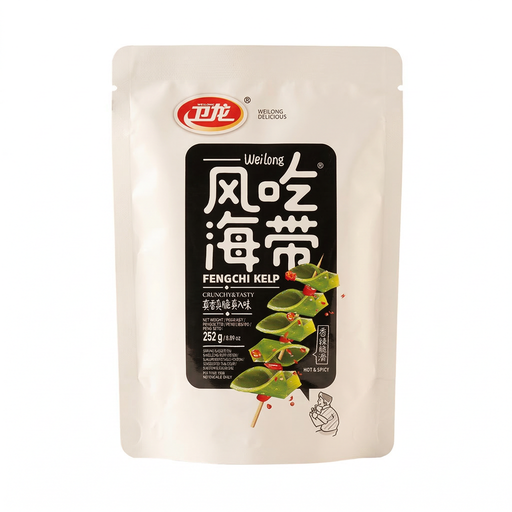
Why this suits the profile: This ready-to-eat kelp snack is suitable for sharing as a side dish or party snack and contains 28 individual portions according to the product name.
The nutritional information shows 38 kcal but also 8.23 g salt per 100 g. This makes it clear that a low energy value is not the same as a low-salt product.
76% kelp according to the product information, hot and sour Sichuan seasoning, vegetarian according to the description and ready to eat.
We’ve put together a full, up-to-date list of products that fully meet these strict selection criteria and comply with current European safety regulations.
Individually packed konjac snacks, tofu snacks, soya snacks and quail eggs are practical for on the go or at the office. They’re ready to eat and you don’t need to bring a bowl or cutlery. Do check whether the pack needs to be resealed after opening and pay attention to allergens.
No. The nutritional value varies by recipe. Some products contain fewer than 100 kcal per 100 grams, while versions with sesame paste, oil or other flavourings come out higher. Use the nutritional table for comparison and also look at salt, fat and the actual portion size.
The best-before date is on the packaging. Unopened snacks can generally be stored in a cool, dry place if the label says so. After opening, product descriptions often advise consuming the snack quickly. Always follow the storage instructions for the specific product.
