
Vandaag of morgen in huis

Kwaliteit gegarandeerd

Welkomstaanbiedingen ontgrendelen: GRATIS bezorging | Tot 80% korting | Gratis 30 dagen JoyPlus-proefperiode
Download de app
Buying Chinese snacks might seem straightforward, but the range varies greatly in flavour, texture, portion size and nutritional information. A striking packet or a label like “Sichuan-style” doesn’t always tell you how spicy, salty or sweet a snack actually is. With the right checks, you’ll find a product that suits your taste and when you want to eat it.
Spicy Chinese snacks can contain chilli, Sichuan pepper, pickled pepper or hotpot spices. These give very different flavour profiles. Sichuan pepper, for example, creates a tingling, numbing sensation in your mouth, while pickled pepper tends to taste sour and sharp.
So don’t just look at words like “hot”, “spicy” or “mala”. Check the ingredients list for chilli, Sichuan pepper, vinegar, pickled ginger and other flavourings. That way, you’ll avoid buying a box that’s too sharp or, conversely, less pronounced than you expected.
Some konjac snacks are relatively low in energy per 100g. That’s an objective fact from the nutrition table, but it doesn’t tell you everything about the product. For example, Wei Long Vegetarian Tripes lists 109 kcal and 8.2g of salt per 100g. Other varieties contain flavour enhancers or several spice blends.
So always compare the full nutrition table. Especially with snacks you eat in one go, the portion size matters more than just the value per 100g.
Konjac snacks and tofu snacks are often sold as vegetarian options. However, flavourings, soy sauce or other additions could be relevant to your dietary choice. Check the ingredients and allergens before you order. Many products in this category contain soya, and some also contain wheat, peanuts, sesame or nuts.
Also, pay attention to the difference between ready-to-eat snacks and products that need preparing. A snack you eat straight from the packet is more convenient for on the go than a bowl of potato noodles that needs boiling water.
Konjac snacks usually have a springy, chewy texture. That’s different from the crunchy texture of fried dough twists or the soft bite of dried fruit slices. Choose based on the occasion:
Product descriptions can describe a flavour or texture, but people experience spiciness differently. If you’re unsure, start with a small 50g or 60g packet.
Individual sachets are practical for lunch, on the go or sharing Asian snacks. A box of 20 small sachets also helps you measure out portions. A large bag is often more convenient for a snacking session at home, but seal the packet well after opening and follow the storage instructions on the label.
Don’t just compare the total weight. A 360g pack might contain 20 portions, while 252g could hold 28 small sachets. The content per sachet determines how easy the snack is to take with you and share.
Before you order, check at least:
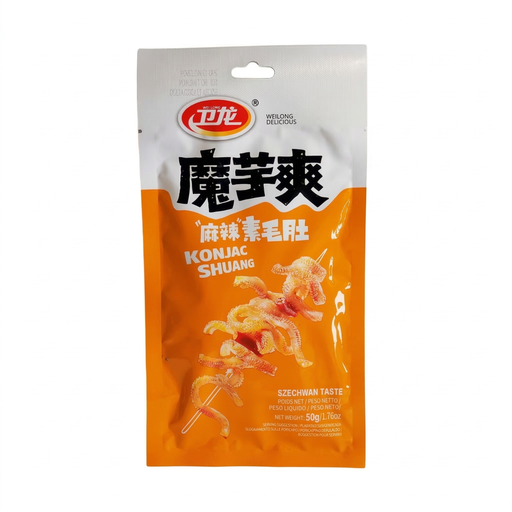
Why this fits the profile: The small 50g sachet is ideal for trying Sichuan flavours and chewy konjac texture first, without ordering a large selection straight away.
The ingredients list mentions chilli and Sichuan pepper, while the nutritional values per 100g are clearly available. This lets you compare flavour and composition based on concrete information.
50g, ready to eat, with a stated energy value of 84 kcal per 100g. Contains soya and wheat.
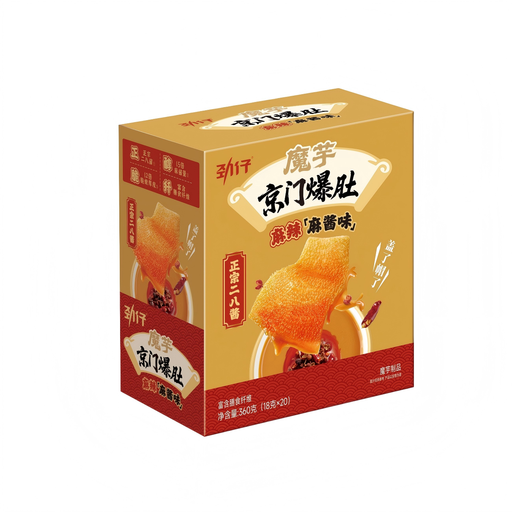
Why this fits the profile: If you value a pronounced flavour and manageable portions, you get 20 individual 18g sachets with sesame, peanut and Sichuan pepper.
The portions are pre-divided and the product information lists the relevant allergens. This makes comparing and taking them with you easier than with a large opened bag.
20 sachets, 71.37% konjac base according to the product information and 196 kcal per 100g. Contains soya, peanuts and sesame.
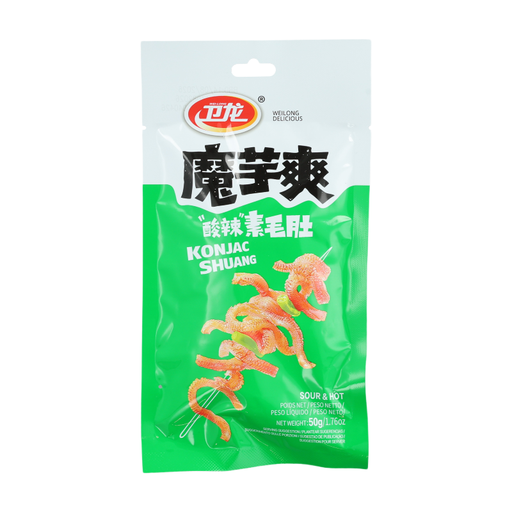
Why this fits the profile: The box of 28 packets is practical if you regularly eat spicy Chinese snacks or want several people to try them.
The product information explicitly states the portion breakdown, ingredients and the soya allergen. So you know what you’re buying in advance, rather than relying only on the packaging.
252g, 28 sachets, hot-and-sour flavour and ready to eat. The stated nutritional value is 108 kcal per 100g.
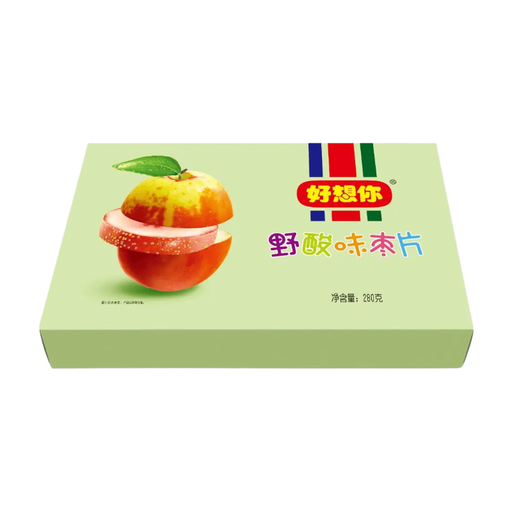
Why this fits the profile: These soft, chewy fruit slices suit anyone who prefers a sweet and sour Chinese treat over a sharp Sichuan snack.
The ingredient ratio lists, among other things, 79% apple, 7.5% red date and 4.5% hawthorn. This makes the sweet-and-sour base clearer than with a generic fruit flavour.
280g, individually wrapped and ready to eat. According to the nutritional information, it contains 52.8g of sugar per 100g and soya.
We’ve put together a full, up-to-date list of products that fully meet these strict selection criteria and comply with current European safety regulations.
You can buy Chinese snacks online from web shops that stock a range of Asian snacks. Before you order, compare the product description, ingredients, allergens, nutritional values, origin and best before date. That way you’ll see whether a snack is ready to eat and whether the flavour suits your preference.
Start with a small packet or a milder sweet-and-sour variety. Konjac snacks of 50g are handy for trying a spicy or Sichuan flavour. If you don’t like sharp flavours, you can choose sour jujube slices or a fruity snack with a soft texture.
The shelf life varies by product and is stated on the packet. Unopened dry snacks should generally be stored in a cool, dry place away from direct sunlight. After opening, seal the packet well and follow the instructions on the label. Ready-to-eat snacks are best eaten soon after opening.
