
Vandaag of morgen in huis

Kwaliteit gegarandeerd

Welkomstaanbiedingen ontgrendelen: GRATIS bezorging | Tot 80% korting | Gratis 30 dagen JoyPlus-proefperiode
Download de app
Buying Chinese snacks in the UK can offer a surprisingly wide range of choices. From spicy mala snacks and chewy konjac snacks to dried tofu, Chinese sausage and hotpot ingredients: the packaging can sometimes look similar, yet the products differ greatly in use, flavour and nutritional value.
So don’t just rely on words like “authentic”, “high protein” or “low calorie”. Those terms only mean something when you check the ingredients list, portion size, allergens and preparation method.
Not all spicy Chinese snacks are the same. Chilli primarily provides heat, whereas mala is a combination of chilli and Sichuan pepper. The latter gives that characteristic tingling or numbing sensation in the mouth. If the packaging only says “spicy”, you won’t automatically know whether you’re getting that Sichuan pepper kick.
Some Asian snacks are ready to eat straight away. Other products, such as dried tofu sheets, tofu sticks and Chinese sausage, are intended for cooking, soaking or steaming. Always check the instructions. A product labelled “ready to eat” requires a different approach than an ingredient for hotpot.
A low energy content per 100g doesn’t tell the whole story. The salt content, portion size and amount of oil are at least as relevant to your purchasing decision. An individual packet can help you control the amount, but always compare the nutritional values per 100g and per pack.
First, choose the flavour profile that suits your use:
The exact flavour depends on the ingredients and proportions. Brand descriptions about popularity or authenticity are no objective guarantee; instead, look at the product information on the packaging.
Konjac snacks often have an elastic, firm bite. Tofu snacks and dried tofu are usually more compact and higher in protein. Wheat gluten sticks are chewy, but contain gluten and are therefore not suitable for those avoiding wheat.
Check the proportion of the main ingredient. For the Wei Long konjac snack with spicy flavour, for example, 6% konjac flour is stated. With JOYTOFU, the product consists of 95% soybeans according to the specification. These percentages help you compare different snacks more fairly.
A bulk pack is handy for a party or shared snacking occasion, but not always economical if you just want to try the product. Individual packets are practical for on the go and portion control.
Also pay attention to storage:

Why this fits the profile: The pack contains around 28 individually wrapped portions. This makes it easy to try konjac snacks without having to open large amounts at once.
The specification clearly states that the product is ready to eat. So you don’t need to soak or cook it.
252g total, individual portions and 114 kcal per 100g according to the nutritional information provided.
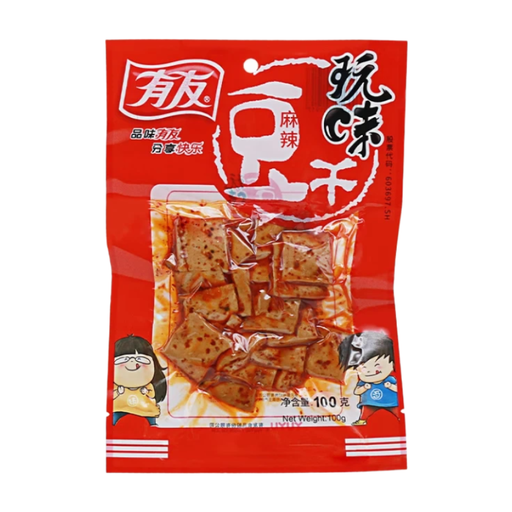
Why this fits the profile: This dried tofu combines soybeans with chilli and Sichuan pepper and is intended as a savoury, ready-to-eat snack.
The product details explicitly call it a ready-to-eat snack. Soy is also listed as an allergen.
20.7g protein and 5.6g dietary fibre per 100g according to the product specification; net weight 100g.
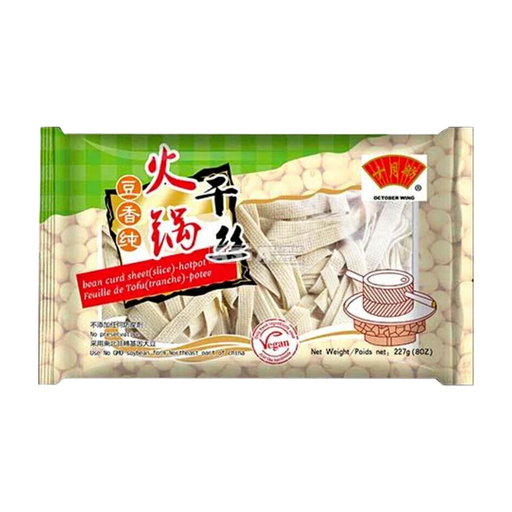
Why this fits the profile: This dried soy product is aimed at home cooks looking for ingredients for hotpot, mala tang, soup or stir-fry dishes.
The preparation method is clear: soak for 20 to 30 minutes, then simmer for 10 to 15 minutes. This is not a ready-to-eat snack.
227g dried soy strips, with only soy and water as ingredients, suitable for multiple hot dishes.
We’ve put together a full, up-to-date list of products that fully meet these strict selection criteria and comply with current European safety regulations.
If you’re looking for vegetarian snacks, you can choose from konjac, dried tofu, tofu strips and soy strips. Do check whether the product contains only plant-based ingredients. Some varieties, for example, contain wheat, sesame or soy sauce. “Vegetarian” also doesn’t automatically mean a product is free from all allergens.
Chinese sausage is a different type of purchase. Laweiju Dry Sausage Suzhou and Wanderfort Guangdong Style Sausage are cooking products according to the product information. They need to be steamed, boiled or fried. La Wei Ju Hubei Preserved Pork must be stored frozen below -18 °C according to the specification and thoroughly heated. These products are suitable for rice, stir-fry dishes and steamed meals, but not for eating straight from the pack as a snack.
Konjac snacks, many dried tofu snacks and certain tofu strips are ready to eat when stated on the packaging. Dried soy strips, tofu sticks and Chinese sausage are usually cooking ingredients. Always check the instructions for each product.
This varies by product. Konjac and tofu varieties are often plant-based, but check the ingredients list and allergen information. Chinese sausage contains meat. Also look out for soy sauce, wheat, sesame and any flavourings if you want to avoid specific ingredients.
The shelf life varies by product and is stated on the packaging. Store dry snacks in a cool, dry place, seal opened packets well and consume opened ready-to-eat products according to the instructions. Frozen products should not be refrozen after thawing.
