
Vandaag of morgen in huis

Kwaliteit gegarandeerd

Welkomstaanbiedingen ontgrendelen: GRATIS bezorging | Tot 80% korting | Gratis 30 dagen JoyPlus-proefperiode
Download de app
Buying cherry sweets might seem straightforward – until you're faced with a shelf or an online selection of dozens of different varieties. Are you after a classic boiled sweet, soft gummies, cherry chewing gum, or perhaps a treat to share? The name on the packet doesn't always tell the full story.
Pay particular attention to three common pitfalls:
With the right checks, you'll find it easier to choose cherry-flavoured sweets that suit a family, a party, your store cupboard or a personal snack moment.
The texture largely determines how you'll use the sweet.
The terms "soft" and "fruity" are descriptive, but they're not a fixed quality standard. So always check the ingredients and nutritional information.
Not every cherry candy product has the same flavour profile. A sweet can be sugary, sour, fresh or even chocolatey. Sour cherry sweets often list citric acid, malic acid or tartaric acid on the label. These ingredients create a sour taste, but they don't tell you anything about the amount of real cherry.
Also look at the order of ingredients. In the European Union, ingredients are usually listed in descending order. If sugar or glucose syrup appears first, it forms a major part of the product. Mentos Pure Fresh Cherry, for example, lists cherry powder at 0.38%. The flavour also comes from flavourings and sweeteners.
A product with a mixed flavour needs extra attention. Look-O-Look Foammmies Apple Cherry combines apple and cherry flavour. That might be interesting if you're after a fruity blend, but it's not a sweet with only cherry flavour.
Sweets often don't contain any of the 14 main EU allergens, but this varies from product to product. Pay attention to:
The nutritional information helps with comparing products, but sweets remain a sugary snack. Use the information to choose portions and packs wisely, not as a medical or health claim.
For home use, a resealable jar or bag is practical, especially if the sweets aren't eaten all at once. For a party, individually wrapped toffees or small portions are easier to hand out. A pack of 200 to 250g is often suitable for sharing, while 50 pieces of gum or a multipack are better for regular use.
Store cherry sweets according to the label: cool, dry and out of direct sunlight. Seal the pack well after opening. Heat and moisture can make hard sweets sticky and cause gummies to lose their texture. If the packaging is damaged, check the product information first before using the product.

Why this fits the profile: A straightforward pack for anyone who wants to try a classic form of cherry sweet without buying a large quantity straight away.
The net weight and ingredients are clearly stated. The product information does not list any of the 14 main EU allergens.
110g, hard sweet sticks and 338 kcal per 100g according to the product information.
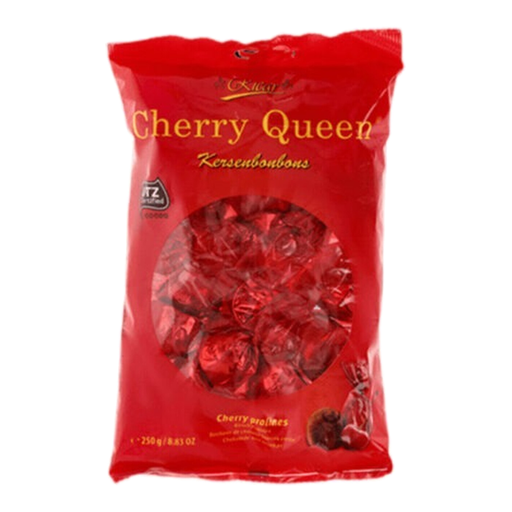
Why this fits the profile: A fitting choice for a coffee moment, a gift or the table when you have guests, if you're after cherry with chocolate.
The ingredients list mentions cherry filling, milk and soya. So you can see upfront that this isn't an allergen-free or vegan option.
250g, chocolate coating and a cherry filling according to the product description.
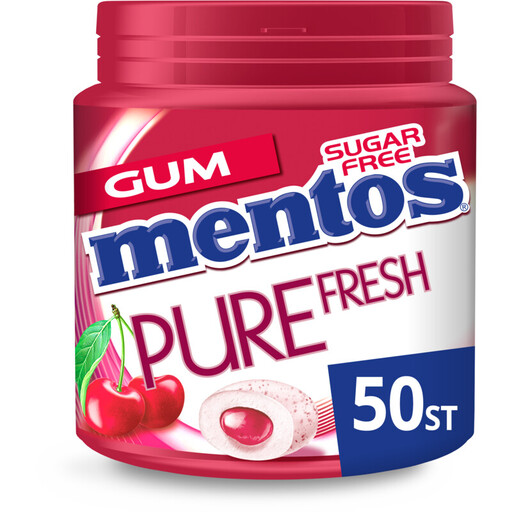
Why this fits the profile: Handy for anyone who regularly uses cherry chewing gum at the office, on the go or at home and wants a pot of 50 pieces.
The pack states sugar-free, but also lists polyols, aspartame and soya. So check beforehand whether this composition suits you.
50 pieces, liquid centre and 0g sugar per 100g according to the product information.

Why this fits the profile: A 250g bag is practical for a sweet jar, visitors or an informal treat where several people can help themselves.
The pack states gelatine and possible presence of milk, wheat and gluten. That prevents the wrong choice for specific dietary requirements.
250g, cherry shape and 46g sugar per 100g according to the product information.
We've put together a full, up-to-date list of products that fully meet these strict selection criteria and comply with current European safety regulations.
Cherry gummies are usually soft and gelatinous, whereas cherry sweets can also be hard sticks, toffees or boiled sweets. Check the ingredients if you want to avoid gelatine or certain allergens.
No. Sugar-free cherry gum often contains other sweeteners, such as xylitol, sorbitol, maltitol, mannitol, aspartame or sucralose. Check the full ingredients list and follow any warnings on the pack.
That depends on the type and the packaging. Store the sweets cool, dry and sealed, away from sunlight and moisture. The official shelf life information is on the pack. Don't use a product where the packaging is damaged or where the smell, colour or texture has clearly changed.
