
Same-day & Next-day Delivery

Quality Guaranteed

Unlock Your Welcome Offers: FREE Delivery | Up to 80% OFF | Free 30-day JoyPlus trial
Download the APP
When you want to buy burgers, you’ll quickly find more than just beef burgers to choose from. There are frozen burgers for a quick meal, Angus burgers for the barbecue, chicken and pork burgers for a change, as well as Chinese-style burgers, vegetarian burgers, sauces, buns and burger boxes. The right choice depends on the ingredients, how you plan to cook them and how many you need.
A product called a hamburger isn’t necessarily made from beef. Some budget burgers contain mechanically separated chicken, pork, breadcrumbs or flavourings. Always check the ingredients list and the percentage of meat.
According to the product information, g'woon Burgers - 12 pcs contains 62% mechanically separated chicken and also includes pork bacon, wheat and soya. This makes it different from a beef burger or Angus burger, even though both are sold as hamburgers.
As well as the price, check the net weight, number of burgers and weight per burger. Twelve smaller burgers are handy for a family or a party, while a 250-gram burger is more suited to a generous portion. When comparing products, work out the price per 100 grams or per serving.
Burger buns, burger sauce and side dishes can also add to the total cost. For a barbecue, buying burgers and buns separately is practical; for quick meals, a larger frozen pack may be more convenient.
Frozen burgers should be kept frozen at the temperature stated on the packaging. Once thawed, a product must not be refrozen, according to the product information. When your order arrives, check the condition of the packaging and put frozen products straight into the freezer.
A product labelled “ready to eat” is also different from a burger that needs cooking or heating thoroughly. Follow the cooking instructions for raw or partially cooked products. For meat products, use a food thermometer if a core temperature is specified.
Start by checking:
A soya-based vegetarian burger isn’t suitable for someone with a soya allergy. Chinese-style burgers often contain wheat, soya or sesame too. According to the product information, the SIJIA KITCHEN Chinese Beef Hamburger contains 40% beef and lists gluten, soya and sesame as allergens.
Multipacks such as a pack of 12 are handy for families. For burgers to cook on the BBQ, look for a size that will cook evenly on the grill. A thick 250-gram Angus burger will take longer to cook than a smaller snack burger.
Burger snacks are a different category, suited to lunch, a light bite or eating on the go. The O'Say Jujube and Hawthorn Hamburger and Red Farmer Union Hawthorn Burger are sweet, ready-to-eat snacks made with hawthorn. They aren’t meat burgers, despite their shape and name.
Check whether the burger is suitable for:
A non-stick pan with several compartments can be useful for smaller portions. The PURECOOK 4-hole pan has four compartments, is suitable for gas, ceramic and induction hobs, and must be washed by hand. Avoid metal utensils to protect the coating.
Burger boxes are handy for takeaways or parties. The 15 x 15 cm sugarcane pulp boxes are sold in packs of 50 and are designed for items such as buns, burgers and pasta. Check that the size suits your burger and packaging.
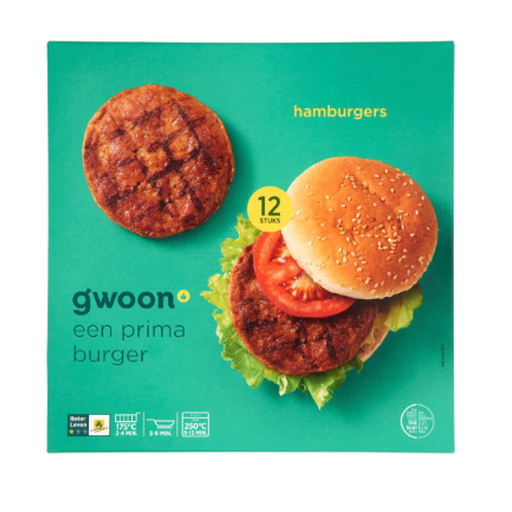
Why it suits this profile: A pack of 12 is handy for families, stocking the freezer and making quick meals during the week.
The product information clearly states that it contains 62% mechanically separated chicken and lists the allergens. So you’ll know it isn’t a beef burger.
12 burgers; suitable for grilling or frying; can be kept frozen as directed on the packaging.
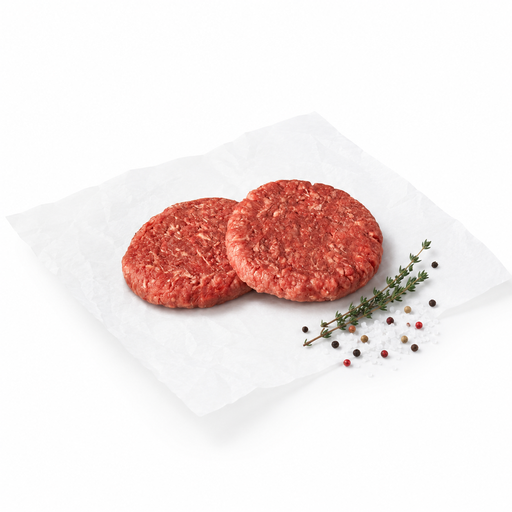
Why it suits this profile: This generous burger is made for a special burger night or cooking on the barbecue.
The product description states that it contains 99% Angus beef and doesn’t list any of the 14 main allergens. Always check the current packaging.
250 grams; suitable for cooking in a pan or on the BBQ; cooking guidance gives a minimum core temperature of 70 °C.
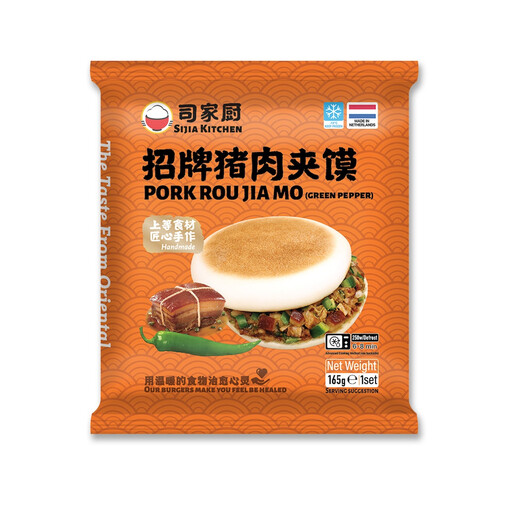
Why it suits this profile: A practical choice if you’d like to try a Chinese-style burger or roujiamo without preparing the filling yourself.
The product information states that it contains 40% pork, wheat and soya. The product is frozen and must be heated thoroughly; it isn’t ready to eat.
165 grams; partially cooked according to the product information; suitable for a microwave, oven, air fryer or pan when prepared as directed.
We’ve put together a complete, up-to-date list of products that meet these strict selection criteria and current European safety requirements.
The right accessories turn a burger into a complete meal. Choose buns that are the right size for your burger. Lekhaven Bakkerij Brioche Hamburger Buns are sold in packs of two and, according to the product information, need around four hours to thaw.
For extra flavour, try burger sauce. Ji Xiang Ju Chinese Burger Sauce is ready to use and contains ingredients including pickled mustard tuber, mushroom and fermented beans. Check the listed allergens, which include wheat, soya and mustard.
Frozen burgers in a multipack are handy when you want to keep several portions in the freezer. Check whether they can be cooked straight from frozen. Chinese-style burgers can be convenient too, although some need to be thawed first or heated thoroughly.
Follow the use-by date and storage instructions on the packaging. Keep the product at the stated freezer temperature. After thawing, follow the instructions for chilled storage and consumption. Don’t refreeze a thawed burger.
As well as burgers, you’ll need buns, burger sauce and a suitable grill or barbecue. Check the burger’s thickness and weight so you can plan the cooking time. A burger box is handy if you want to take burgers with you or hand them out after grilling.
